Sexy Hendrix

Jimi Hendrix is the key to Christopher Bruce‘s first work for the Royal Ballet and his first creation since retiring as Director of Rambert Dance Company. One can confidently assert that the a couple of years rest has done Bruce a lot of good, since the quality of the choreography is exceptional and it sits gratefully on the bodies of the Royal Ballet company.
The music is the violinist Nigel Kennedy‘s interpretation of the music of Jimi Hendrix – “Third Stone From The Sun, Little Wing, Fire“ – and the 1960s theme is taken up in the costume designs by Marian Bruce featuring the essential colours of the period: red, burgundy, brown, black and the essential purple. Crushed velvet and satin appear in the form of flared trousers and bolero jackets and fringed shawls tied around waists. The ballet is an evocation of a period, a zeitgeist, with allusions to Hendrix himself but the sensibilities shaping the piece are predicated on the values of 21st Century abstract dance.
The three principal women, Zenaida Yanowsky, Tamara Rojo and Deirdre Chapman hold the stage initially, with Yanowsky’s solo featuring a memorable leaning motif. Then the three men, Gary Avis, Johannes Stepanek and ...
Weiterlesen mit dem digitalen Monats-Abo
Sie sind bereits Abonnent von tanz? Loggen Sie sich hier ein

- Alle tanz-Artikel online lesen
- Zugang zum ePaper
- Lesegenuss auf allen Endgeräten
- Zugang zum Onlinearchiv von tanz
Sie können alle Vorteile des Abos
sofort nutzen
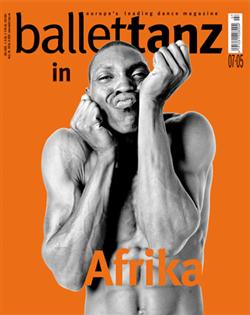
Vermutlich wird kein anderes Tanzereignis im Jahr 2005 ähnlich viele Fans und Fachleute anlocken wie das 3. Bournonville-Festival des Königlich Dänischen Balletts. Kein Presseorgan von einiger Bedeutung zwischen Amerika und Japan, das keinen Berichterstatter nach Kopenhagen geschickt hätte; alte Freunde und Bekannte in jeder Parkettreihe. In den Aufführungspausen...
Ntsikelelo “Boyzie” Cekwana and I have met several times over the course of the past two years. He has dramatically increased my awareness of South Africa. Socially, culturally, politically, economically, and, yes, dance-wise. But the latter aspect seems just one of many in an avid creative life that reaches out in all directions. His curiosity, voracious reading...
Burkina Faso ist ein kleines Land in Westafrika, ohne Bodenschätze, ohne Safariparks, ohne Tourismus, weil es nichts Spektakuläres gibt – das macht es so sympathisch. Die Menschen sind schön und freundlich, aber es fehlt an allem, «das Land der Anständigen», so die Übersetzung des Namens, das als Kolonie Obervolta hieß, ist eins der ärmsten Länder der Welt. Aber...