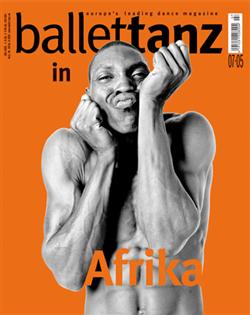
Boyzie Cekwana

Ntsikelelo “Boyzie” Cekwana and I have met several times over the course of the past two years. He has dramatically increased my awareness of South Africa. Socially, culturally, politically, economically, and, yes, dance-wise. But the latter aspect seems just one of many in an avid creative life that reaches out in all directions. His curiosity, voracious reading and quick mind thriving on constant challenge make him an interesting if somewhat demanding interlocutor. Our talks have been long and loaded, as I suspect any conversation with this complex man is. But all the more rewarding.
Especially if you have seen some of his work.
Cekwana isn’t one of South Africa’s best known dancer-choreographers for nothing. Before our interview, I saw “Ja, nee” for the fourth time. It still shakes me. The enlightened Westerner’s reflex reading of work from the other hemisphere tends towards indiscriminate embrace of the foreign as “authentic” i.e. good – and an idealization of unfamiliar ethnicity. Particularly in dance. And now this. Seven black men devoid of individuality and charm, a pack of predatory beasts. “Ja, nee” has been touring to tremendous acclaim since its creation in 2003. Even ...
Weiterlesen mit dem digitalen Monats-Abo
Sie sind bereits Abonnent von tanz? Loggen Sie sich hier ein

- Alle tanz-Artikel online lesen
- Zugang zum ePaper
- Lesegenuss auf allen Endgeräten
- Zugang zum Onlinearchiv von tanz
Sie können alle Vorteile des Abos
sofort nutzen
After more than twenty years, it seems that we have entered a new phase in the field of contemporary dance. I am not trying to define the latest heroic moment in dance: these days it is only too obvious that a history that follows a lineal and positive timeline does not reflect reality. This new phenomenon (that shares time and space with other phenomena of very...
Afrika ist groß. Gibt es den einen afrikanischen Tanz? Nein. Afrikanischer Tanz ist ein Konzept, eine Erfindung, die in Frankreich begann, als afrikanische Tänzer sahen, dass ihr Körper etwa im Ballett anders reagiert als der von Europäern. Man merkt den Unterschied halt eben erst in der Fremde. Als ich nach Afrika zurückging, habe ich systematisch nach...
Henning Paars «Romeo und Julia» am Staatstheater Braunschweig hält die blind sich wiederholende Mechanik der Machtgesellschaft am Laufen. Zwischen eisernem Vorhang und Metallwänden lauern Falltüren und Capulets Familienkäfig der verlogenen Konvention. Vom ewigen Kämpfen sind die nackten Füße blutigbraun verkrustet.
Auf den Schnipseln vergilbter Seiten, verstreut...