Michele Abbondanza, Antonella Bertoni: «Capricci»

Following their trilogy dedicated to Greek tragedy (“Alcesti,” “Medea,” “Polis”), the small Trentino-based company led by former Carolyn Carlson dancers Michele Abbondanza and Antonella Bertoni have turned to pure dance with their new creation, capricci, the first part of the project “Poiesis” (“to make” in ancient Greek). From the start – a plastic, intense duo in semidarkness – one can feel a true need for movement, indeed for eloquent movement.
The smart lighting by Lucio Diana enhances every moment of the ensuing choreography for the group, consisting of Eleonora Chiocchini, Chiara Michelini and Tommaso Monza besides Abbondanza and Bertoni themselves, while the original music is played live by Elisa Amistadi (who also softly sings) and Michele Bazzanella. The aim of “Capricci” is to emphasise the mechanics and anatomy of the dancing body: “… a body with other bodies, as a sign of nothing other than itself. The body which vibrates in the effort to master a task is beautiful; the body which finds itself while losing itself in the other can be sublime,” writes the leading couple. And the performance really does live up to this: It is clear in fact that every sequence of ...
Weiterlesen mit dem digitalen Monats-Abo
Sie sind bereits Abonnent von tanz? Loggen Sie sich hier ein

- Alle tanz-Artikel online lesen
- Zugang zum ePaper
- Lesegenuss auf allen Endgeräten
- Zugang zum Onlinearchiv von tanz
Sie können alle Vorteile des Abos
sofort nutzen
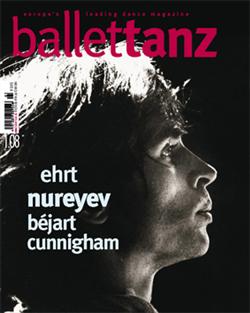
Zwei neuere Publikationen international gefeierter Autoren und Kritiker in Tanzzeitschriften haben mich dazu angeregt, auch meinerseits etwas zum Thema Tanzgeschichte zu Papier zu bringen: zum einen ein Beitrag von Kathrine Sorley Walker in ihrer «Talking-Point»-Kolumne in Dancing Times, zum anderen Clive Barnes’ Aufsatz «Vorwärts in die Vergangenheit» (Forward to...
«Und verloren sei uns der Tag, wo nicht Ein Mal getanzt wurde! / Und falsch heiße uns jede Wahrheit, bei der es nicht Ein Gelächter gab!»
Maurice Béjart stellte seinen Memoiren «Einen Augenblick in der Haut eines anderen» einen Satz aus Friedrich Nietzsches «Also sprach Zarathustra» als Lebensmotto voran. Es wäre weit gefehlt, ihn deshalb als Nietzscheaner zu...
Eben noch ist Sue Jin Kang einen leidvollen Bühnentod gestorben, schon nimmt die Erste Solistin des Stuttgarter Balletts, die sonst derart tief in ihre tragischen Rollen eintaucht, dass ihr der Weg zurück in die Realität schwerfällt, lachend den Schlussapplaus entgegen. In der zurückliegenden Stunde im Opernhaus hatten zwei Leichen ihren Weg gesäumt, sie die große...