Jenseits

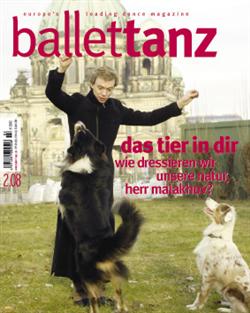
The Animal Theatre Manifesto
By Wayn Traub
1. The animal is the beginning and end of animal theatre. It is both the source and the aim.
2. Animal theatre is born of a deep desire, the cry of the animal in each of us (animus). The creator transforms this desire into action (animer) and if his performance is successful, the animal in man is aroused (animal). Theatre must rouse people from their winter sleep. These three phases can be of help here.
3.
Animal theatre speaks – through the codes and images and of its age – the language of all ages. The creator uses a language he masters and the audience knows, which makes it possible to transmit a universal message.
4. Animal theatre does not work with texts, but images. It is not based on an existing concept for the display of a personal interpretation or opinion. It is based on a personal view of life which gives form to the theatre.
5. Animal theatre must alienate. The actors transform into divine, animal beings so that the audience too will undergo the same experience. This theatre allows those present to travel to another world where they live in the proximity of and in unity with an unattainable truth. The theatre is metamorphosis, ...
Weiterlesen mit dem digitalen Monats-Abo
Sie sind bereits Abonnent von tanz? Loggen Sie sich hier ein

- Alle tanz-Artikel online lesen
- Zugang zum ePaper
- Lesegenuss auf allen Endgeräten
- Zugang zum Onlinearchiv von tanz
Sie können alle Vorteile des Abos
sofort nutzen
Michael Kidd konnte toll tanzen, er war ja rechtzeitig von Verfahrenstechnik auf Ballett umgestiegen. Er tourte mit Lincoln Kirsteins Ballet Caravan, war «Billy the Kid» und, obwohl eher zierlich als bedrohlich, auch «Bluebeard»; 1942 ging er als Solist zum Ballet Theatre, dem späteren American Ballet Theatre, aber zum Glück für die Nachwelt dauerte seine...
Kim Brandstrup is to perform at The Royal Ballet in London a new ballet in the spring using a “lost” Prokofiev score. The music was written in 1936 for a film of “The Queen of Spades” to be made by Mikhail Romm. Political interference in the arts during the Stalinist era prevented that. Prokofiev’s later scores for “Alexander Nevsky” and “Ivan the Terrible”...
Das eigene Ego: Privatsache. Konsequent verweigert Anton Adassinsky jede Auskunft über sich. Auf der Website seiner Kompanie findet sich unter dem Stichwort «Leben in Daten» denn auch nicht seine Biografie, wie man erwarten sollte, sondern jede Menge Wissenswertes über Derevo. Adassinsky stammt aus dem sibirischen Krasjonarsk, ging in frühen Jahren in Leningrad in...