Revival
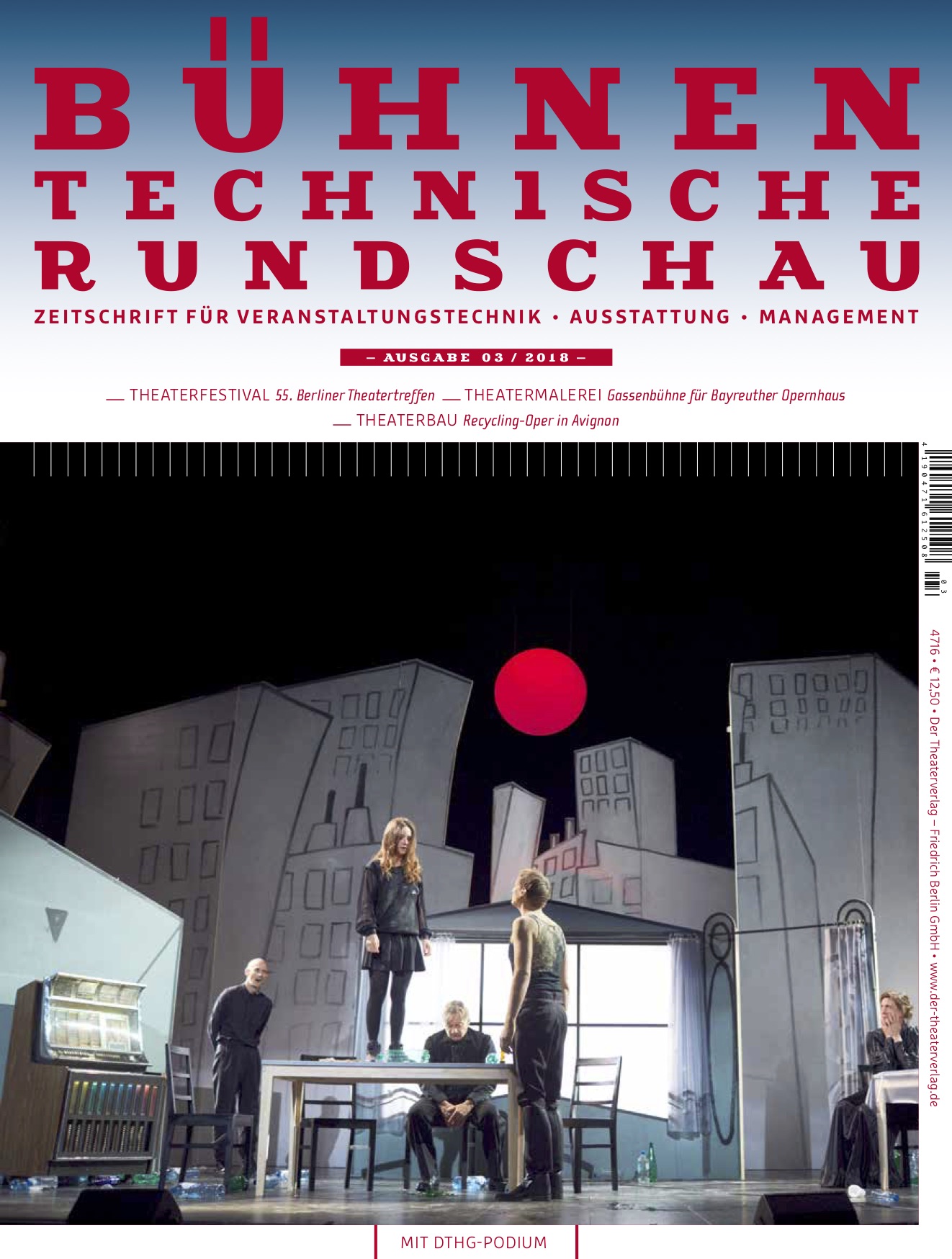
How can we keep theatre history alive, or perhaps even revive it? In this issue, we look at a range of different projects that offer possible answers. First, feast your eyes on photographs and historical drawings illustrating the opulence of baroque theatre: in this case, the Markgräfliche Opernhaus in Bayreuth, built in 1748, which reopened in April after renovation. This involved the reconstruction – and re-interpretation – of an alley stage after a design by Carlo Galli da Bibiena.
A lot of wood was used in the Markgräfliche Opernhaus and elsewhere, too, this classic material is enjoying a revival. In Avignon, an entire theatre has been made of wood – as a substitute venue for the town’s opera house, which is currently under renovation. For reasons of both economy and historical interest, the seating was sourced from various European opera houses, lending the auditorium a special, recycled charm. It’s partly thanks to improved fire safety precautions that wood is back in demand as a building material for opera houses. But they can also have negative consequences, as the recent floodings have shown – an issue we continue to investigate. This month, we traced how the current regulations came about; read on for an overview.
A tendency toward old classics can be observed not only in theatre construction but also in productions. Classic plays and ancient themes are being used as templates for exploring contemporary issues, as demonstrated at this year’s Theatertreffen in Berlin. Age-old legends such as The Odyssey and the myth of Oedipus reveal striking contemporary relevance when set in modern contexts.
In an insecure world, historical material seems to provide stability. Stage sets play an important role here, as a current production of “Woyzeck”, with a crucial tilting and revolving stage, shows. But smaller format productions such as “Trommeln in der Nacht” (depicted on the cover) also demonstrate the potential of stage sets for combining the historical and the contemporary. And a current exhibition on the history of pop music takes revival as its mission, rousing visitors’ memories of their own musical experiences in a colourful show.
The past is also an important reference point for both the German stage technicians’ society DTHG and us at BTR, having recently celebrated our 111th anniversaries at the stage engineering conference in Dresden. Read about the event in the enclosed copy of “Podium”. But, of course, the main focus is on what’s ahead, both here and in the current issue of BTR, so let’s take things forward together.
The editors
Am Münchner Volkstheater werden zweiwöchige Praktika angeboten, die passend auf den Lehrplan der 9. Jahrgangsstufen zugeschnitten sind. Die Schüler bekommen zudem interessante Einblicke in das Zusammenspiel der einzelnen Abteilungen im Haus in speziellen Führungen. Gegen Ende dürfen sie sogar ihr eigenes Bühnenbild erstellen und Kostüme entwerfen.
Brennend interessiert sich die...
ITEAC UND BTT: Austausch national und international
Vom 1. bis zum 4. Juni trafen sich knapp 400 Theaterplaner und -betreiber aus aller Welt zur vierten „International Theatre Engineering and Architecture Conference“ ITEAC und diskutierten aktuelle Trends und Entwicklungen. In Dresden wurde die 59. Bühnentechnische Tagung als Jubiläum gefeiert: 111 Jahre DTHG und BTR. In zahlreichen...
In diesem Jahr fand die Light + Building vom 18. bis zum 23. März in Frankfurt statt. Der Zweijahresrhythmus der wichtigsten Messe der Branche bestimmt den Takt von neuen Entwicklungen in der Welt der Leuchten. Die Märkte sind in Bewegung, zeigte auch der Gang über die Prolight + Sound, die vom 10. bis zum 13. April veranstaltet wurde. Von etablierten, großen Marken bis zu...