Where is the Love?

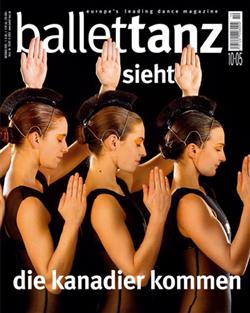
Over the last century dance has traveled from continent to continent, shifting its focal points of creativity and intensity. Historically, the fluctuating cartography situates long traditions in Berlin, Paris, and London. In the mid-1980s rejuvenation occurred in places like Brussels, Ljubljana, Barcelona, and Montéal.
Guy Cools, the former dance programmer and artistic coordinator at the Vooruit Arts Centre in Ghent, who was named artistic director of Montréal’s Fondation Jean-Pierre Perreault in its final days, takes the view that artistic identities, individual qualities and geographic content are linked. “There were new territories – where a group of individuals, and dialectics between them, started to be powerful.”
Montréal rose up as a key centre of dance invention, Cools speaks of a generation of choreographers, led by someone like Paul-André Fortier, “who didn’t necessarily have international recognition, but who influenced a generation.” In fact, there was a diversity of voices within Montréal’s ranks, including artists ranging from Fortier and Perreault, to Édouard Lock, Marie Chouinard and Ginette Laurin. Equally important, the dance community managed to organize itself ...
Weiterlesen mit dem digitalen Monats-Abo
Sie sind bereits Abonnent von tanz? Loggen Sie sich hier ein

- Alle tanz-Artikel online lesen
- Zugang zum ePaper
- Lesegenuss auf allen Endgeräten
- Zugang zum Onlinearchiv von tanz
Sie können alle Vorteile des Abos
sofort nutzen
Der Begriff Entschleunigung, der schon abgedroschen war, bevor er in Mode kam, trifft es nur oberflächlich, was Rosemary Butcher macht. Sie zelebriert Kargheit und Repetition als Alternative zu Redundanz und Beschleunigung. Sie arbeitet dabei mit zwei Elementen, die unserer Zeit widersprechen: der Verlangsamung und der Verdichtung. Weil sie beim strukturellen...
Imagine a selection of drawings, scores, instructions or sketches created by choreographers during the process of making dances, e. g. Trisha Brown, Yvonne Rainer, Dominique Bagouet, Remy Charlip, Mary Wigman, William Forsythe and Elisabeth Streb. How might we conceive of these as representations of choreographic thinking or as carriers of moving ideas? How would...
Ea Sola, sie kündigten vor vier Jahren Ihren Abschied vom Tanz an und kehrten Europa den Rücken. Heute melden Sie sich zurück. Wichtige Personen wiesen mich darauf hin, dass es ein Fehler sei, «Requiem» zu meinem letzten Stück zu erklären. Die Warner hatten Recht. Man wird so schnell aus dem Kreis der Eingeweihten verstoßen....