Cine Dance

Dance films are a cinema of poetry, exploring certain ideas through various situations rather than narrative. This definition comes from the pioneer of dance film making who launched a new film movement in the early 1940s, Maya Deren. An independent worker and thinker, she explored the language of film in her theoretical writings as well as in practice. Her aesthetics demanded a transformation of reality using cinematic capabilities to manipulate space, time and movement. Her artistic manifesto was: the form of a work of art is the physical manifestation of its moral structure.
Maya Deren called her films “choreographies for the camera.” In her most famous, “Meshes Of The Afternoon” (1943, 15 min., made in collaboration with Alexander Hammid), dance is not explicitly used. However, motion is everywhere. Silent, except for the music, the film moves through different spaces in no logical order. Logic gets confused when it interacts with the world of dreams. Every move has a direction and purpose, nothing is excessive, nothing is missing, and everything happens in a few cycles with open endings. The audience is very aware of the presence of the character, played by Maya Deren herself, ...
Weiterlesen mit dem digitalen Monats-Abo
Sie sind bereits Abonnent von tanz? Loggen Sie sich hier ein

- Alle tanz-Artikel online lesen
- Zugang zum ePaper
- Lesegenuss auf allen Endgeräten
- Zugang zum Onlinearchiv von tanz
Sie können alle Vorteile des Abos
sofort nutzen
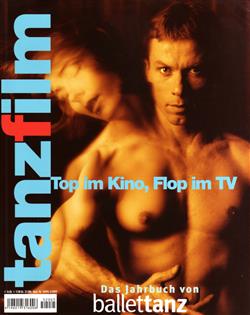
Katerstimmung auf der weltweit wichtigsten Plattform für neue Tanzfilme, dem 10. internationalen dance screen, das in diesem Jahr in Brighton stattfand: Die Einschaltquote geißelt selbst mächtige, bislang selbstbewusste europäische Fernsehsender in den Niederlanden, Frankreich und Kanada. Der größte und bislang wichtigste Produzent für Tanzfilme, die TV-Anstalten,...
Paz is not a new name. She joined Batsheva in the early 1990s, soon after Ohad Naharin became artistic director. She stayed for three years and then left for Europe, looking for challenges of a different nature. After an intermezzo at Scapino Ballet, she settled in Cullberg Ballet for twelve years. Upon her recent return to Israel, she encountered a vibrant dance...
Sean Dorsey choreographer/performer, is the most refreshing phenomenon in dance theater hereabouts. A queer artist, born female, who prefers the pronoun “he,” Dorsey employs exquisite tact to make tender dances. Using the manners, gestures, glances, shrugs, shirkings of contemporary American masculinity, Dorsey makes mimed/danced stories of young love, which...