"Avant-garde" and "accomplice"—two terms originating in the realm of power and the exercise of active force: "Avant-garde" originally denotes the spearhead (in the sense of a military vanguard), while "accomplice" means co-perpetrator—a term rooted in the legal sphere. Art has appropriated these terms, recontextualizing them within aesthetic and social frameworks. A defining characteristic of artistic avant-gardes is the break with tradition. Avant-garde discourse and practice reveal an aggressive rejection of everything previously considered "state of the art": a resounding "No!" to aesthetic concepts and artistic methods, as well as to the institutional, social, material, and economic underpinnings of the art that had prevailed until then. The motto: shatter the encrustations!
Perspectives
Adieu
Avant-garde
Can Complicity Replace the Avant-garde as the Driving Force Behind Artistic Innovation and Cultural Change?
Complicity
Cultural scholar Gesa Ziemer has reinterpreted the concept—and the associated idea of acting together (in the sense of complicity)—in a positive light and introduced it into performance theory. This model of "complicity" is not about criminal intent, but rather about productive forms of cooperation, collaborative creativity, and innovative projects. In this regard, complicity differs from other forms of collaboration, networks, or situational alliances: it is usually small in scale. It involves a small number of people—whether brought together for a specific project or already acquainted through professional contexts—who are organized informally; their formats and modes of action are not institutionally defined. Often, they are not even clearly visible as a group, but are instead linked through episodic undertakings.
The affinity with the avant-garde lies precisely in the effort to develop new ideas for which no established structures yet exist. In this indeterminate space, it is permissible to act in unconventional and experimental ways. Yet the originally criminal background is certainly present—specifically where accomplices operate in a gray area between the legal and the illegal, perhaps even consciously occupying and pushing the boundaries of that space. In this context, the focus shifts to embracing ambivalence and exploring modes of action and scope for maneuver that also generate political effects in the public sphere—such as the interventions by the Radio Ballet Ligna or the Center for Political Beauty.
Accomplices feel a sense of connection to one another, even when projects and the collaborative laboratory are pursued individually and autonomously by each member. These projects often entail risks and therefore require mutual trust. The tension between closeness and independence characterizes the collaborative dynamic of any given partnership. It makes it possible to withstand resistancen and create spaces for freedom, to draw attention to existing power structures and to subvert them. Viewed in this light, complicity is a characteristic organizational principle of founding phases—whether in political spheres or, above all, in the field of artistic collaboration.
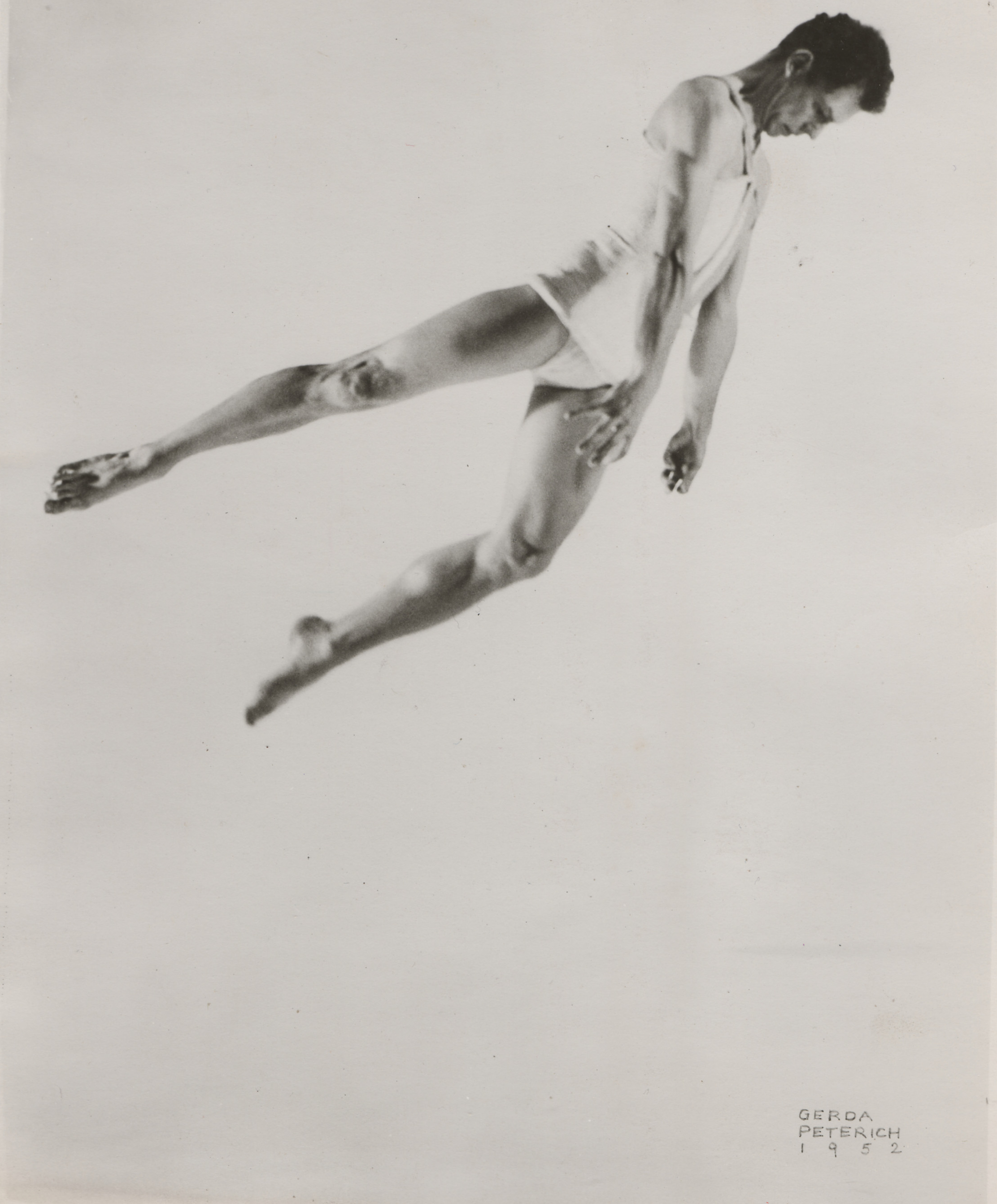
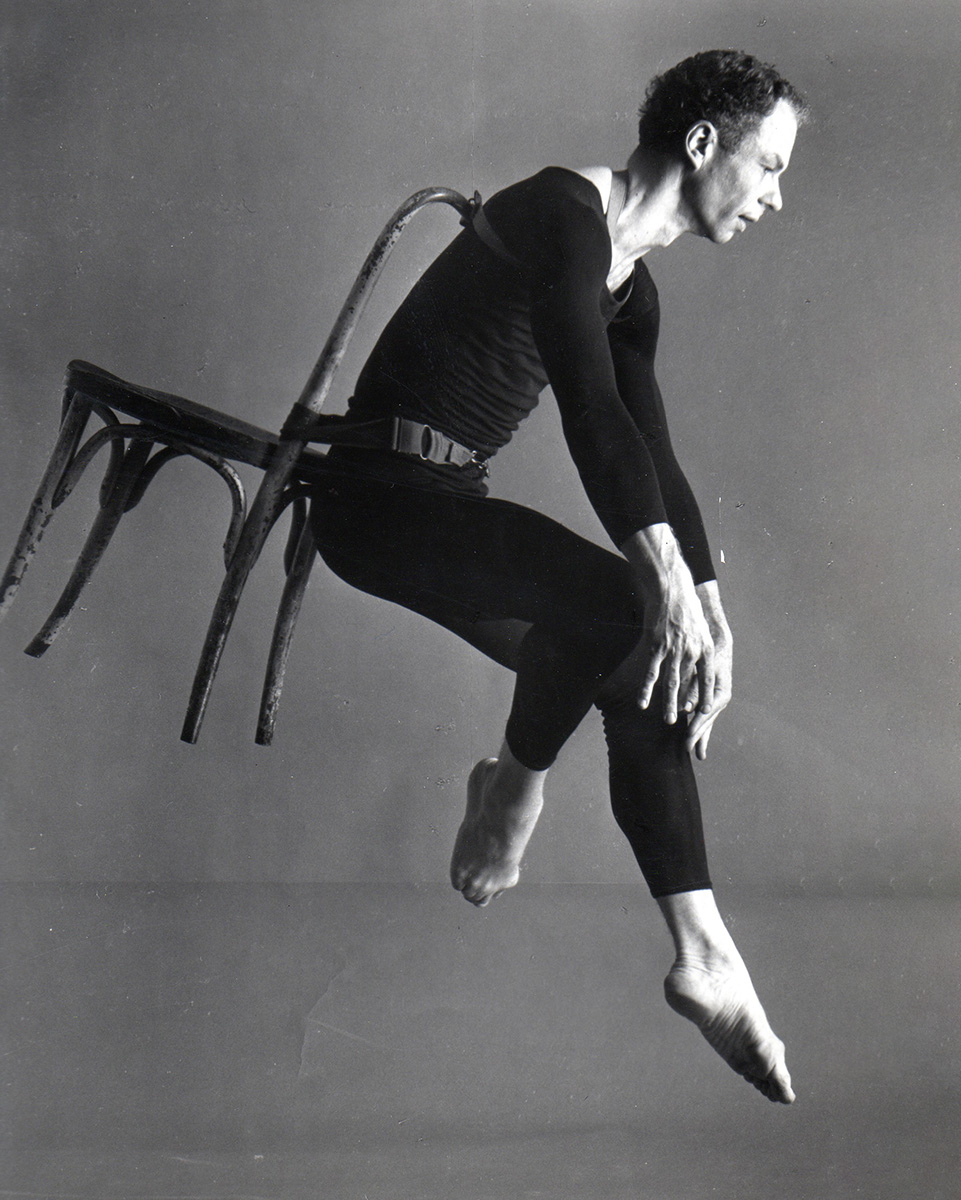
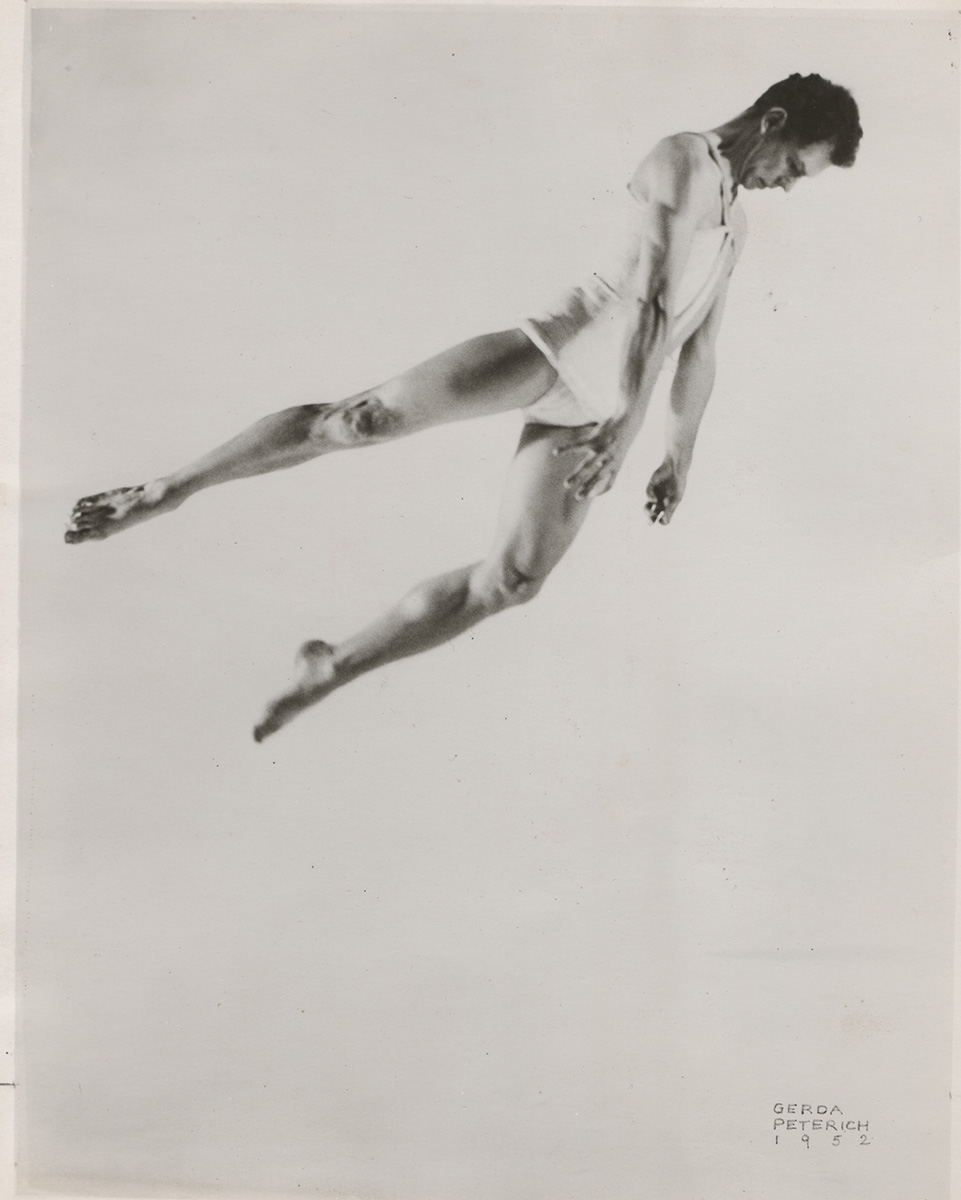
This model has become established in the fields of contemporary dance and performance, as a great many works are geared toward intimate, informal, and often time-limited collaboration. Does this also hold true for the classical avant-gardes—the "-isms" such as Expressionism, Futurism, Cubism, and Surrealism that emerged in the early 20th century? And for the so-called second avant-garde following 1945—Fluxus, postmodern dance, Minimal Art, conceptual art, and Butoh? Yes—even though the complicité within these groups was often marked by hierarchies and discord. The collaboration among artists at the Bauhaus or Black Mountain College demonstrates that partnerships—such as the one between Merce Cunningham and John Cage—are inconceivable without that bond of complicity, whether loose or close. This was impressively documented in the recent Five Friends exhibition at Munich’s Museum Brandhorst, which focused on Cunningham, Cage, and their alliance with Jasper Johns, Robert Rauschenberg, and Cy Twombly. These avant-garde accomplices are defined by the close intertwining of art and life, shared travels, and experimental laboratories for new concepts and design practices.
If the motto is "breaking up encrustations"—what happens when artists find noencrustations to break up? When everything is fluid, caught in a paradoxical transformation that already implies potential counter-positions anyway? The classic narratives of artistic avant-gardes have long since lost their appeal in contemporary dance. Gone is the insistence on progress, the glossy attitude of techno-futurism and serial manifestos like those of Futurism; gone, too, are the abrasive scandals designed to shock the bourgeoisie, as seen in Dada or Surrealism. The sensations, uproars, and the aesthetic and institutional revolutions brought about by the dance avant-garde (and certainly passed on as achievements to subsequent generations) now seem outdated and integrated into the new dance scene: the liberation of the body from the disciplinary code of ballet was achieved through Freier Tanz and Ausdruckstanz—from Isadora Duncan to Mary Wigman, and continued by their successors. Queer concepts of the body and performance were shaped by figures such as Alexander Sacharoff, Harald Kreutzberg, Julius Hans Spiegel, Anita Berber, Sebastian Droste, and Manja Chmièl—to name just a few pioneers. Everything that was new back then—the aesthetics and the challenges they posed to the social norms of the 1920s and 1930s through depictions of the naked (Anita Berber) or transgressive body (Valeska Gert)—which subverted conventions of female grace through grotesque gestures and provocative themes—all of this has long since been integrated into contemporary programs and contemporary art. So, is it a case of "Adieu avant-garde,"? Or rather:
Avant-garde Undercover?
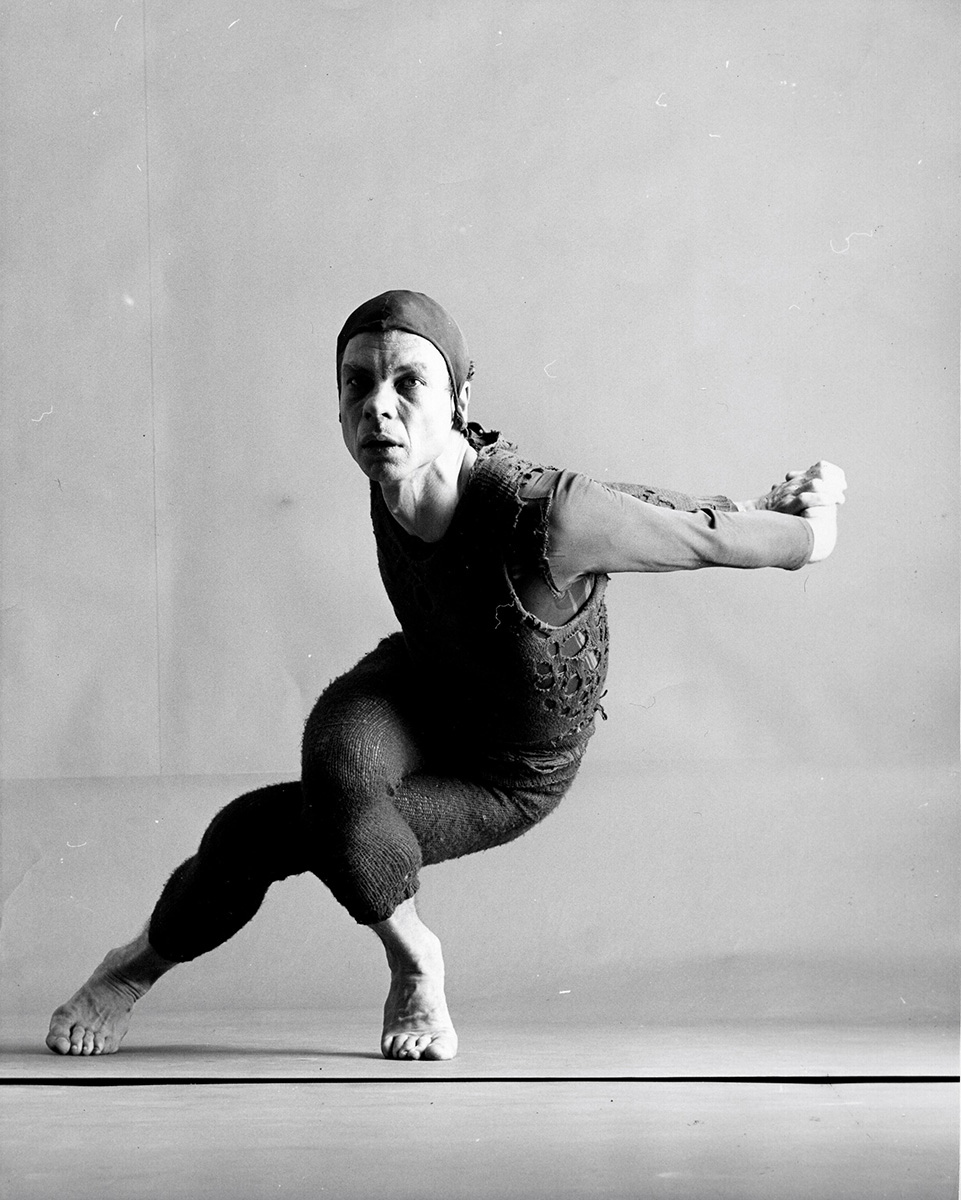
Is the contemporary dance scene too tired, too cool, or too laid-back to still combatively imitate—or parody—the avant-garde gesture of rejection? Or can avant-garde quicksand be detected nonetheless? Undercover, so to speak, or in the shadow of a current dance scene whose trends may, on the whole, appear rather indistinct. Yet, in the face of multiple crises, certain structural features can be identified that might support such a thesis regarding the existence of an avant-garde—with the "A" crossed out or appearing as a shadowy figure.
For one thing, there is an attitude of resistance in defense of artistic freedom—currently a common denominator across the performing arts—manifesting as a demand to dissent and intervene. At the same time, there is a growing insistence on maintaining a perspective for the future (however viable that may still be). Even though the avant-garde notion of progress has become untenable, contemporary artistic works—across diverse concepts and formats—are shaped by the act of planting signs of hope (albeit faint ones) that acknowledge the harsh realities of lost livelihoods, as well as by the posing of major questions that halt the momentum of "business as usual." This is evident in actions that are often intense, such as those by the group Pussy Riot or the queer-transformative performances of Yuko Kaseki.
Is it possible to envision a replay of the avant-gardes? A repetition and rewriting of them? If so, what might new perspectives on a different way of engaging with the body look like? Turning the audience into accomplices? And challenging them to notice the avant-garde’s blind spots? After all, it is evident that the classical avant-gardes had an elitist side—that the disdain for the establishment within their insular Experimental scenes amounted to a form of artistic-intellectual classism. It is a matter of complicity based on exclusion, propagating a predominantly white aesthetic. Accomplices, in the sense of Gesa Ziemer’s definition, are open, participatory, and unconventional; their flexibility allows them to occupy gray zones and utilize unregulated interstitial spaces. And yet, these small-scale complicities are usually closed in-groups. Performative works—such as those by Trajal Harrell, who offers a counter-reading of the Judson Church-style postmodern dance avant-garde— probe this very wound. They expose the blind spots regarding the Black dance avant-garde, transform the body of work, and thus operate within a realm of replay—without being merely retro.
So where does complicity manifest itself today in a critique of the avant-garde that swaps the notion of unconditional progress for a different kind of cohesion found in collaborative design and production? There are many examples of such engagement—some combative and loud, like that of Pussy Riot, others quiet and subtle. Take, for instance, the group of dancers who came together in 2008 for the "Dance (Praticable)" project—among them Alice Chauchat, who emphasizes "complicity" in her collaborative work, and Frédéric Gies, who describes their shared endeavors as having a deliberately casual quality. The aim is not to be interesting, let alone spectacular. Instead, the rehearsing and experimenting draw their strength from the quality of the movement—stemming, for example, from the shared practice of Body-Mind Centering. The subversive nature of the work by "Dance (Praticable)" is, of course, particularly evident in how the group engages with institutions—an approach defined by genuine complicity. They operate on a standing agreement: whenever a member of the group is invited to a performance or festival, another project born of their collaborative work is smuggled in alongside it. The way selection processes regarding funding, curation, and the allocation of resources are subverted here through a practice of complicity mirrors the concept of "smuggling" that Irit Rogoff has articulated in her institutional critique.

Defiant, But No Spearhead
Do such artistic works reveal counter-models to the avant-garde? Movements without a "spearhead"—and yet defiant? Avant-gardes possess a distinctive concept of time. For the focus is on rejecting the past and the obsolete while simultaneously looking toward the future: through projections and utopias of the (im)possible. Admittedly, a paradox lurks here—one that artistic (as well as political) avant-gardes cannot overcome, or perhaps cannot even hope to overcome. The sociologist Niklas Luhmann formulated this paradox as follows: the avant-garde lays claim to being ahead of its own time. Yet, since it cannot (as yet) act within that "ahead"—in the future—it remains tethered to the present. It is only from the present that it can distance itself, offer criticism—and develop counter-models.
Avant-gardes repeatedly grapple with this boundary line—possibly even without their aspirations being recognized as such anymore. The question of the future, and of the role played by as-yet-unknown (and seemingly dangerous) apparatuses and technologies—such as the current debate surrounding the role of AI—is more relevant than ever. The enthusiastic welcome accorded to thinking machines—which, in keeping with the avant-gardist ideal of progress, were expected to improve the future—has lost its luster. An avant-garde today? The answer is ambivalent. Can the slogan "Beneath the pavement, the beach!"—coined by the Situationists around Guy Debord in May 1968 (the year of the student uprisings)—still be mobilized today? Could it still serve as an anarchist slogan—one that seeks to break up calcified structures and demand their exposure—in an era of digital surveillance, amidst all the contradictions between consumerism and recycling, the climate crisis and rearmament? And if so: what might the strategies and methods of the Situationists—disruption, the subversion of purpose, and the hijacking of familiar expectations and experiences—look like today?
At most, one might conceive of an ironic engagement with the narrative of the future—one that highlights gaps and reframes aspirations. It is an approach that stages the relationship between the old and the new without resorting to the avant-garde trope of progress: much like the performance series Unter dem Pflaster ("Beneath the Pavement"), curated by Frauke Havemann and Peter Stamer, which adopts a playful, parodic tone. Since 2020—the year of the pandemic—they have invited artists from the fields of dance, theater, and film to participate in a low-budget project at Berlin’s Milchhof. This performance series exemplifies an understated, almost covertly conspiratorial re-visioning of the avant-garde—achieved, for instance, through omission: the Situationist slogan "Beneath the pavement ..." is quoted only in part. The interplay with the beach, the cracks in the concrete, and the utopia of freedom, alternative ways of living, and cooperation all reveal themselves through the objects and the arrangement of the setting—a space shaped in part by the visitors themselves. Deckchairs invite the audience to view the presentations (films, performances, sound events) much as they would while lounging on a lawn or at the beach.
One can also walk around the glass pavilion to circle the unfolding events—or the "exhibits"—creating a form of situational sculpture. Everyone present—project curators, artists, spectators, bar staff, and passersby—forms a temporary collective operating on the fringes of Berlin’s conspicuous art projects and their institutions. This inconspicuousness—this casual stance of refusing to consume art—does not quite fit into the contemporary cultural landscape. Yet, precisely for that reason, it acts like quicksand in the resistance against the bureaucracy of grant applications, efficiency evaluations, and the system-imposed servitude that accompanies them. It raises the question: can we still afford—or afford once again—this kind of avant-garde today? At a time when the precarious situation of artists is (rightly) being debated?
Dancing the Paradox
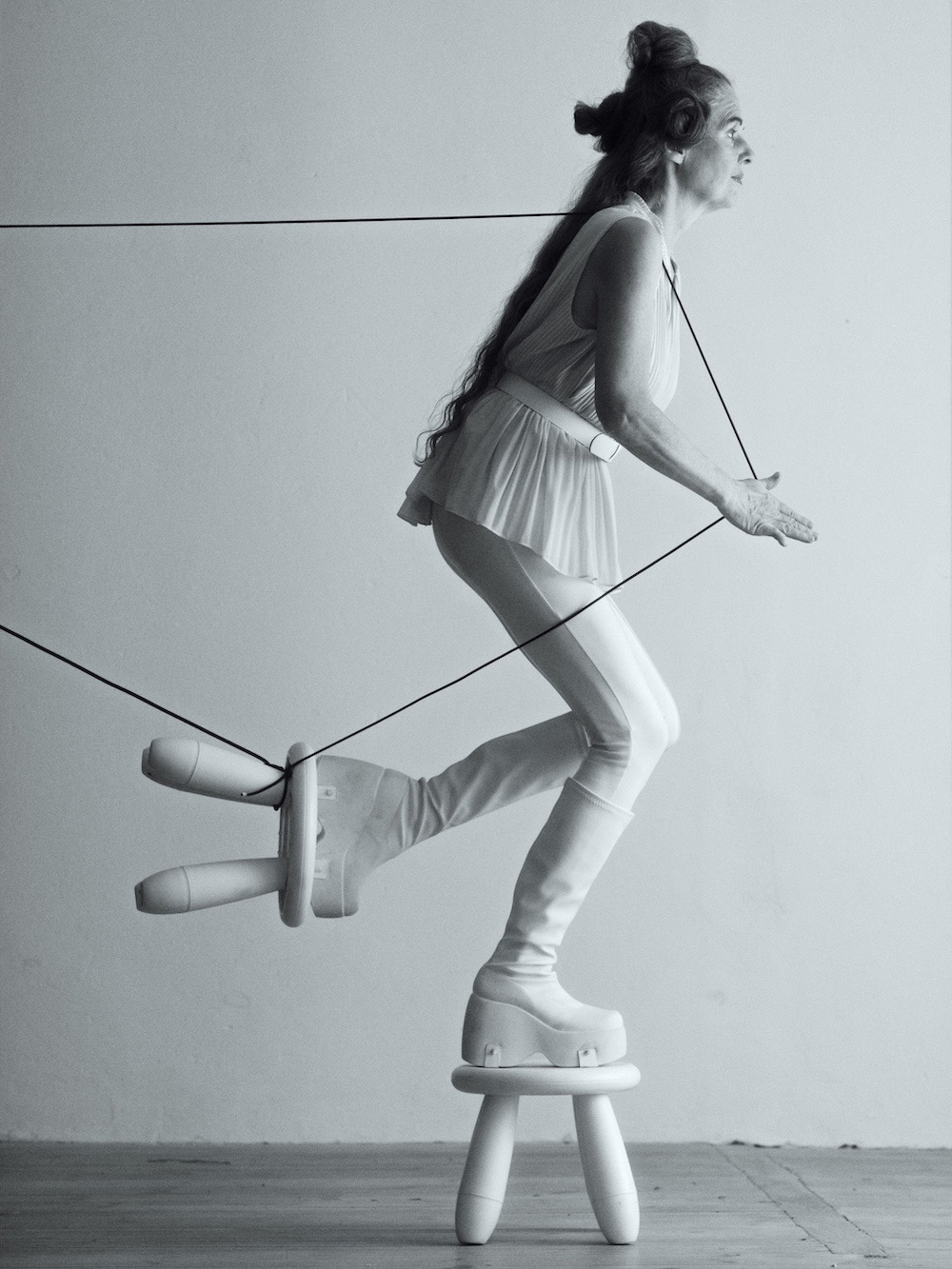
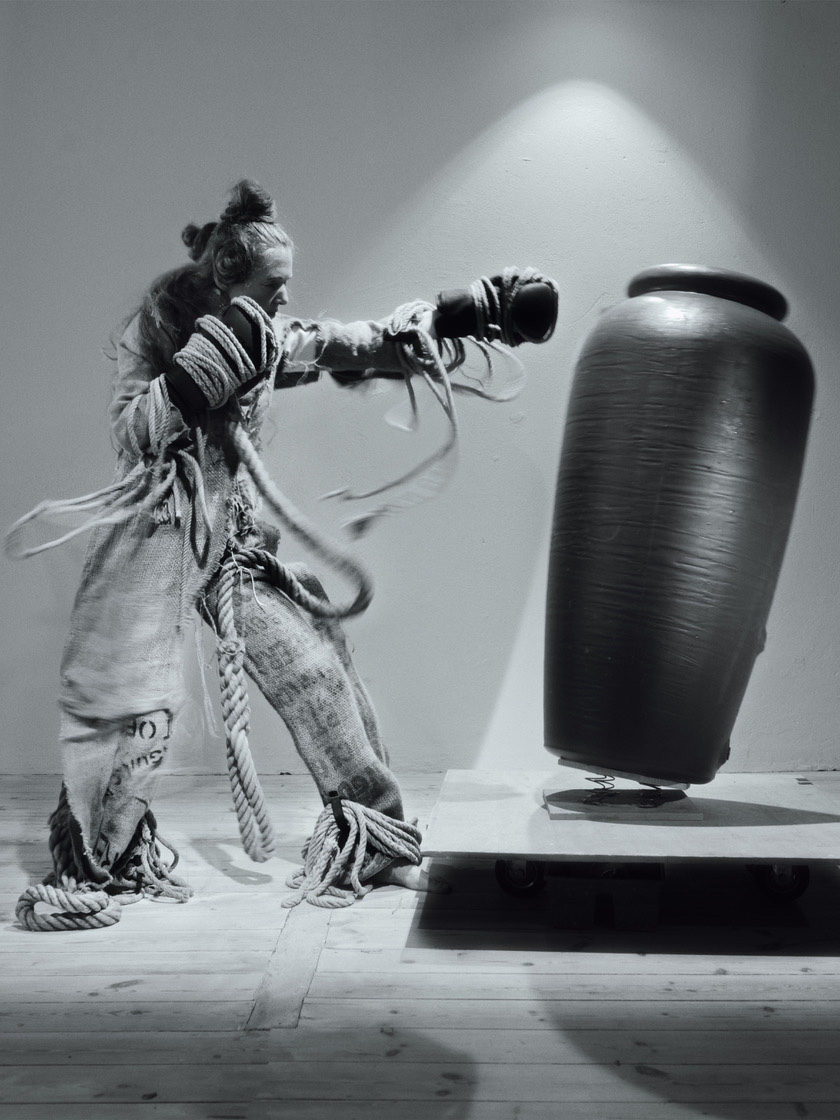
In the 2026 series, Maren Strack stages a dance exploring the avant-garde paradox of past and future with Your Past Is My Future. Set in a glass pavilion—a scenario that is playful yet technically precise, featuring machinery—she leads the audience (who can circle the elongated cube like a display case) into antiquity. From there, she moves via relics of the old world into what she calls the "future of our memories." Strack takes on the role of Arachne, the ancient weaver, by tying black threads to her feet, hips, and arms and setting them in motion. She manipulates a cable system, stretching and halting it in a display of fragility and tension—like a marionette pulling its own strings, yet held back from advancing by a machine. Throughout, she stands and walks on absurd cothurni—small white stools strapped to her feet. Each step demands balance and stability, yet also the lightness of the ancient figure of Hermes, with wings upon his heels. Or is she perhaps Pythia, the ancient seeress on her tripod stool? And what future might she be conjuring? What blessings or evils might emerge from the giant amphora she laboriously unwraps from its burlap covering in the next scene? It is an object that takes on the function of a punching bag, springing back against Maren Strack’s powerful blows. Finally, she moves tall white fans strapped to her arms like wings—opening and closing, opening and closing. Mechanical images of a giant moth, Pierrot Lunaire, or Loïe Fuller? Or perhaps a play on the fan constructions of Rebecca Horn? Within the collage of sound and film projections, the objects take on a life of their own. And the audience, as they please, brings their own memories—images from their personal inner cabinet of curiosities—into this toybox.
So, accomplices are present here too—namely, everyone who happens to gather in the outdoor space of the Berliner Milchhof. Have we thus—retrospectively, yet perhaps in a way that remains relevant (?)—landed in a scenario of artistic works that draw upon the Situationists’ avant-garde project? Such an alignment can, of course, be risky: what does the phrase “Beneath the pavement...?” imply for the Berlin pavement, which is known to possess so many layers? One might also describe the idea of such complicité as a “slow” or “low” practice of artistic work in public space. It involves “casting off the ballast of our constructions and accumulations”—as the series’ concept puts it—while fully aware that the beach beneath the pavement no longer holds a utopian, or even particularly welcome, future in store. At the same time, there is the awareness “that the waves wash back what was supposedly swept away.” Thus, the aim can only be to “pick up this flotsam, sort it into the realm of the performative, and exhibit it.”
And what kind of aesthetic would that be? No longer the avant-garde! Yet not a case of "adieu, avant-garde!" either—but certainly a call that must not go unheard, neither today nor tomorrow.
The author, a professor of dance studies at Freie Universität Berlin, was honored this year with the German Dance Prize for "outstanding developments in dance." She has firmly established dance research within the academic landscape and built numerous bridges to professional practice.