Obsession and Identity
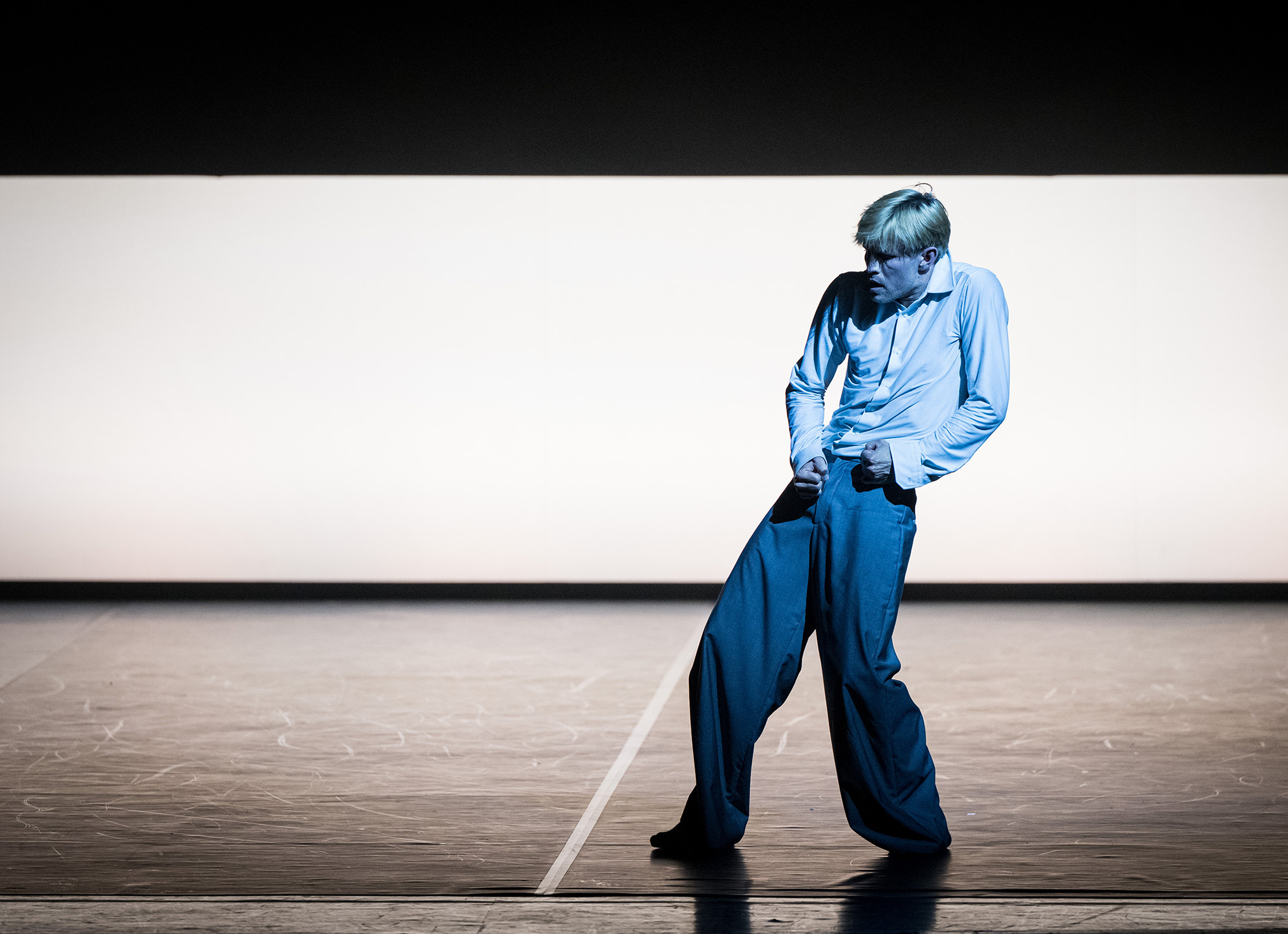
Teatro Malibran near San Marco: the empty stage yawns behind a screen. On it, a news presenter appears in stark black and white, reporting on the Scirocco phenomenon—that desert wind which, in Thomas Mann’s novella Death in Venice, shrouds the palazzi, alleys, and stairways in stifling waves of air. The man is still seated, holding forth on this meteorological malaise, but soon—as a dancing news-matador, narrator, and alter ego—he will trace the key stages of the Venetian downfall that befalls the writer Gustav Aschenbach: a widowed, middle-aged gentleman smitten with a same-sex passion, who ultimately falls victim to the cholera epidemic. It is the dancer-choreographer Paul Chantry whom Javier de Frutos employs in the short films interspersed between the saga’s three main chapters—titled "Obsession," "Identity," and "Horizon"—which distill the essence of the events into a few brief sentences. Chantry moves with a spring in his step—clad in a sweater, trousers, and sneakers—through stark rooms and empty office landscapes, where, at most, a few tables or armchairs break up the visual void. De Frutos, known as one of the international dance scene’s most flamboyant figures with a knack for courting controversy, eschews all provocation in Scirocco. Nevertheless, even the deadly strawberry that Chantry—alias Aschenbach—consumes in a casual act of indulgence appears as alluring as a fetish object.
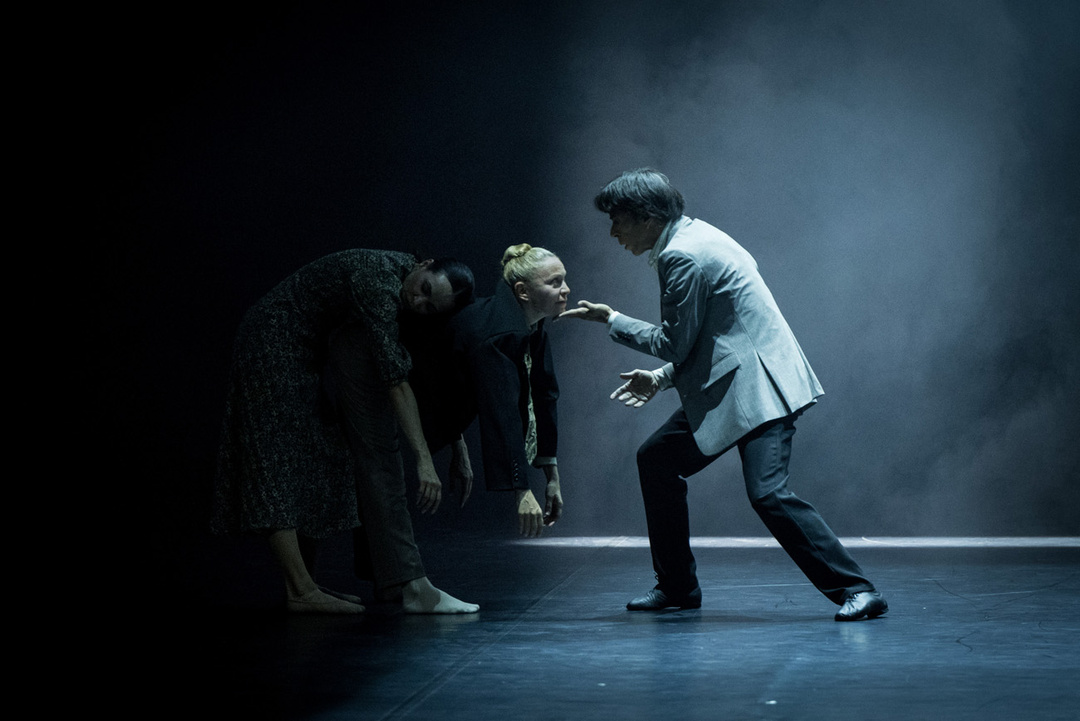
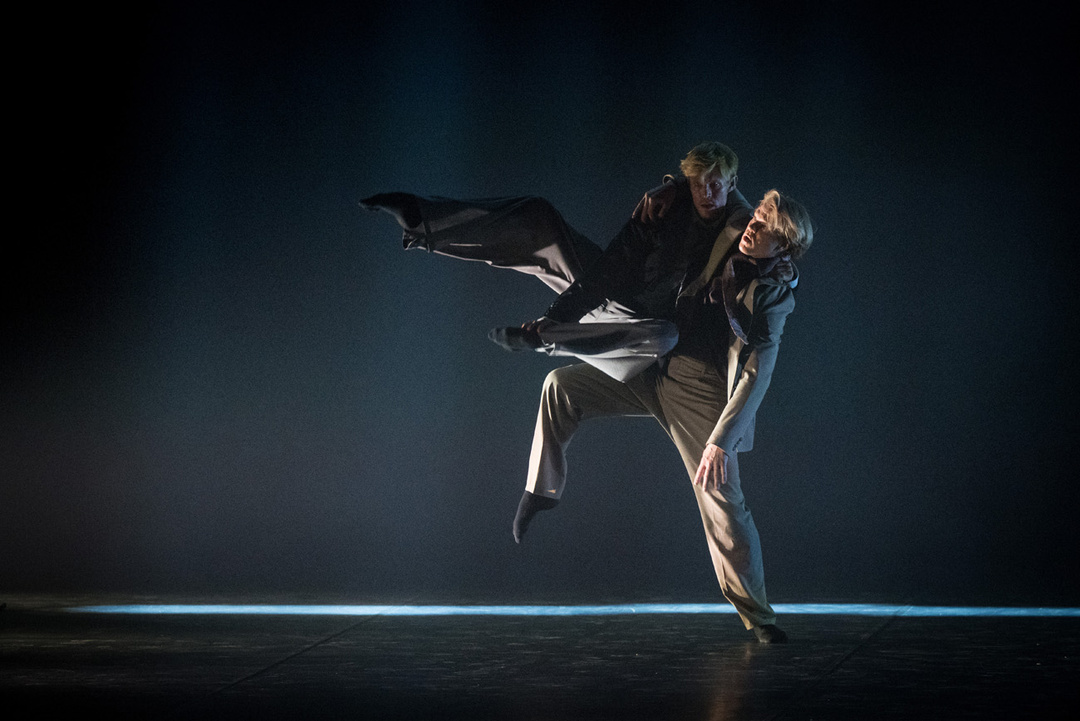
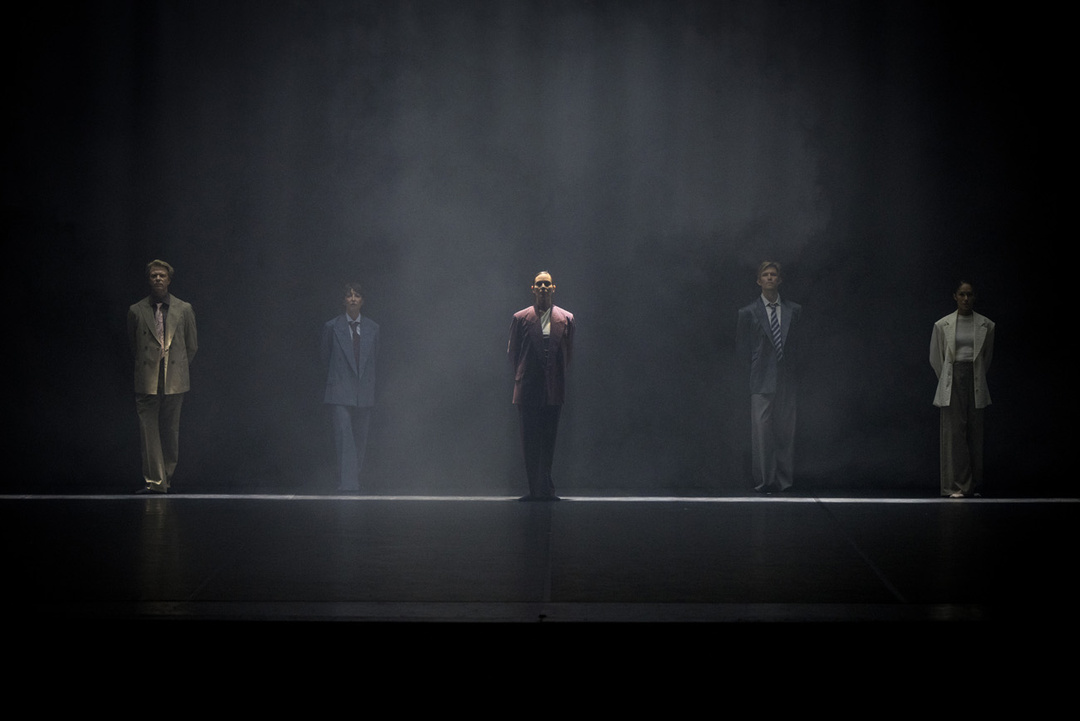
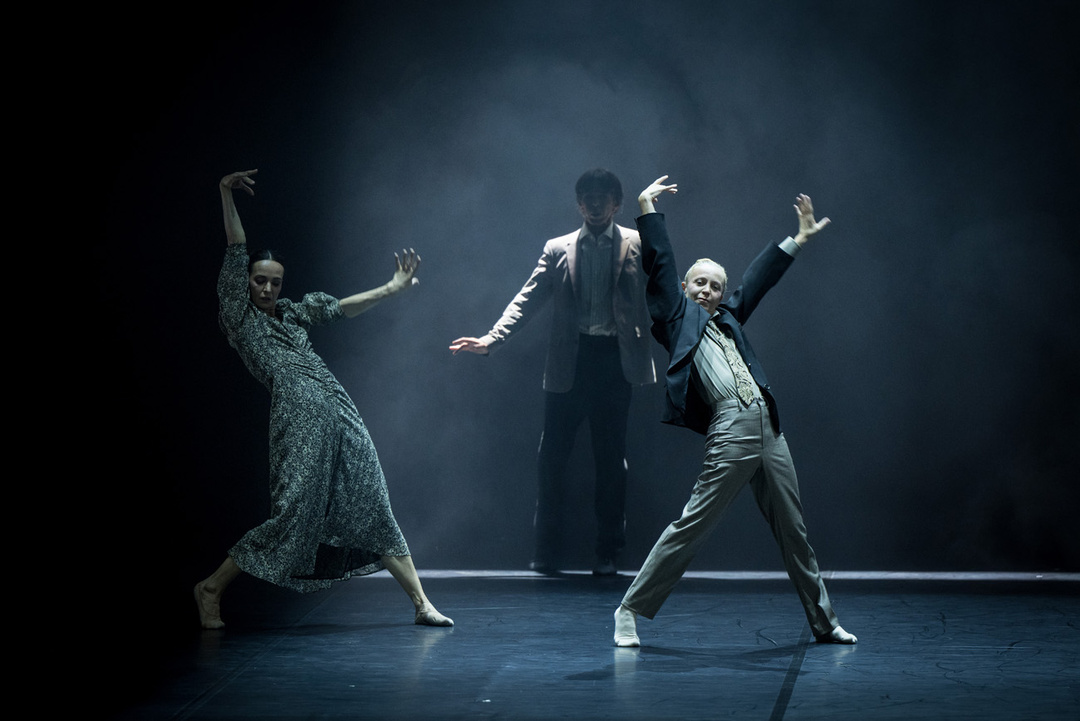
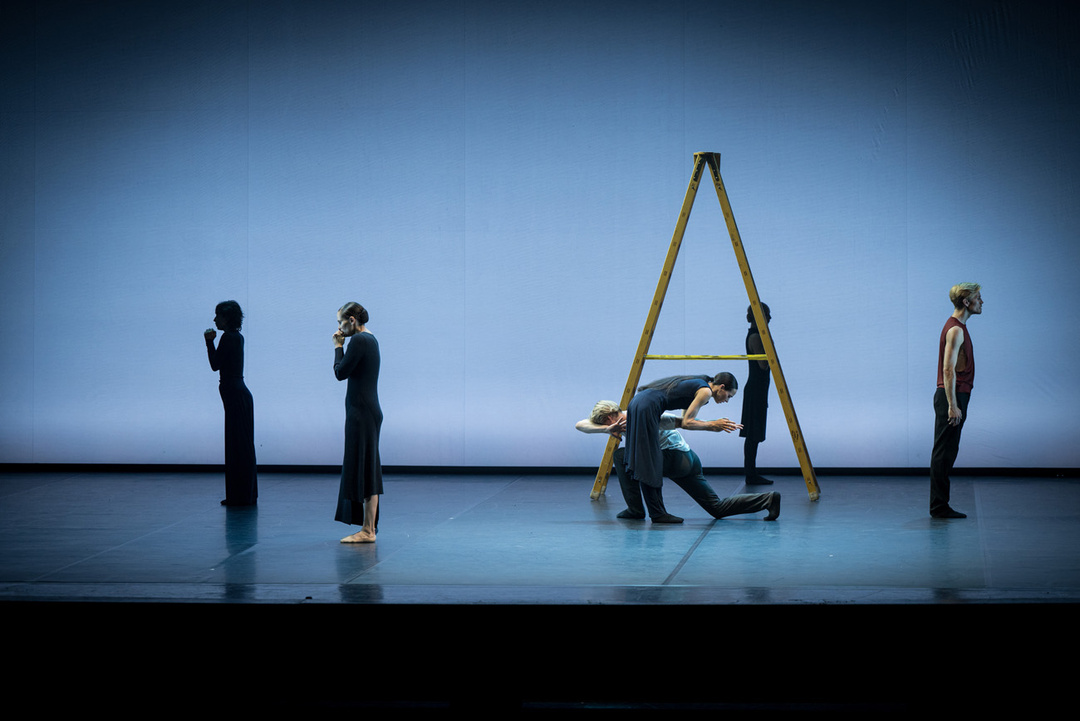
After the cinematic prelude, the stage square opens and yellowish cones of light sculpt five figures from the darkness. In relaxed suits with an 80s vibe—tailored by Boss—they conquer the stage’s corridors and open spaces. Sparse interactions and sweeping movements lead into an aesthetic laboratory that explores every facet of "obsession": narcissism, infatuation, possession, and the despair of emotional burnout. Until a pas de deux unfolds with such tenderness that it reaches out to the audience, drawing them in and entangling them in the obsession. The man, having just skirted the edge of an emotional abyss, finds solace and strength in his partner’s affection.
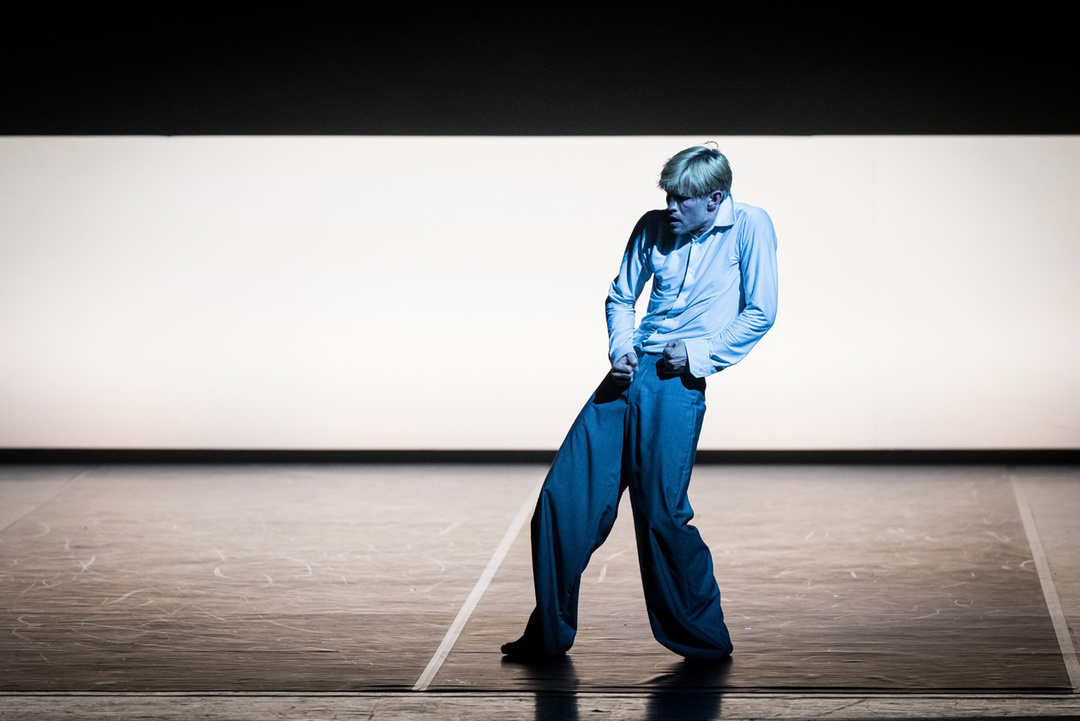
Silas Henriksen and Kayoko Everhart are the couple who provide the final visual embodiment of "Obsession," created by the van Opstal siblings. An extroverted tone defines this choreographic opening to the evening, which strings together sweeping arcs, intimate solos, and powerful tutti sequences. What immediately catches the eye—and sets this two-hour multi-tableau apart from the routine—is that the dancers carry their own histories and their own dance DNA with them.
The wealth of their experiences and the artistic imprints stored within their bodies flow into the work’s creation, resonating seamlessly throughout. Hans van Manen observes Igone de Jongh’s spirited elegance at close quarters. Kayoko Everhart and Silas Henriksen excel in contemporary styles reminiscent of Nederlands Dans Theater, while Marijn Rademaker blends the narrative grounding of his Stuttgart years with the more abstract approach he adopted at Amsterdam’s Het Nationale Ballet. Mara Galeazzi impresses as a dynamic, versatile performer with a Royal Ballet background, and Gil Roman as a dedicated heir to the Béjart legacy; meanwhile, Oleksandr Ryabko and Silvia Azzoni reveal, step by step, the artistic richness they have cultivated over decades with the Hamburg Ballet under John Neumeier. Yet one dancer stands out even within this already superb lineup.