
Close-Up
Techno Touch
Emanuel Gat continues his journey through classical music, fusing abstract dance with the shifting moods of Gustav Mahler’s Symphony No. 5
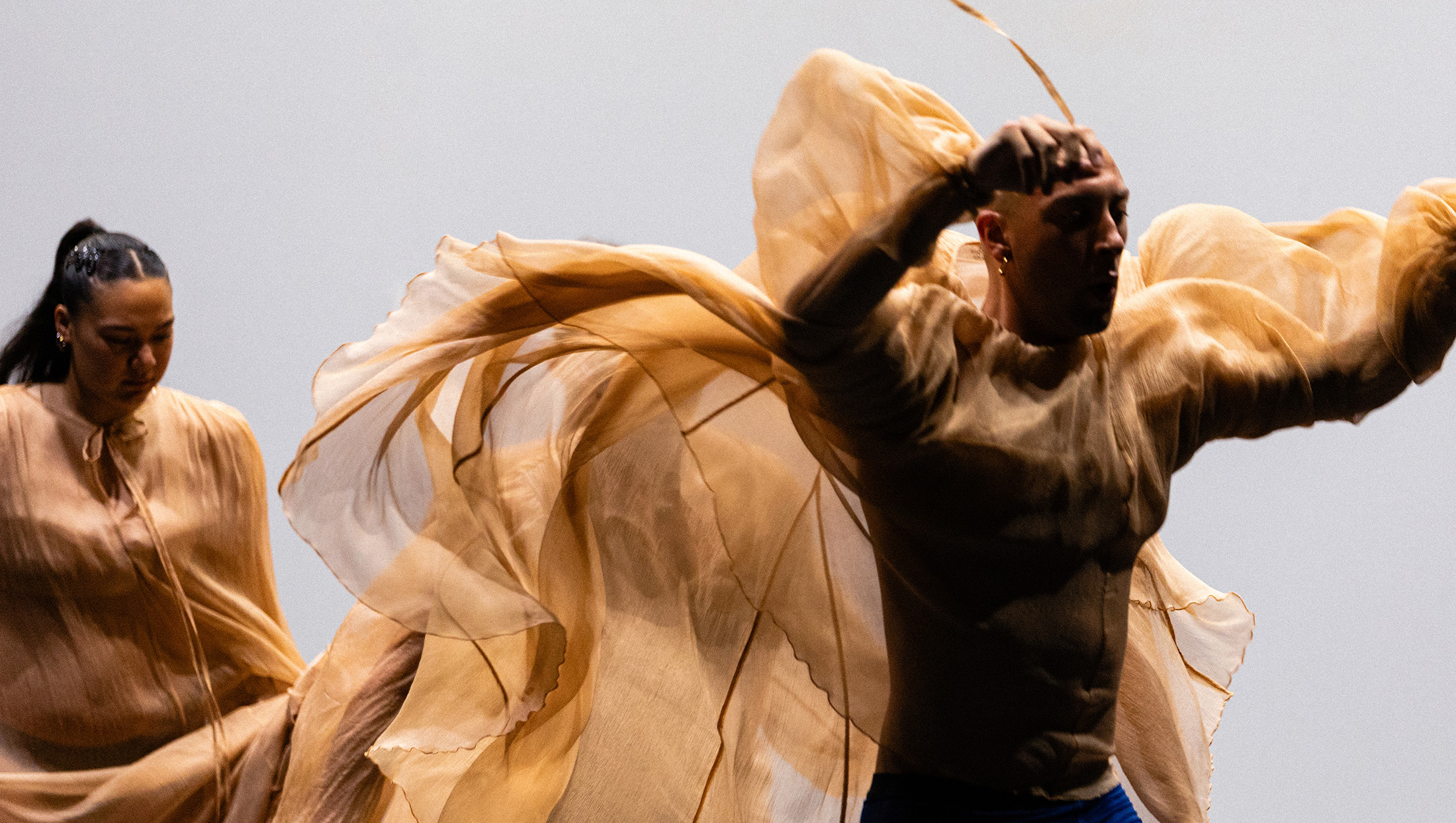
Cinq jours au soleil: Emanuel Gat promised five days of sun. That was before the premiere at Montpellier Danse. The choreographer can afford to have such a promise sound like a slip of the tongue. Instead of five days, weeks of sun and heat followed, after Gat’s new production had given the festival’s 46th edition a real boost of energy. This five-act epic set to Mahler’s Symphony No. 5 was the 13th piece he has premiered or presented there since 2008. Yet he is not part of the quartet now leading the festival into a new era. But he is a regular fixture there. And the new co-directors Jann Gallois, Dominique Hervieu, Pierre Martinez, and Hofesh Shechter presented an edition strongly rooted in the festival’s tradition. Will Gat continue to be part of it in the future?
Artistically, he is in the top tier, yet he remains somewhat low-key as a figurehead. He is far too comfortable in the role of an independent choreographer who is completely immersed in his art. Nevertheless, he was the one chosen to launch this new era. The fact that he chose Gustav Mahler points, in turn, to a certain continuity. "I suppose I’m in a Mahler phase right now," he explains. And, beyond that, in dialogue with the symphonic tradition.
In fact, Gat had created Abschied—a piece set to Das Lied von der Erde—for the Dresden Frankfurt Dance Company in 2025, performing first at the Bockenheimer Depot and subsequently at Hellerau. Time and again, he creates remarkable work set to classical music. His first foray into opera music came in 2021 with The Unexpected Return of Heaven and Earth. Regarding this, Gat explained that there are essentially only minor differences between opera—in this case, Puccini’s Tosca—and the pop music featured in his piece Lovetrain2020, which was choreographed to 1980s hits by Tears for Fears. This was followed in 2023 by Träume, set to Richard Wagner’s Wesendonck Lieder, for Salzburg. And all was well. But in 2024, things went spectacularly wrong: In Freedom Sonata, he juxtaposed Beethoven’s final sonata with Kanye West’s album The Life of Pablo. It was a daring move to explore the—undeniably brilliant—soundscapes of a rapper and composer diagnosed with bipolar disorder who had repeatedly marginalized himself through antisemitic outbursts. Even with Gat’s reputation, hardly any theater wanted to present the piece. Although West’s album contains no political messages, Gat ultimately had to admit that he could not simply sweep the former US presidential candidate’s hateful rants under the rug. One thing became clear: Gat is one of those choreographers who are also musicologists, but he is no political expert.
Symphonic Music for the Dance Floor?
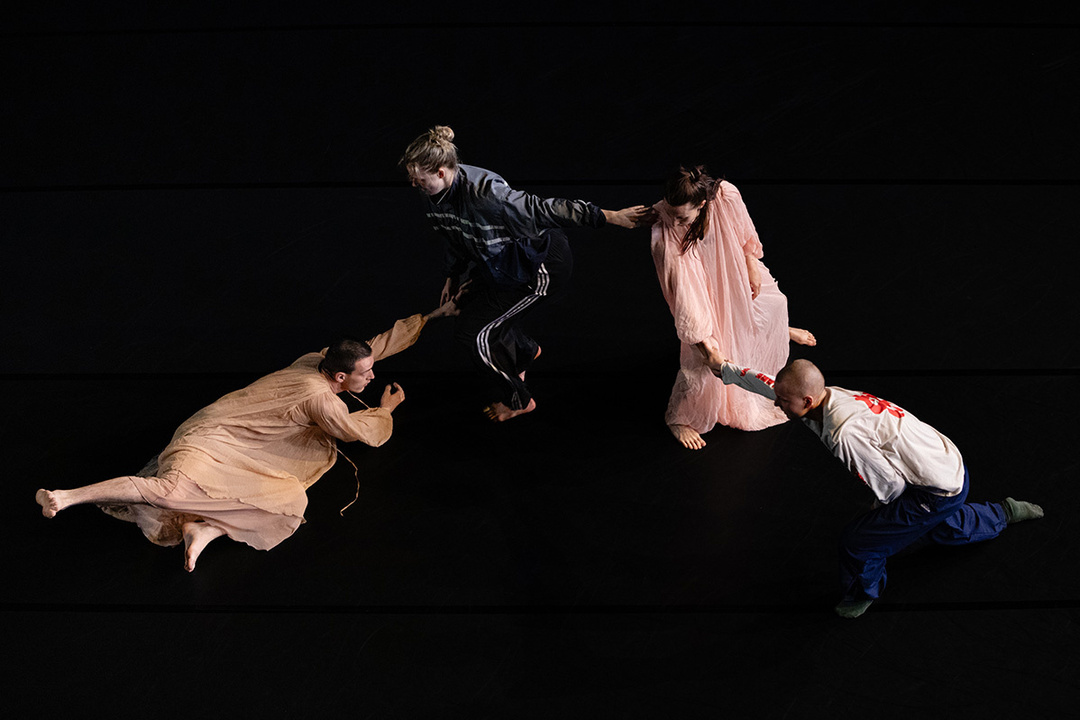
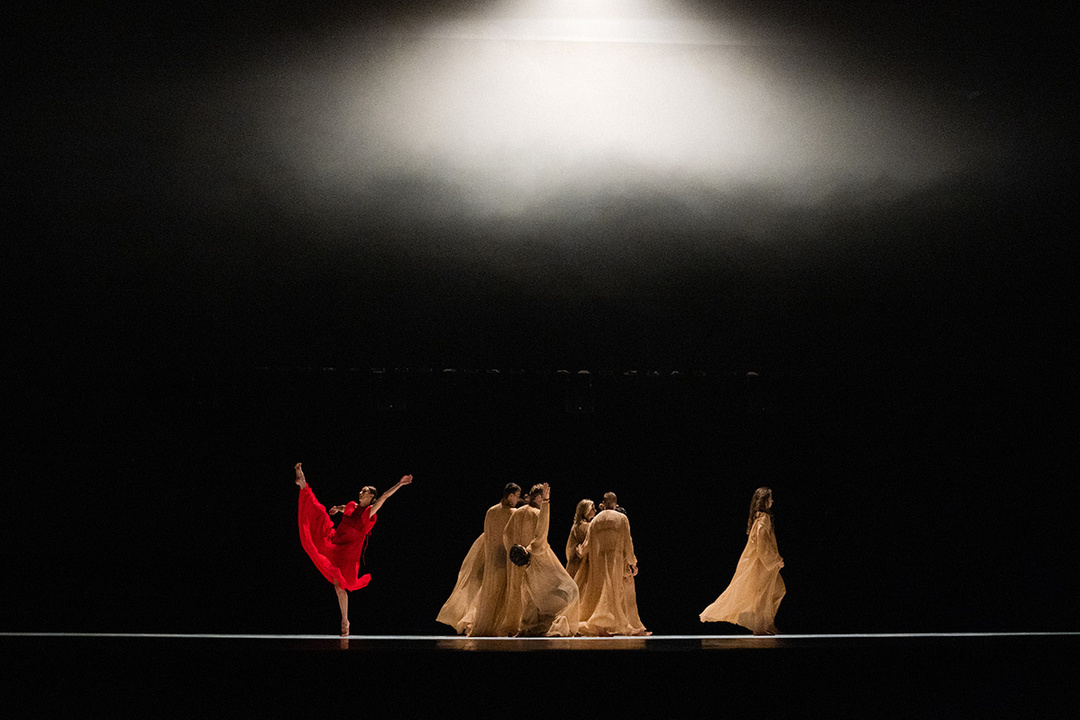
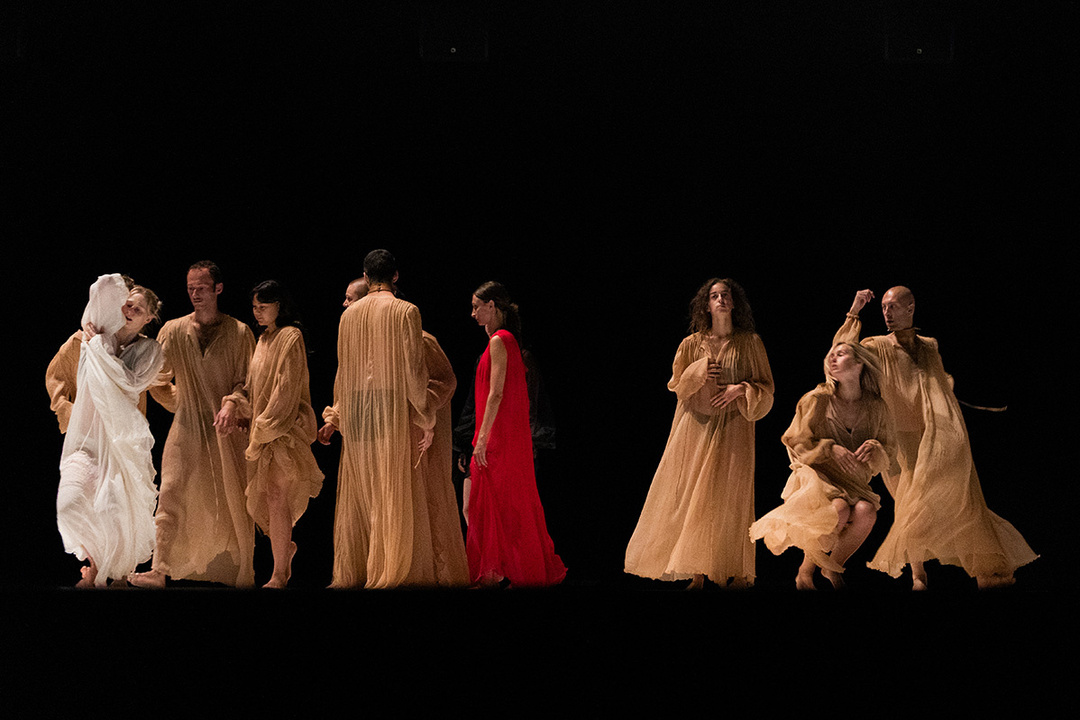
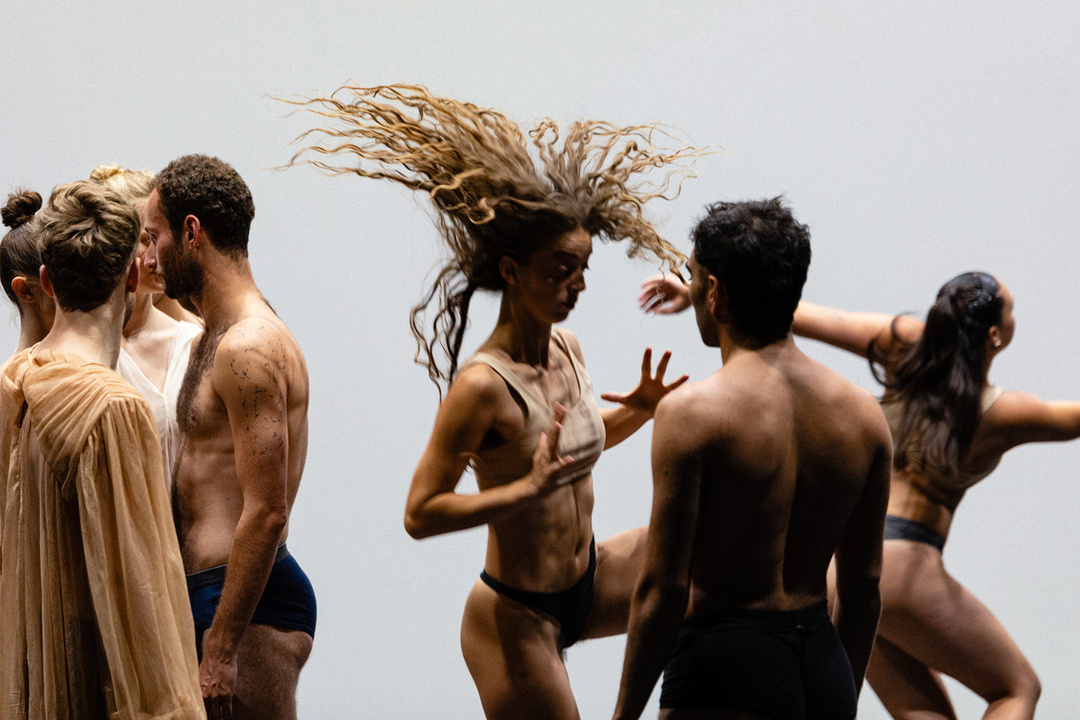
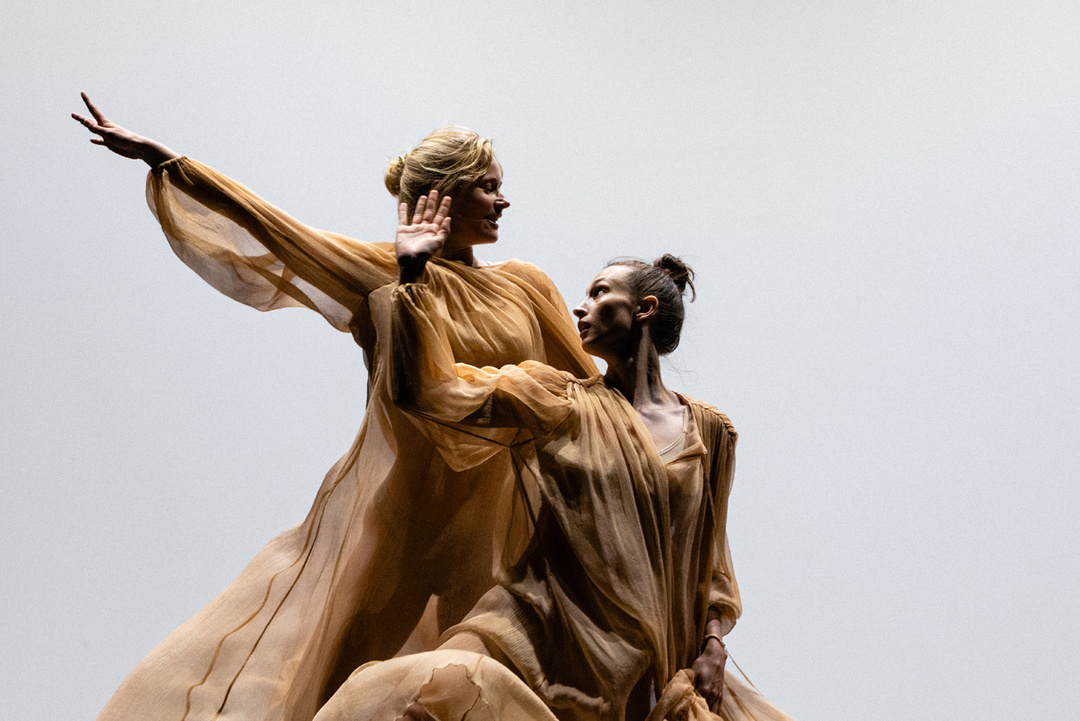
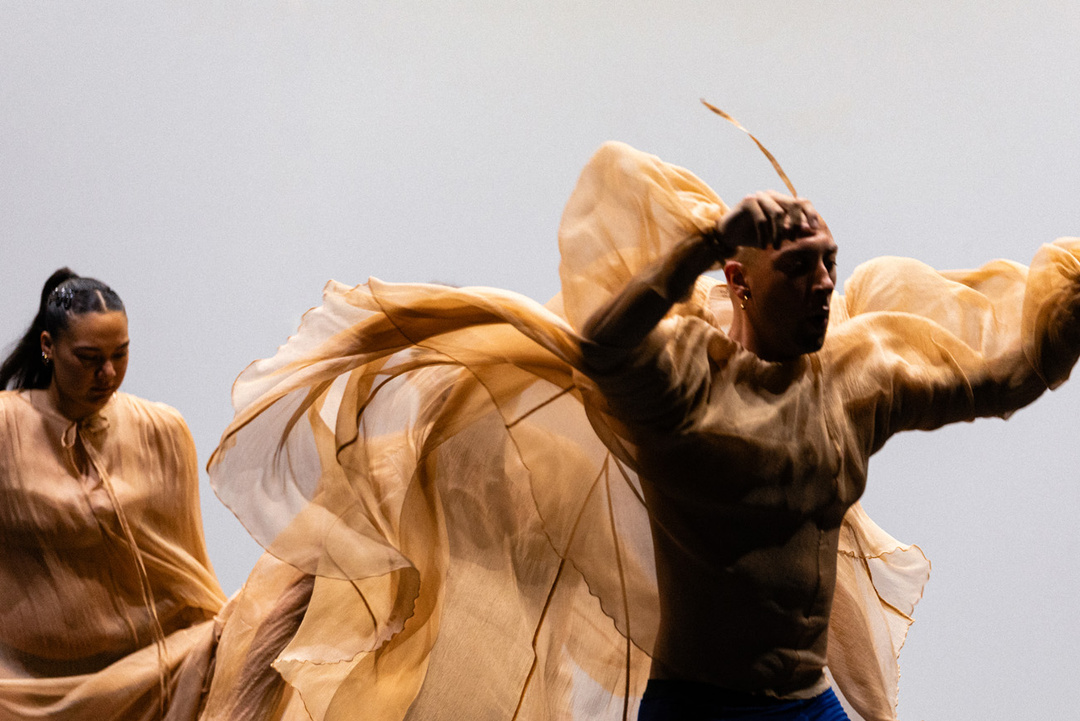
Now he turns to Mahler for grounding—a choice that can hardly go wrong, even though Gat once again avoids a conventional approach. Yet he manages to discover something unexpected in the music every time. One leaves Cinq jours au soleil with the feeling that Mahler is just as suited to the dance floor as techno. The dancers in his completely newly assembled company had no prior familiarity with Mahler’s music, Gat explains. But they quickly internalized its compatibility with club culture. Yet anyone who might surmise that Gat has succumbed to the currently popular concept of dance-floor choreography is sorely mistaken. At first, the figures actually evoke the impression of an opera production. They stand like a chorus at times, or step in and out of formation, dividing into soloists and a group whose diaphanous costumes create an aura that subtly blends the eroticism of concealment with the visual arts. It seems as though they might burst into song at any moment—even though Mahler’s Symphony No. 5 contains no vocal text whatsoever. Here, any potential for song originates in the body. And the body breaks free from all constraints when the twelve figures—in a turbulent display—fling their personal gestures into the fray to the music of Mahler’s rondo finale. It is an image born of improvisation; according to Gat, it will unfold differently each evening. The question is whether one would even notice. The web of movement is so overwhelming that one inevitably thinks of Boris Charmatz’s monumental work 10,000 gestes.
Exploring Structures
What makes Gat’s work different is that—throughout the entire piece, but especially in this section—the tempo, gesture, and intensity of each individual dancer forge a close, intimate bond with the instruments, tempos, and moods. The overwhelming wealth of physical imagery borders on the swirling turbulence of a solar storm. This is largely because, as always, Gat does not dictate specific movements to his company. During the creation of each piece, he acts more as an observer, offering feedback after rehearsals that empowers the dancers to build a living, functional structure. Gat describes himself as a "researcher" concerned solely with structures: "My aim isn't to tell a story or express my own feelings. If I want to do that, I talk to my wife or my children. I create pieces to understand and learn things." And if his work in the studio leads him to a deeper understanding of Mahler’s music, the dance invites us, in turn, to rediscover the avant-garde artist within the former director of the Wiener Hofoper.
Towards the end, the sun dazzles the audience as the performers reappear in airy, streaky costumes that seem almost fluid—performing dances of their own, as it were. The mood turns operatic once more, featuring a dying populace and a dramatic, positively murderous solo by Anaïs Van Caekenberghe. Emanuel Gat speaks of how deeply he was moved by the personal history behind the composition of Mahler’s Fifth Symphony. It was not the cinematic imagery associated with the Adagietto in Visconti’s Death in Venice that guided him, but rather Mahler’s near-death experience and his meeting and marriage with Alma Schindler. These elements underpin the various energies and moods found in both the Symphony No. 5 and Cinq jours au soleil; the two works illuminate one another.
Further performances in Martigues, Théâtre des Salins, 9 October; Ludwigsburg, Forum am Schlosspark, 17, 18 October; London, Sadler's Wells, 3, 4 November; Bruges, Concertgebouw, 6 November; Bolzano, Theater Comunale, 25-29 November; Cannes, Festival de Danse Cannes, 5 December; Vicenza, Teatro Comunale, 22 January; Avignon, Opera Grand Avignon, 20 February;