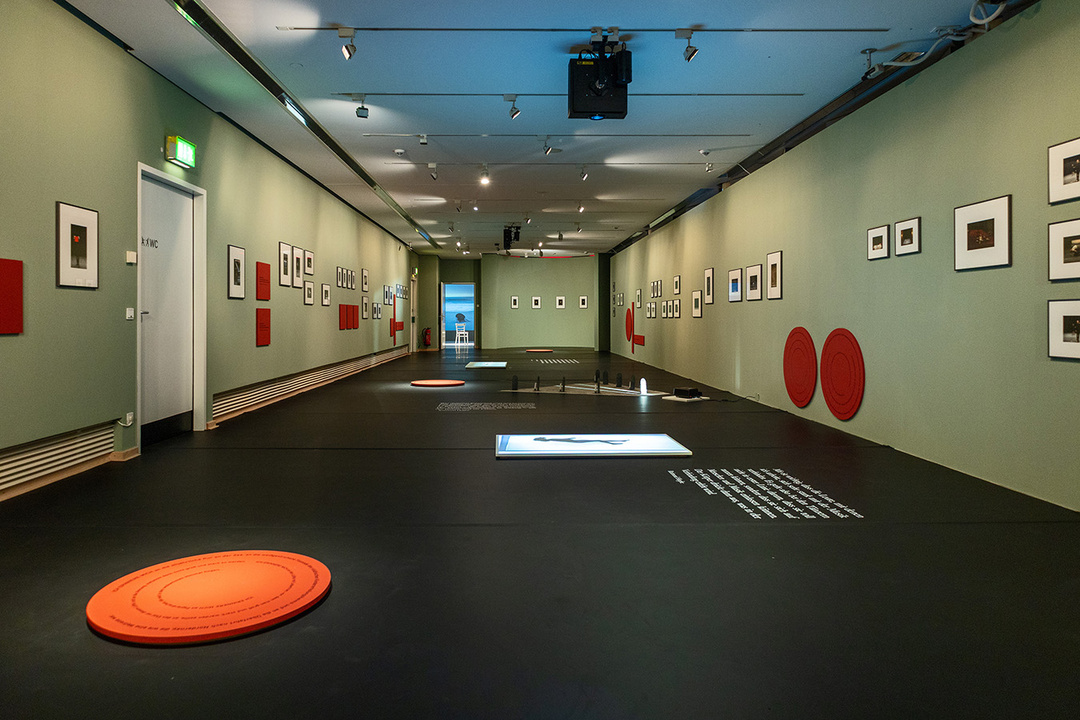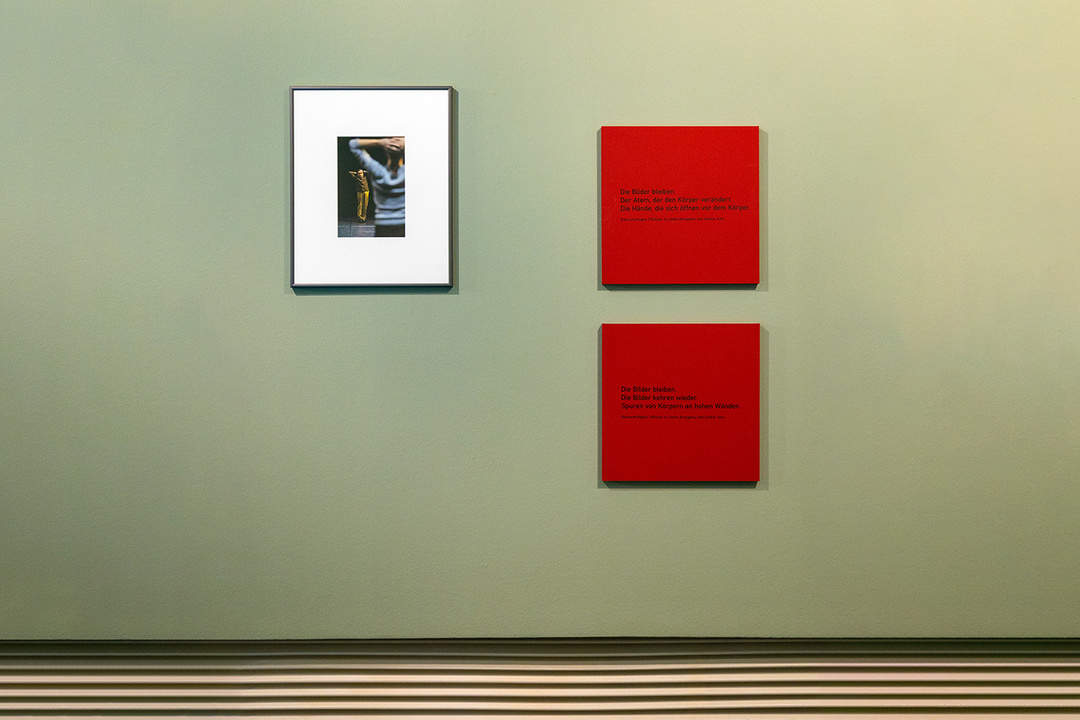
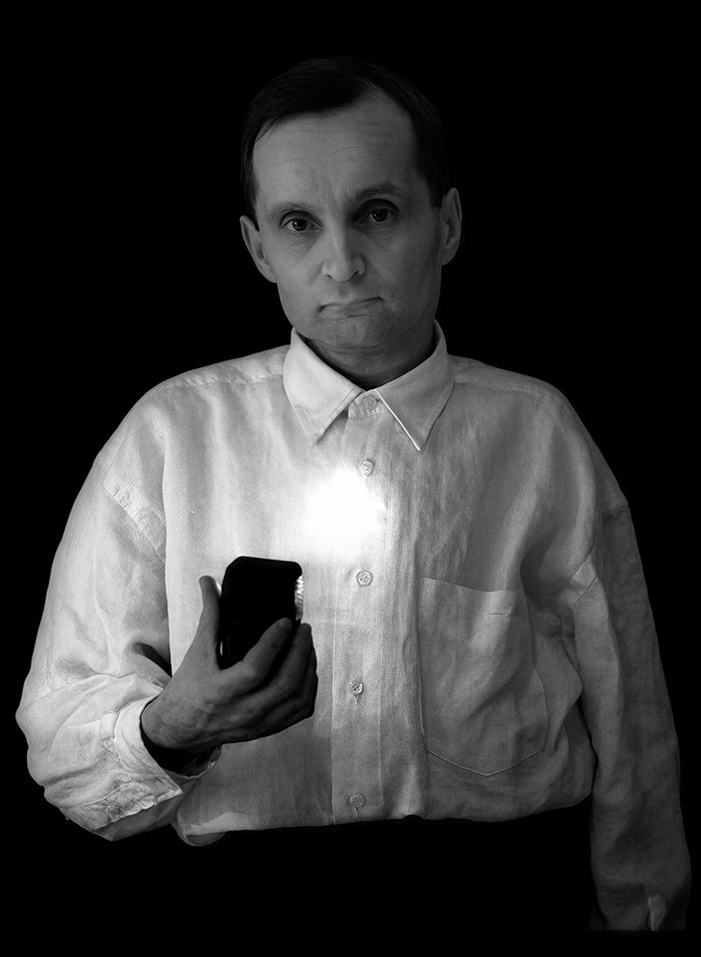
An exhibition? Anyone entering the small room at Tanzmuseum Köln pauses at the threshold, struck by a sense of bewilderment: the floor is black, inscribed with quotations in white lettering. A few objects are scattered throughout the space, while photographs line the walls, arranged in a strict, side-by-side sequence. Among them are red discs bearing fragments of memory—some poetic, others shocking. No, this is not an exhibition; it is a mise-en-scène, an aesthetic reenactment that echoes the quiet, evocative minimalism of Raimund Hoghe. It is a setting whose stillness and mysteries one instinctively wants to take in from a distance.
Inscrit – Schreiben mit dem Körper is the title, accompanied by the subtitle "An Exhibition for Raimund Hoghe." This tribute would have immensely pleased the choreographer, dancer, and journalist who passed away in 2021. He was celebrated in theaters across the globe, yet Germany struggled to embrace him. While the French Ministry of Culture named him an Officier de l’Ordre des Arts et des Lettres in 2019, he received the German Tanzpreis for lifetime achievement in his home country in 2020—just in time before his death on 14 May 2021. Hoghe himself attributed this reticence to Germany’s past. "I perform two or three times a year in Germany, but twenty times in France. There is a different kind of openness there toward me and my body. This has to do with German history—with the Nazi ideology regarding the ideal body. I fall outside the norm. People like me are viewed as victims; no one wants to see us in any other role, whether on the street or in life," he once explained to the author of this article in an interview. Hoghe’s experience: "When I walk across the street abroad, people look at me quite differently. More kindly, with acceptance. In France, there are also more short men in the public eye—take Nicolas Sarkozy, for instance."