
Mixed Media
CDs, Books, Streaming ...
CD of the Month
Sergei Rachmaninoff
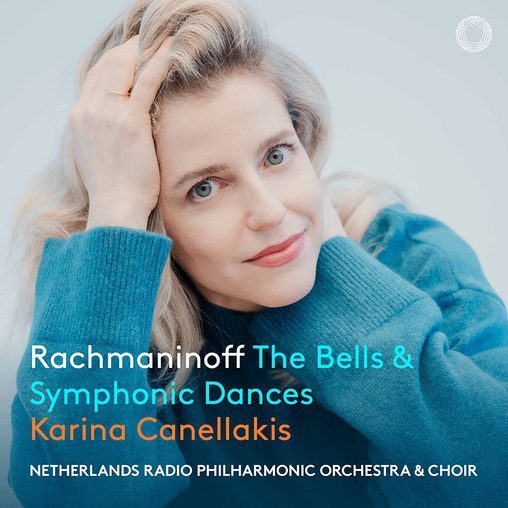
The Symphonic Dances, the last work Sergei Rachmaninoff composed, are, in his own view, his finest. Yet years earlier, he had said the very same thing about his choral symphony The Bells, written in Rome in 1913. And for the same reason: both are works of great intellectual depth, as rich in sonority as they are intricate in construction—as if, through his music, he could capture the full spectrum of human existence. For The Bells, he drew upon a poem by Edgar Allan Poe that had come to his attention in 1907 via a Russian adaptation. In the Symphonic Dances—originally conceived as a score for a ballet by Mikhail Fokine—the composer, then suffering from cancer, reflected on his own destiny; the work includes a quotation from his First Symphony and the “Dies irae” theme in its finale.
Karina Canellakis, an American with Greek-Russian roots, conducts both works with such evocative power—as if seeking to conjure up the spirit of Rachmaninoff within his own compositions. The Netherlands Radio Philharmonic Orchestra—joined for The Bells by the Radio Choir and three vocally adept soloists—follows its chief conductor wholeheartedly and sensitively into that sound world.
Hartmut Regitz
Sergei Rachmaninoff: The Bells & Symphonic Dances, Netherlands Radio Philharmonic Orchestra & Choir, Conductor: Karina Canellakis; www.pentatonemusic.com
Documentary
The Beauty of Ballroom
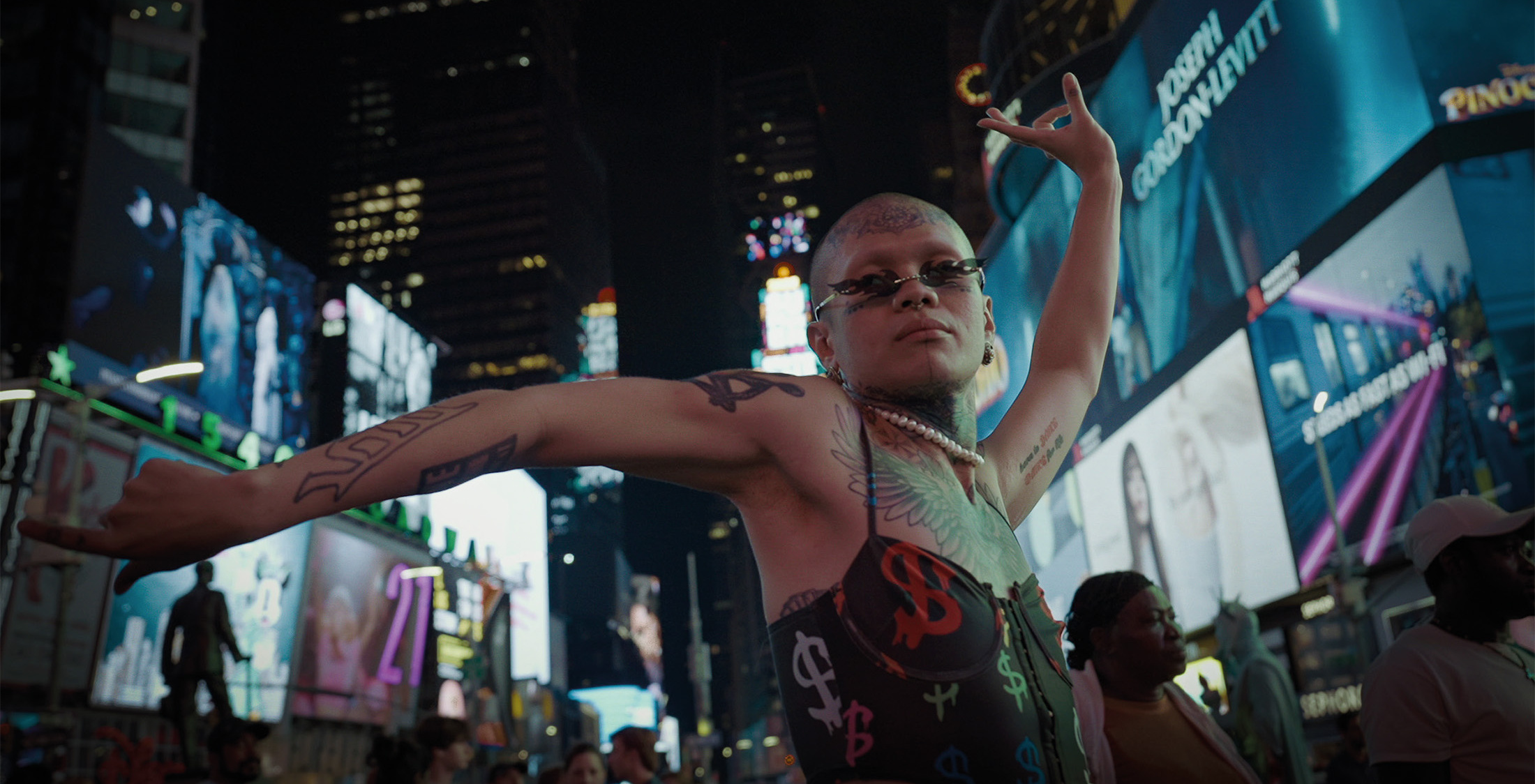
Chan Sze-Wei views ballroom culture from an unexpected perspective: the documentary The Beauty of Ballroom focuses not on the New York community, but on the ballroom boom in Southeast Asia over the past few years. Sze follows Teddy Oricci (Malaysia), Xyza Pinklady Mizrahi (Philippines), and Aurora Sun Labeija (Thailand) as they use voguing and ballroom for self-empowerment—while looking to their New York predecessors for inspiration. The film explores the respect required when adopting aesthetics from another culture to ensure the practice does not devolve into cultural appropriation.
New York is frequently cited as a positive reference point, with the pioneering work of figures like Crystal LaBeija in the early 1970s acknowledged as a way to find answers to the community's own questions: anti-queer discrimination, racism, and rejection by family are global issues, yet the lack of economic prospects is countered by the glamour and excess of the ballroom scene. Great emphasis is placed on the role of "Houses" as surrogate families—a commitment so deeply felt that one wonders whether the protagonists will truly achieve autonomy. But for the time being, simply not facing discrimination based on sexuality or skin color is a victory in itself. And looking breathtakingly cool while doing it—just like Teddy, Xyza, and Sun during their performances.
Falk Schreiber
In cinemas from 24 September; www.riseandshine-cinema.de
Background photo: Rise And Shine Cinema
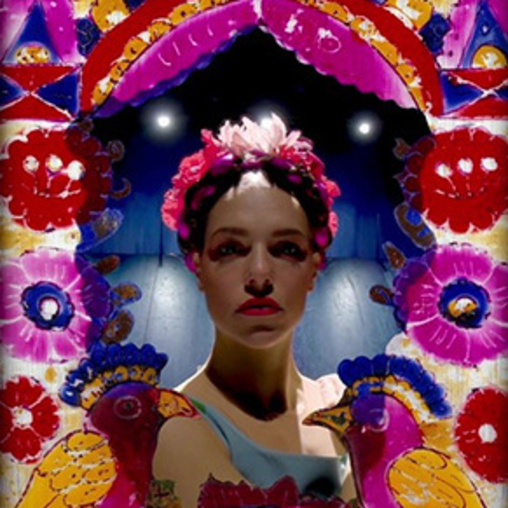
Photo: Benjamin Seuffert
VR
Frida
Since the pandemic, the Staatstheater Augsburg has been experimenting with VR formats—productions specifically adapted for virtual reality headsets (which remain bulky and heavy). In 2021, there was a dance encounter with a single-arm robot from market leader Kuka; now, Ballet Director Ricardo Fernando has adapted his Frida choreography for the digital realm. This means we stand at the edge of the front stage and let the action literally come towards us.
Martina Piacentino imbues the Mexican painter Frida Kahlo with an immense presence as shegazes deeply into our eyes at close range. Her unfaithful husband, Diego Rivera, and the unborn children Frida longed for so deeply—they, too, make powerful appearances. The scene that truly showcases the technology’s capabilities unfolds beneath a "white cube" style vault where Frida sits enthroned, portraying herself as a wounded doe. El venado herido (1946) appears to the right, while figures of flora and fauna dance before us, butterflies scatter to the left, and a gallery of roses grows at our feet. These are magical images we help create—for they only become visible when we turn our heads, allowing our gaze to wander through the virtual space. Ricardo Fernando has condensed the action for the Frida VR version into forty-five minutes—and that is as long as one would want to wear the headset. Apart from that: a lovely idea, a clever setting.
Dorion Weickmann
Clip
The Wave
Internationally successful since 2014, the British band Jungle—known for their groovy retro sound—has not only released hits like Back on 74. They have also simultaneously developed a distinctive visual language in their music videos: through single-take shots and funky choreography, situational stories unfold that, over the course of an album, coalesce into a dance film. The setting for the video for the new single The Wave: a remote gas station at night, ten dancers in the glow of car headlights. The camera pans—without a cut—between shifting group formations and individual solos; feet move with electrifying speed across the dusty ground, slowing for a moment in anticipation of the beat. That beat—almost languidly laid-back—runs through the song while Lydia Kitto’s breathy voice sings, "We’ve got it all / Don’t you worry." The fact that the music remains almost monotonous makes Will West’s choreography all the more compelling to watch: It engages with the sound both effortlessly and wittily—until the guitar playing can be heard in the dancers’ steps and the vocals in the waves rippling through their bodies. The Wave video is an audiovisual whole and, at the same time, a harbinger of the new album Sunshine, which is set for release in August—and which might ultimately result in another dance film.
Pauline Michel
Clip
Tiler Peck
The music video for Olivia Rodrigo’s Stupid Song is a massive hit—not least thanks to the choreography and performance by Tiler Peck, a principal dancer with the New York City Ballet (NYCB). In fact, ballet is currently enjoying a major resurgence in the pop world, thanks to shows by singers like Adéla and Rosalía (the latter even having her live performance choreographed by the collective (LA)HORDE, who have directed the Ballet National de Marseille since 2019.
For the video for Stupid Song—which revolves around the state of being in love as a form of madness, longing, and loss of control—Peck and seven other NYCB dancers danced through New York in the early morning. They appear as "sparks in the dark," accompanying Rodrigo while wearing pink tutus. Choreographed at 1.6 times the speed of the original track, the moves are played back in slow motion. The images are slightly blurred, meaning the choreography is never captured in its entirety, but rather glimpsed in brief camera shots. A growing loss of control is reflected in movements that shift from delicate and composed to a mosh-pit style, as hair comes loose from buns. The visual language may not be surprising, but seeing Central Park transformed into a stage for professional ballerinas is certainly not an everyday occurrence.
Helena Bogner
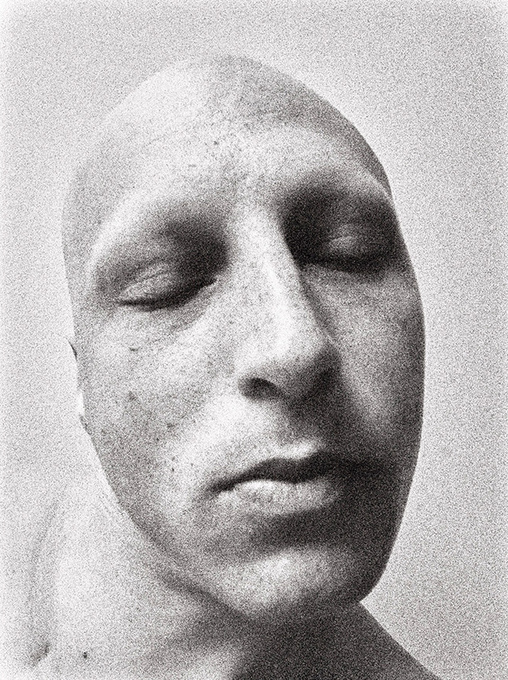
Photo: Jacob Jonas
Memoir
Jacob Jonas
In 2024, I met choreographer Jacob Jonas during a residency in Italy. He was developing To Begin Again, his first creation after cancer. I remember the precision of his voice. “It is a privilege to be here with you now,” he told me. I asked about the future. He replied: ”Tomorrow’s sunrise.” His new book Cemented Beauty returns me to that exchange. At age 30, he was diagnosed with stage 4 diffuse large B-cell non-Hodgkin’s lymphoma, triggered by a reaction to medication for Crohn’s disease. The odds were nine in 10,000. He became the exception. This memoir refuses to make recovery heroic. It records what severe illness does to one’s identity, time, desire, and control. Journal entries meet black-and-white images, forming a personal diary. His prose is unadorned, almost exposed. Each page appears shaped by someone conserving energy while trying to remain present.
Most pictures are self-portraits. They follow physical change without disguising its damage. Eyebrows vanish as a wound bleeds across bruised flesh. A tree sheds leaves. The ocean offers distance. Some frames look composed, revealing a performer who knows how to hold a pose. The rest feel immediate, harrowing, absurd or unexpectedly funny. Parents, companions, clinicians and his dog enter the sequence, yet no company can share the ordeal. I was drawn to the moments where he smiles. The expression comes from somewhere deeper than reassurance, especially beside the animal he once associated with freedom in our conversation.
Halfway through the volume, “pain” occupies a spread in the largest type used anywhere. The gesture is blunt, but it works. Everything surrounding it has been restrained, so the word strikes like an interruption. Known for bringing dance into dialogue with other disciplines and wider communities, Jonas yields to enforced stillness. An artist accustomed to directing bodies must watch his own become unfamiliar. He learns the cost of forcing momentum. Reading the book, I kept thinking of that answer. It no longer sounded optimistic. It turned literal: survival reduced to the next morning. There is no polished lesson, only a candid account of personhood under reconstruction. Jacob, you are not alone.
Nicolas Vamvouklis
Jacob Jonas: Cemented Beauty. A Cancer Story; www.atelier-editions.com

Satire
Opernball
Anyone calling themselves Stefanie Sargnagel (coffin nail) raises expectations. And the Viennese author lives up to them—even though she does not actually lay the Vienna Opera Ball to rest in her book. Invited by the organizing committee for a "visit among the elite," she seizes the opportunity to take a critical look. She is accompaniedby a well-read museum attendantwho repeatedly interjects his knowledge of the waltz, and by an anarchistic waitress who, in passing, shortens the earlobes—pendants and all—of a few dignitaries.
For no one escapes unscathed here—sometimes quite literally drawing blood. The men, who in Sargnagel’s eyes look like "mutated poultry," as well as the ladies who had their "worn-out tissue stitched back up according to the latest cuts" specifically for the gala event. The debutantes, too, who—despite all outward youthfulness—can barely conceal their inner decrepitude. And, of course, the ballet, although the reality is quite the opposite. Spanning barely 80 pages All of this makes for a read that is ruthlessly observant and laced with biting wit. Yet, for all Stefanie Sargnagel’s satirical approach: after reading, one feels an almost masochistic urge to experience the Opera Ball firsthand. No problem: advance ticket sales for 2027 have just begun.
Hartmut Regitz
Stefanie Sargnagel: Opernball. Zu Besuch bei der Hautevolee; www.rowohlt.de