
In Practice
Helicopters and Angels
How does a man become a good partner, what can go wrong in the process (spoiler: everything), and why are there hardly any lifts in contemporary ballet anymore?
"Lift me! Lift me!" chirps the over-the-top prima ballerina in the musical On Your Toes—for which George Balanchine created the choreography on Broadway in 1936. The musical pokes fun at every ballet cliché, including lifts that collapse. The men present the ladies—this constitutes the technical and, in a sense, moral foundation of partnered ballet dancing; it ranges from guided turns and overhead lifts to the contortion of the female form seen in the post-Forsythe era. The pas de deux—dancing as a pair—is indispensable for depicting interpersonal relationships in narrative ballets, yet it is also an essential stylistic device in modern classical ballet, from Hans van Manen and Jiří Kylián to Nacho Duato. Beyond that, its trail goes cold.
Lifts and Injuries
It all began quite tamely in Russia, relatively close to the ground. "You don't show the Tsar your crotch," Alexei Ratmansky once explained during a historical reconstruction. It was only with the advent of Soviet ballet that we began to be thrilled not just by virtuosic jumps and pirouettes, but also by daring lifts—Kitri held aloft one-handed for as long as possible in Don Quixote, the acrobatic shoulder-based formations in Spartacus, or Tatiana soaring blissfully high in the Mirror Pas de Deux from John Cranko’s Onegin. Then there are gala pieces like Spring Waters, in which the male dancer carries the ballerina offstage one-handed while running. At the Stuttgart Ballet—a company made a stronghold of complex
partnering by John Cranko—two cheerful Canadians explain how to safely master such difficult lifts and the risks of injury involved. Anton Tcherny has been dancing there for three years; he arrived from the Académie Princesse Grace in Monaco and is currently settling into corps de ballet roles that feature an unusually high number of lifts, such as in Glen Tetley’s Voluntaries. Jason Reilly will celebrate his 30th season with the company next year and has—in the words of his admiring colleague—"partnered half the ballerinas under the sun!"
Around the age of 13, their training begins to involve dancing with a partner of the opposite sex. "First, you learn where their balance lies," explains Reilly. "We move the girls sideways, forwards, and backwards to understand their center of gravity. We spend a month or two just learning this balancing—but with different girls." Then come the sustained arabesques and promenades—the pas de deux par terre, as it is known in French terminology. Reilly started performing actual lifts right away because he was already practicing with a more advanced class. And no one looked out for the backs of teenagers who hadn't yet finished growing? "In the early 1990s, nobody paid attention to anything," he laughs. Anton Tcherny attended Canada’s National Ballet School two decades later and confirms that student safety is a major priority today.
The Magic Word: Coordination
Reilly didn’t just rehearse with girls her own age; she also held a pas de deux class with ten- and eleven-year-olds. This way, they lost their fear of lifts, and—because they were lighter—one could "do the tricks" with them, but above all, learn coordination. Which brings us to the magic word of partnering: coordination. A dancer must understand his own body’s center of gravity and balance, and synchronize his limbs and every movement with the music; it is a matter of focus and a sense of spatial awareness. And all of this must also be managed with the partner in mind. "If you don't engage your whole body in this coordination, you burn out very quickly," says Reilly. Of course, physical attributes play a role, too: "I’m fortunate enough to have very long arms, which allows me to partner women who are taller than I am." Ultimately—and both dancers fully agree on this—partnering is something learned solely through experience.
Anton Tcherny observes closely in the ballet studio: "How does the dancer look at his partner? When do they go into a plié? How does he use his legs? How does he coordinate extending his arms during an overhead lift? There are so many tiny details. You get it wrong far more often than you get it right. Coaching is so valuable. I’m so glad to have people like Jason who spot problems and show me the solutions—not just him, but many others, too." As a beginner, it’s good to find a partner outside of rehearsals and try everything out with her—working directly with a real partner—so that after three to five years in the company, you become a reliable partner. Lifting weights in the studio isn't actually the most crucial factor.
"You can see a lot more from the outside than when you’re in the thick of the situation; sometimes you’re so intensely focused that you don’t notice things," says Coach Reilly. "Maybe the girl is leaning too far forward during the turn, or too far back, or her hips are too open in that position. The ballerinas sometimes spot it too and say, 'Hey, your hands are way too high up on her ribs! You’re supposed to be holding her hips, not her breasts.' That can end badly—the ribs are delicate. " The so-called 'floating ribs'—the bottom two—are connected only to the spine, not to the sternum. "That’s exactly where we sometimes have to hold or catch them. We literally lift other people around for eight hours a day; sometimes you lose track of your own strength! If we catch someone really hard, we might not realize the damage we could be causing."
A Team Sport
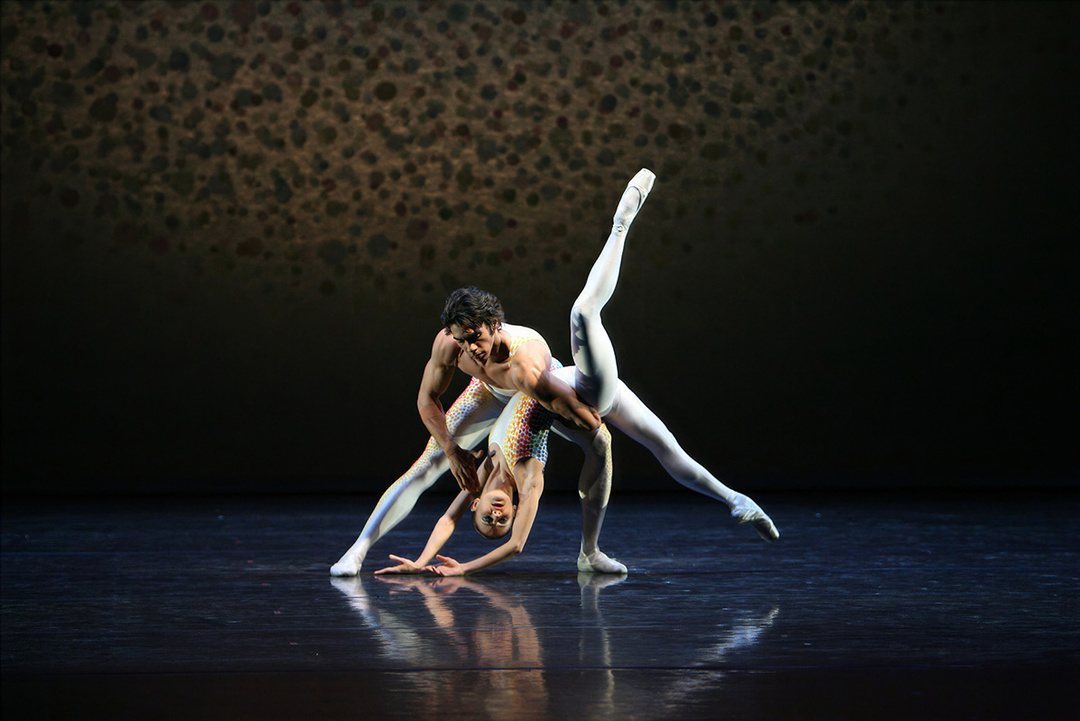
Men suffer injuries too; Reilly knows all about that. He once dislocated his shoulder because his partner didn't feel secure up there. "She moved, and it simply tore my shoulder apart. If she leans even slightly in the wrong direction, the shoulder gives way, and suddenly you can no longer hold those 48 or 50 kilos. There are so many small muscles in the back and shoulders; if one tears, the others say, 'Hey, we aren't doing this alone,' and they tear too. It’s a team sport. The forearms, biceps, shoulders, core, and back—they’re all involved in a lift like that." In the final pas de deux of The Taming of the Shrew, the woman sits backwards on his shoulder, then has to jump up slightly, thread herself through, and land sitting the other way around: "You’ve got 45 kilos jumping around on your neck." He has strained muscles doing that, too. He once broke his thumb because his partner was afraid of the lift and hesitated. When he tosses a girl into the air, he is throwing 50 kilos, but due to gravity, the impact hits him with the force of about 100 kilos. Jason Reilly was 1.83 meters tall when he arrived in Stuttgart; now he is 1.78 meters because, after nearly 30 years of ballet, his spine has "practically fused together," as he puts it. He says he feels no pain.
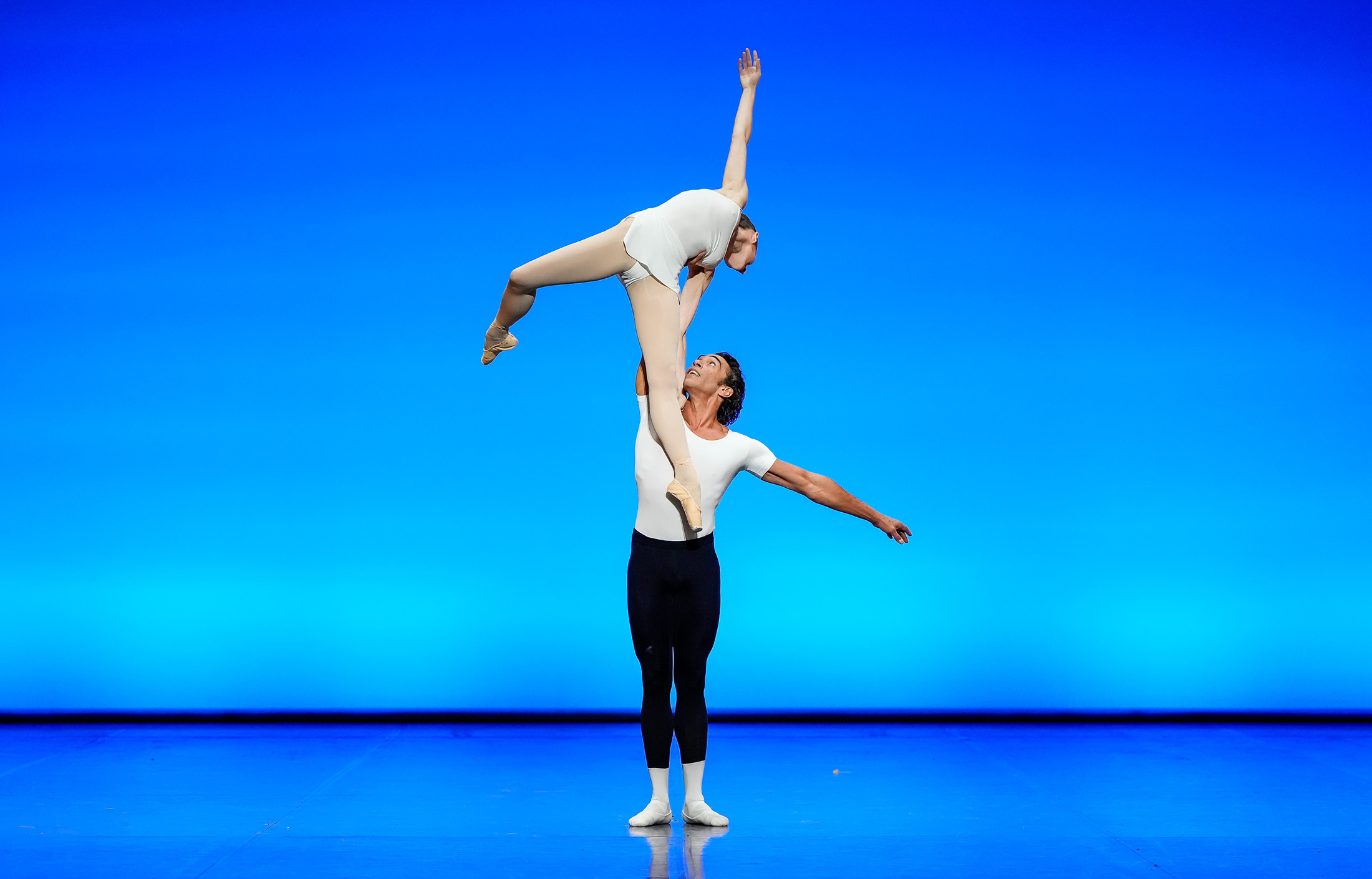
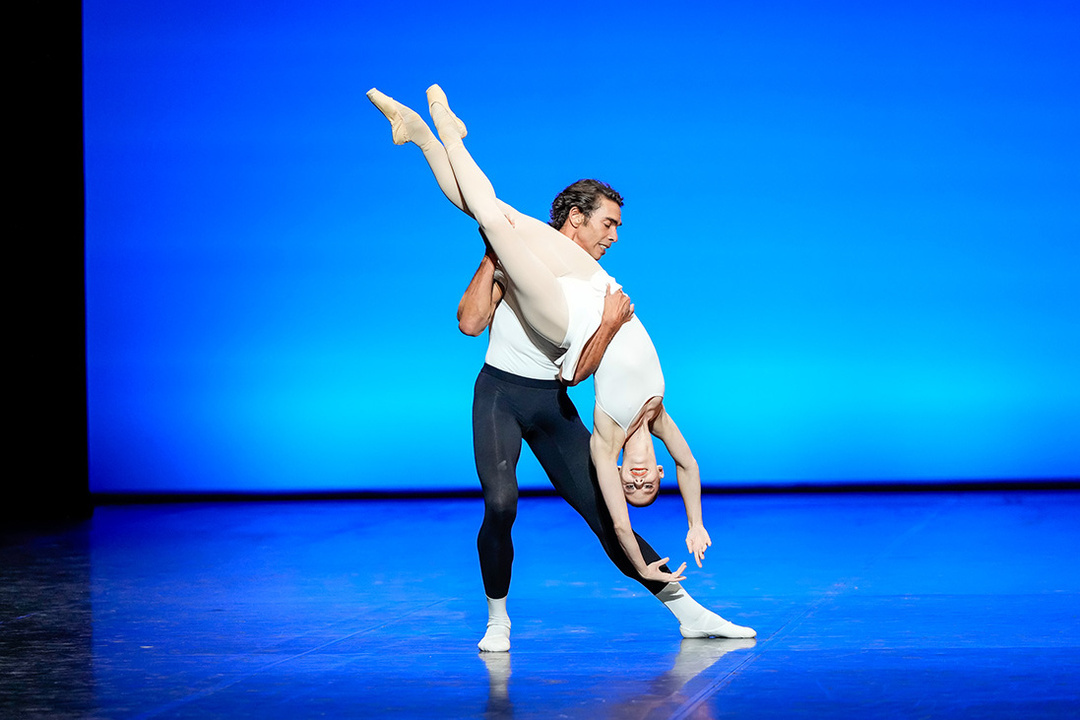
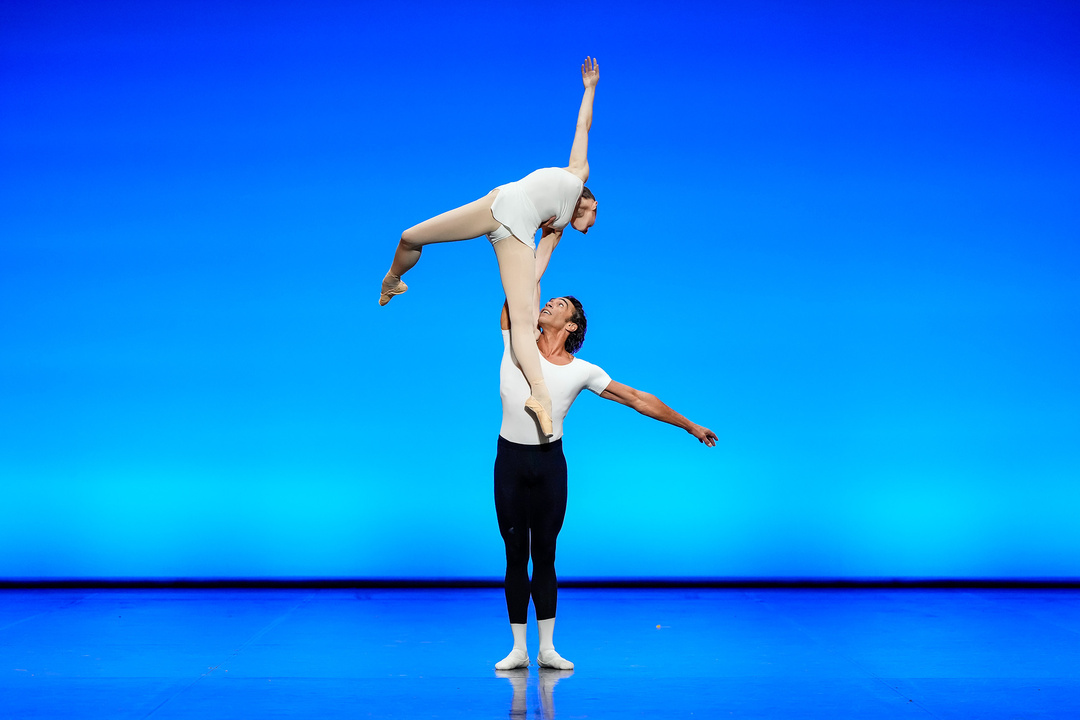
Communication is just as important as coordination, explains Reilly: "It’s a partnership, and we have to figure it out together. His weight, his balance, and the length of his arms and legs will be different every time, and she has to figure it out for herself. A ballerina’s height can make a world of difference for her partner." Ideal proportions exist when she is en pointe and looking him straight in the eye. For the truly difficult lifts, French ballet terminology no longer has any terms at all; they all bear English names—such as the Helicopter Lift, Torch Lift, or Angel Lift—including the famous lift from Giselle in which she hovers above him, flat as an ironing board.
But why do hardly any of the modern choreographers currently in vogue—from Marcos Morau, Crystal Pite, Akram Khan, and Sidi Larbi Cherkaoui to Marco Goecke—incorporate lifts into their pieces anymore? Reilly: "Everyone works within their comfort zone; perhaps they never did them as dancers." William Forsythe, for instance, choreographed a great deal of partnering for In the Middle, Somewhat Elevated, but it was all par terre—ground-based—with practically no lifts. With Wayne McGregor, it is more a matter of wrapping around the body, a "manipulation" of the female partner, as the British like to describe it. David Dawson, however, is a choreographer who loves lifts and really challenges his dancers—something Jason Reilly, still enthusiastic after thirty years, appreciates: "That’s exactly what we want! When I step onto the stage, I want to show something difficult. That’s what I love so much about partnering: it’s never the same. In class, the barre is the same every day, but if I rehearse with a different woman than the day before, the sensation is immediately new: different legs, different balance, different weight, different shoes. Does her costume have a bow? Is her tutu so huge that I can’t see her legs? My job is to figure out all those little details that no one out there sees."