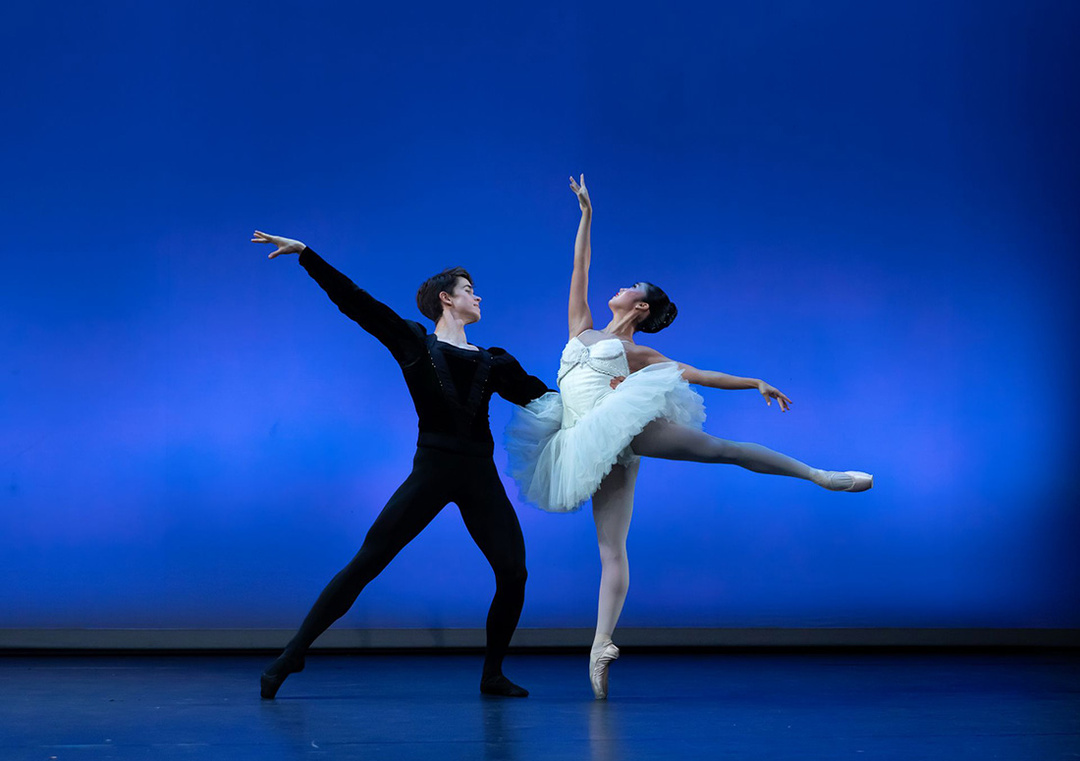
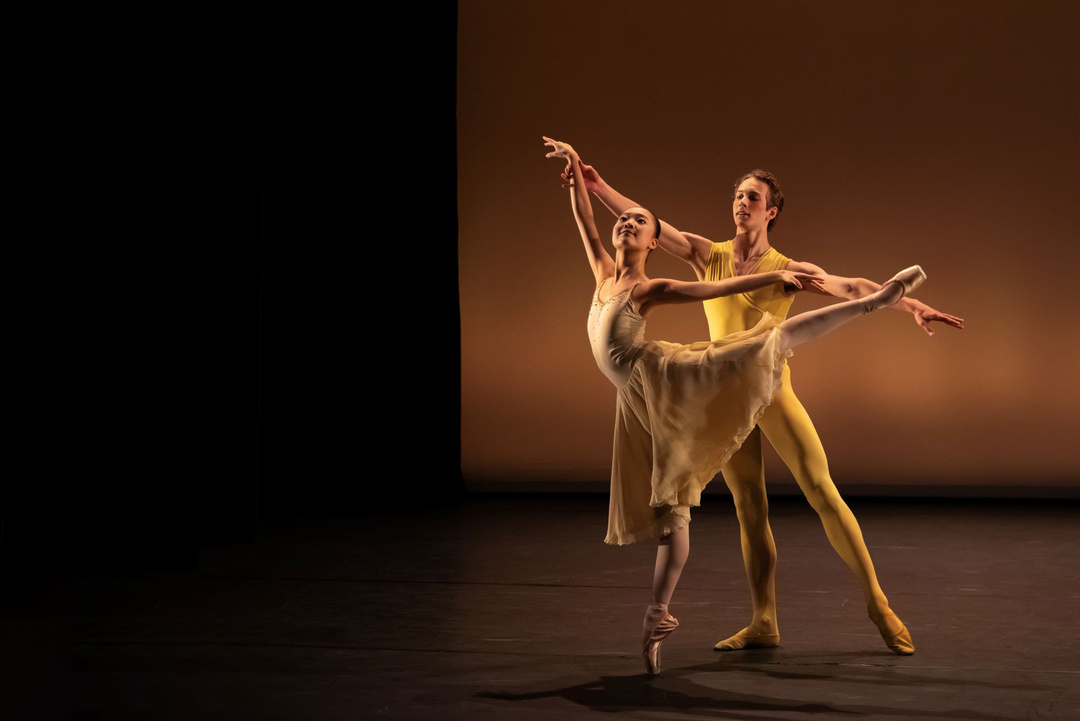
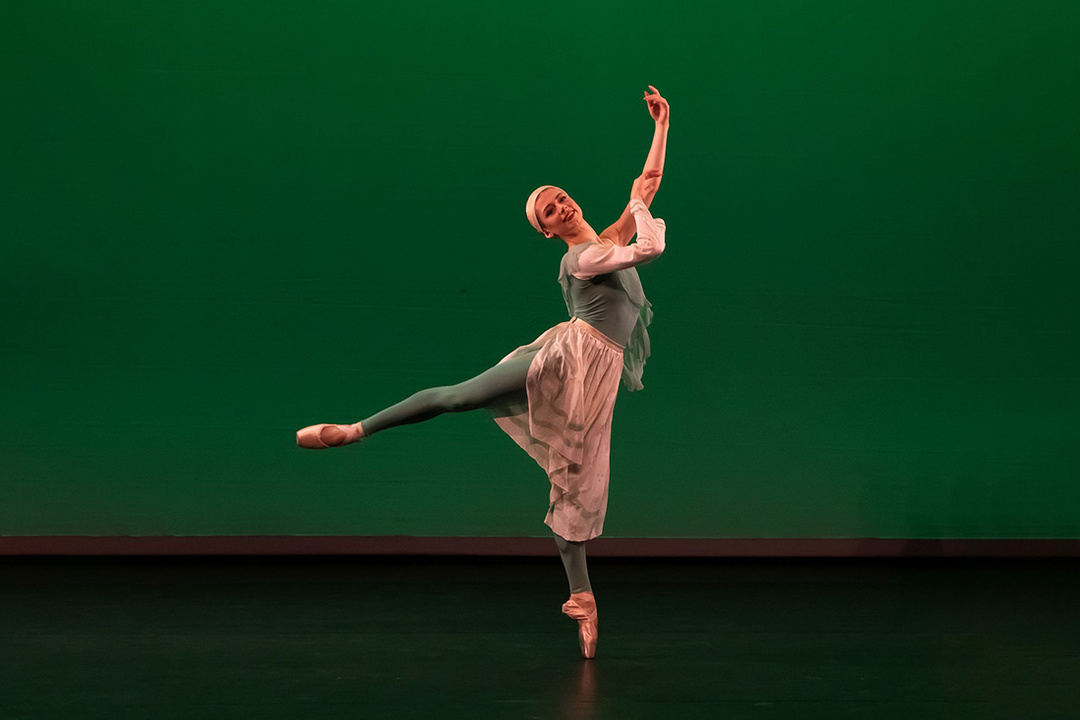
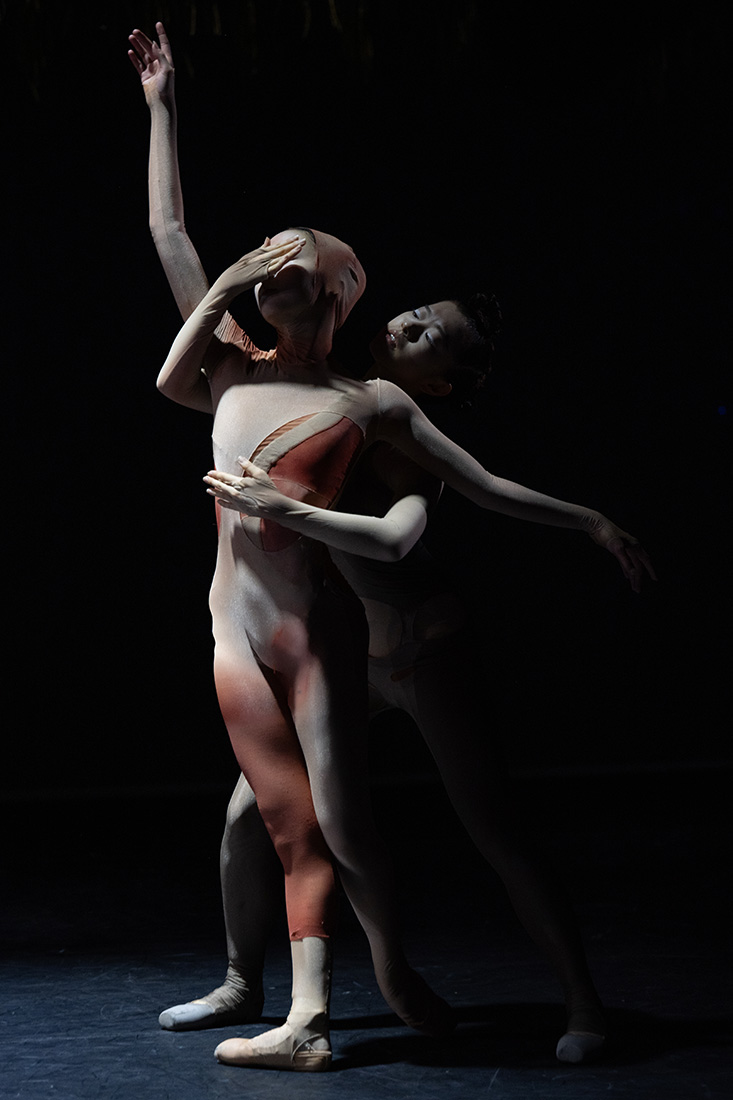
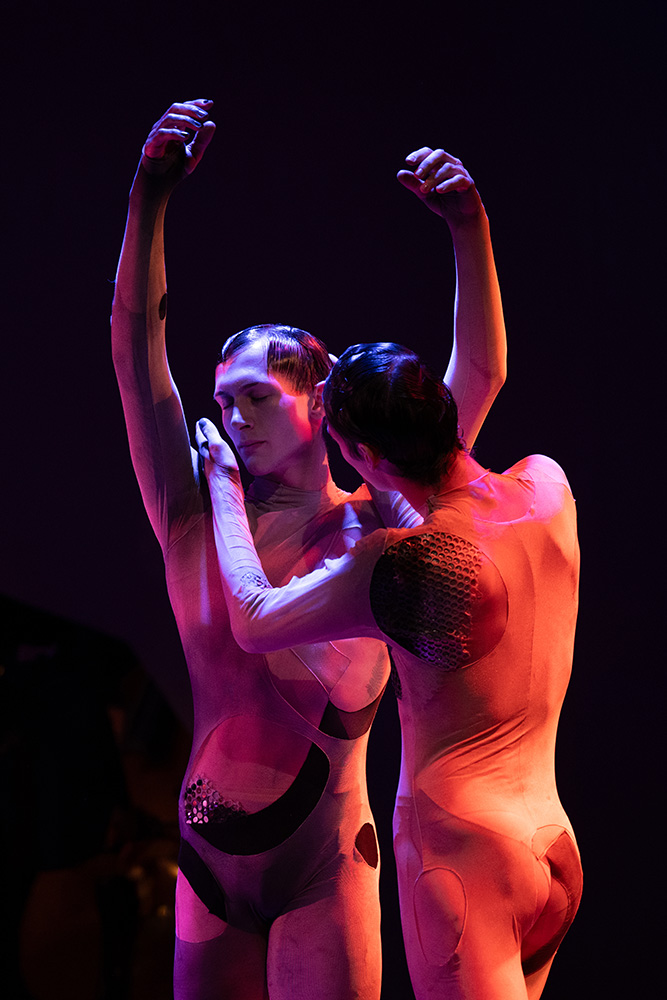
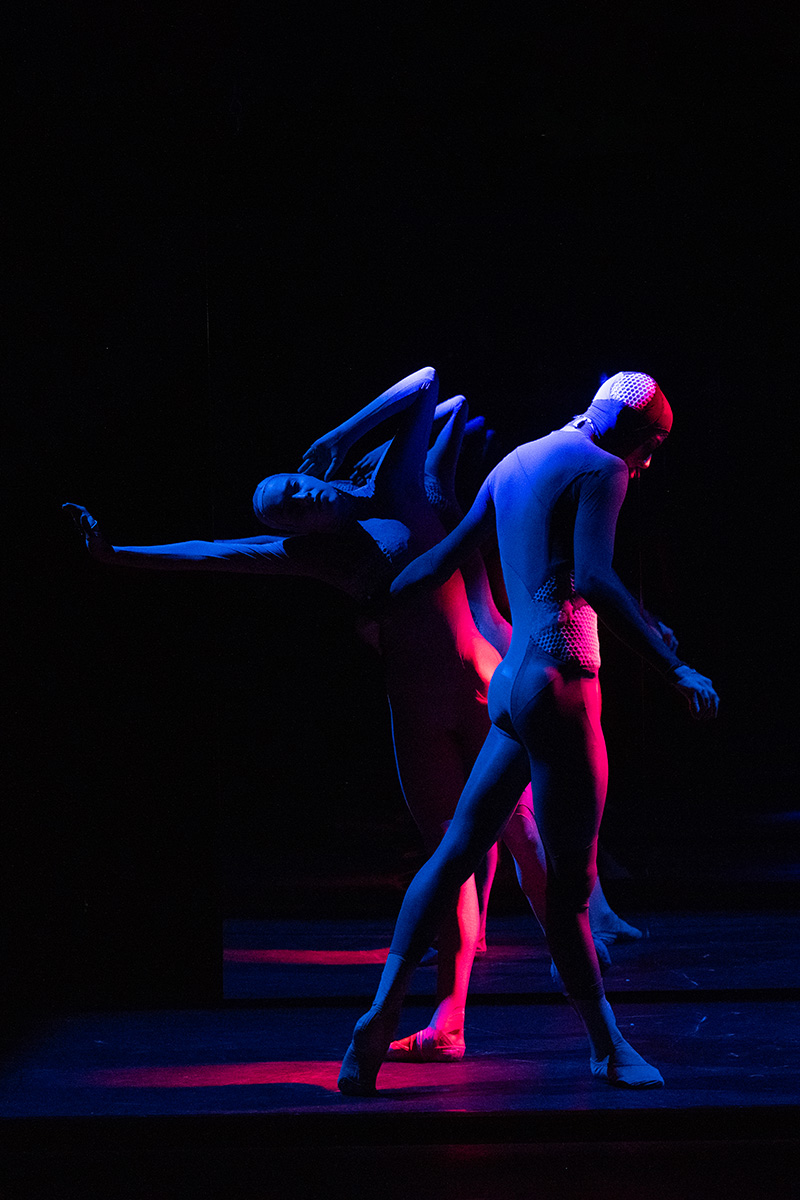
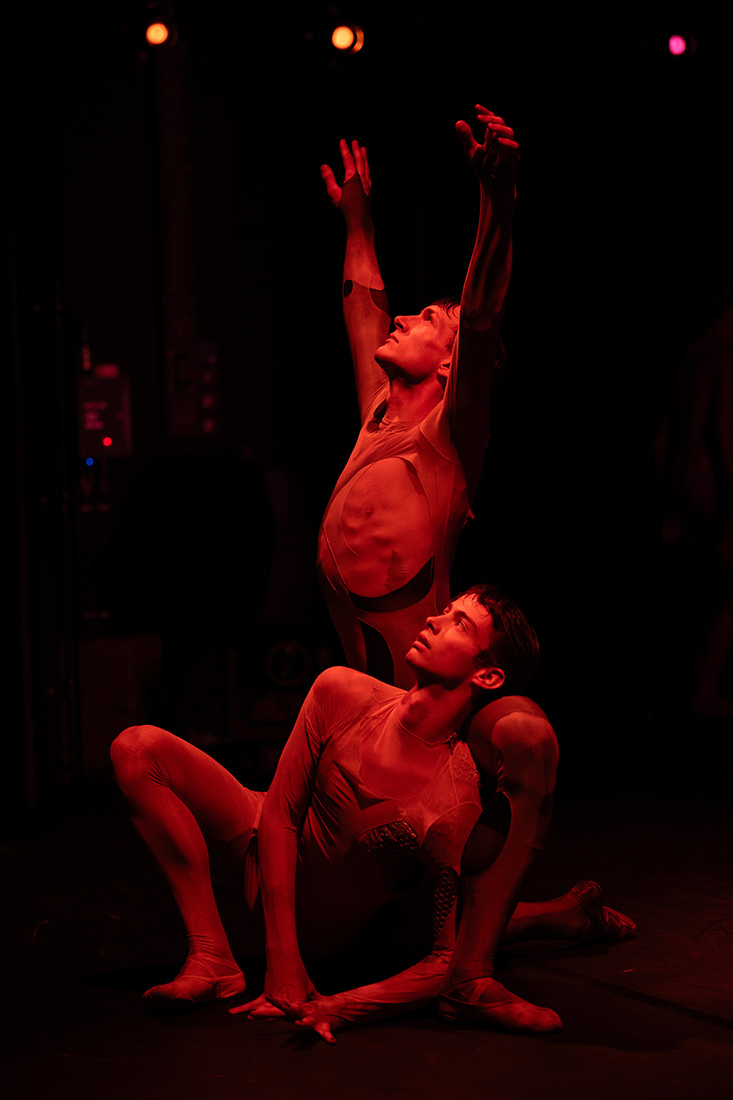
For the last few years, the Linbury Theatre has become something of a magnet for junior companies and final year ballet students from around the world, with representation from Canada, New Zealand and France and many others, as part of a Royal Ballet initiative to showcase international dance talent. This year the Youth Company of the Vienna State Ballet inaugurated the series of performances, with 12 performers in their late teens bringing Strauss 2225: Dances for the Future by Robert Binet, a Canadian choreographer, originally mentored by Wayne McGregor, who has previously created a number of studio pieces for Royal Ballet dancers. This was a sombre, hour-long ballet to celebrate the 200th birthday of Johan Strauss employing contemporary music but was not an ideal showcase for young performers. Specially commissioned in 2025, the talented Binet has made an thoughtful and interesting ballet that does not celebrate youth and enthusiasm.
In Practice
Showcasing Talent
London’s Next Generation Festival brings together young companies and renowned ballet schools from Great Britain, Europe, and across the globe to celebrate the future of dance
Exceptional Quality
The Royal Ballet School, celebrating its 100 years of existence, will give its annual performances at the open-air theatre in Holland Park, with the grand finale on the Royal Opera House stage on 18 July; but here the emphasis is on choreographic creativity with ten student pieces in a programme entitled “Creative Voices for the Future“. The student choreography was remarkable for its quality and polish, embracing abstract and narrative genres and even a nod to musical theatre, and was supported by ballets by established creators Sir David Bintley, Jessica Lang, Cathy Marston, Kristen McNally and Andrew McNicol. Some of these pieces will be reprised on the main opera house stage which will conclude with the traditional Grand Défilé. The current tranche of students at the RBS is highly talented and represents the cream of British talent, however, the works were created by a wide age-range of students, not solely by the most senior dancers who will be showcased at the Royal Opera House, and most of whom already have contracts with prestigious companies.
Pairing English National Ballet School with the John Cranko School was an interesting idea and produced in many ways the most stimulating programme and much food for thought. Anton Dolin’s Pas de Quatre, an evocation of Perrot’s famous Romantic ballet for the great nineteenth ballerinas Marie Taglioni, Carlotta Grisi, Fanny Cerrito and Lucile Grahn is not a ballet that should be danced by tyros. Staged by artistic director Lynne Charles and Mikhail Kaniskin, the students of English National Ballet School, Annabel Foster, Hana Toyama, Mei Abe and Lyla Ireland, danced the steps beautifully and dutifully, but this work frequently exceeds the capacities of many experienced ballerinas, since it was designed as a showpiece for stars like Alicia Markova. I memorably saw this ballet fail miserably at the Mariinsky Theatre. Ironically, a company that understands its subtle rivalries and competitive undertones is the Trocks, who side-eye and delicately sneer at each other between their variations. The Pugni music was here played by pianist Mark Webster.
Winter by Demis Volpi, to part of Vivaldi’s Four Seasons, suited the young dancers much better. Again, staged by Lynne Charles, the six performers were addressing material where they looked considerably more at home. The same was true of Fleeting by Bridget Breiner where Elizabeth Schemel, Katie Betz and Viviana Guemez showed a true sense of style. The John Cranko School contributed two solos: When Dark and Light Meet with choreography by Jordan Pellitari to music by Handel, is a solo for Macie Miersch. At Last, by Xenia Wiest, music by Etta James, featured Wiktoria Kielbasinska. Great maturity and sensitivity characterised both performances and one did not feel one was watching immature performers. All Long Dem day, choreographed by Marco Goecke, was movingly danced by the 11 dancers to the music of Nina Simone to close the evening.

However, the standout performance was the very first item on the programme, Dolin’s Variations for Four, the male companion piece to his Pas de Quatre. Conceived as a bravura showcase for four men without the historical shadow of famous ballerinas hanging over it, Cameron Cinnamond-Bland, Kenshin Kimura, Keisuke Miyazaki and Simon Tischler positively scintillated in the bravura demands of the choreography.
Startlingly evident with all these young companies is the truly international nature of dance schools, with every country fielding a range of nationalities. National styles really do not exist anymore. Once it was possible to identify an American, Danish or French dancer without needing to consult a programme. All dance artists declared their national school by the way they moved. What is readily observable from witnessing young performers on stage nowadays is the quality of their training, and in this respect Stuttgart’s John Cranko School has a great deal of which it can be proud.