
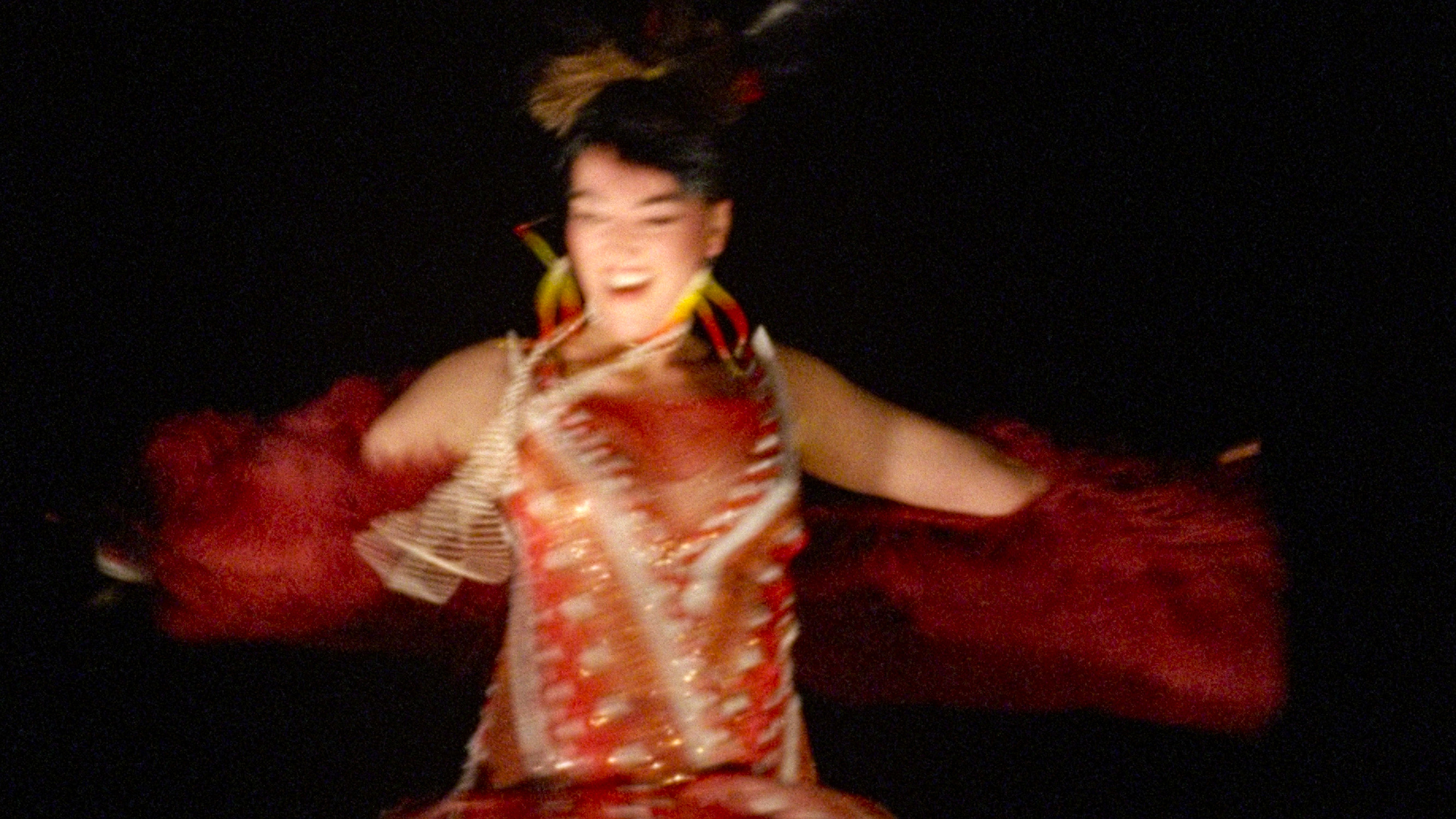
It's a true love affair between Nicolas Canniccioni's camera and the bodies of the six dancers in Pidikwe, a short dance film by Caroline Monnet, marketed internationally under the name Rumble. At first, the light dances only around the faces: one sees feathers and lace trembling, pearls and fur, while hands gently circle heads. Only then do the bodies come into view. As in the magnificent costumes, times and cultures meet in the vibrant movements of the dance, choreographed by Clara Furey. Ritual-like gestures mingle with revue and Charleston elements. Pearl necklaces and fringes fly in the turns, feet bounce in high heels, skirt hems bounce around rapidly moving legs. Something of the glamour of the 1920s shimmers through, but also of the exoticization of indigenous cultures in the entertainment industry. Self-empowerment and liberation also lie in the play with the mixed codes of the cultures.
Reversing Appropriation
Canadian director Monnet is also a visual artist and has already explored the two sides of her heritage, Canadian Algonquian and French immigrants, in video installations. At the 2025 Berlin International Film Festival, Pidikwe was screened in the "Forum Expanded," the platform for hybrids between genres. The director emphasizes "that indigenous women are survivors of centuries of assimilation, abuse, exploitation, and dispossession of matriarchal values." The dance in Pidikwe rebels against this history of loss by interweaving traditional and contemporary elements, reversing cultural appropriation. Caroline Monnet herself is among the six dancers in the performance which develops an intoxicating pull to the electronic music of Alessandro Cortini.