
Mixed Media
CDs, Books, Streaming ...
Children's novel
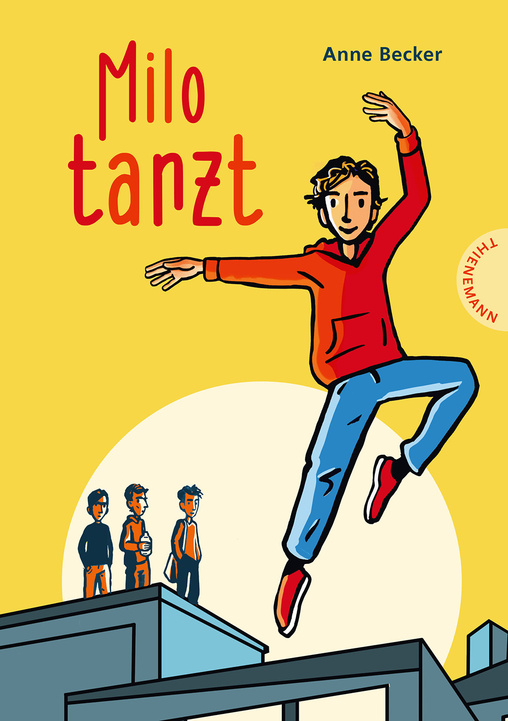
Milo tanzt
As a gamer, he calls himself Baryshnikov276, which is not particularly modest, and his fight dance is called "Double Tour en l'air". Unlike Billy Elliot in the unforgettable film by Stephen Daldry, Milo doesn’t live in the countryside somewhere in County Durham, but in the middle of Germany, more precisely: between Essen and Mülheim in the "Heimaterde" factory settlement. But like his determined contemporary, he has always been on the move since childhood. And he explains why right at the beginning: "Although your jump may only last a second, you feel invincible. It's like flying."
The children's novel Milo tanzt by Anne Becker has 22 chapters on a good 200 pages, which in terms of sheer volume suggests that "flying" is not going to be so easy. In the book, it is not so much the father who puts obstacles in his son's way, but rather he supports the boy when he suddenly has problems at school. "Just do your thing," says the father when a classmate is after Milo for some reason. And the way he then does it is not only knowledgeable, child-friendly, sensitive and exciting to read. It also shows why, in addition to one's own self-discipline, it sometimes takes friendship, but above all the civil courage of others, to be able to say with the author at the end: "Milo is dancing".
Hartmut Regitz
Anne Becker: Milo tanzt; www.thienemann.de
Analysis
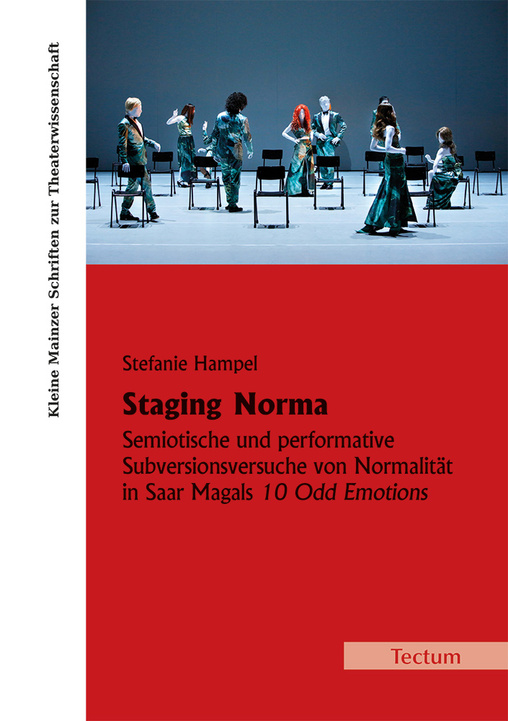
Staging Norma
In 2023, Saar Magal created 10 Odd Emotions with the Dresden Frankfurt Dance Company and the Schauspiel Frankfurt. The piece, with 22 performers from the fields of dance, performance, acting and music, negotiated historical responsibility, anti-Semitism, racism and bodies defined as normal or foreign. Stefanie Hampel is now analyzing the performance in Staging Norma, published in the "Kleine Mainzer Schriften zu Theaterwissenschaften". Normality is initially explained as historically constructed and viewed in its function of disciplining bodies. In order to approach the representational political dimension of normality, Hampel devotes herself to a phenomenon called "Search for Norma", which is performed in Magal's piece. The background is a newspaper advertisement in the US from 1945 which was looking for a woman with ideal measurements. Hampel then goes into a more specific examination of 10 Odd Emotions: The book uses the concepts of "artistic foregrounding" and "backgrounding" to analyse the possible subversion of representations of normativity. Magal's piece uses performative means such as the representation of artificiality to alienate the familiar and question normality, according to the thesis. Slowed movement, for example, is a method of representing everyday things in a modified way, which leads to a deliberate irritation of the audience.
When it comes to "backgrounding," Hampel refers to the attributions that the actors give themselves in the play: These labels collide with the physical reality of the performers and illustrate the inadequacy of such attributions.
Hampel cites the use of (white) morphsuits as an important staging element. These led to the uniformity of the performers and questioned the social construction of identity. Magal's staging makes visible the mechanisms that maintain a regulatory order. Queering is another strategy that destabilizes usual representations of gender and race. Additional perspectives from the selected theorists, such as intersectional or anti-ableist, would have been appropriate here.
The book concludes that in 10 Odd Emotions theater can be understood as a space for dealing with identities and differentiations and can thus be a place for the queer, indeterminate experience of the body. This makes it potentially subversive for the production of normativity.
Hannah Meyer-Scharenberg
Stefanie Hampel: Staging Norma. Semiotic and performative attempts to subvert normality in Saar Magal's 10 Odd Emotions; www.tectum-verlag.de
DVD
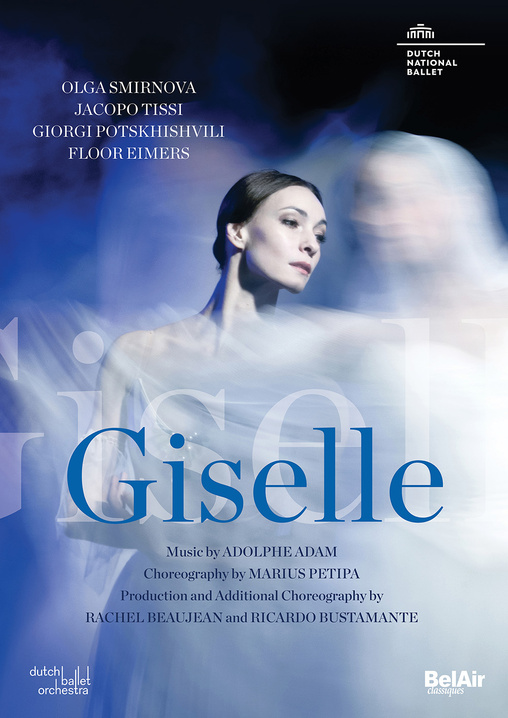
Giselle
Many parties involved in Giselle are listed on this DVD from Het Nationale Ballet: Marius Petipa as the main choreographer of the Petersburg version of 1903 which in turn is based on the romantic Parisian original version by Jean Coralli and Jules Perrot from 1841. Then there are the 2009 directors, Rachel Beaujean and Ricardo Bustamante, who are actually only responsible for the rearrangements of the peasant pas de quatre in the first act and the decision to place the title character's dance between her friends and not in front of the foreign princess. The ending is also relatively untragic: Albrecht does not go mad after Giselle has saved him from the death-dancing attacks of the Wilis before descending into her dark grave — he simply continues to mourn in the dawn.
This showpiece of ballet romanticism is presented as a jewel, polished over 180 years of stage practice, without a real creator. Toer van Schayk's clear-cut Biedermeier set also appears decidedly tidy and modern. Added to this is the flawless, straightforward interpretation by Olga Smirnova and Jacopo Tissi: she is not a shy peasant girl, but a ballet blanc heroine, he is an ambivalent fairy-tale prince of the modern age. Just recently in Amsterdam and on Arte (available until 31 May), and already out on DVD.
Manuel Brug
Petipa: Giselle, Het Nationale Ballet; www.belairclassiques.com
Clip of the Month
The Bat
Big white bow, glittering sequins: this is how choreographer Ruth Page presents herself on the monitor to introduce what she has made of Johann Strauss's "deliciously silly operetta": The Bat aka Die Fledermaus, a musically sugar-coated social satire that Page brought out in Chicago in 1961 and had recorded in 1986 with a super cast. Richard Cragun — once John Cranko's star ballerino —, Galina and Valery Panov and two audience favorites from the American Ballet Theater transform the chaos of a costume ball into a playful feast for the eyes. An excavation on YouTube that foreshadows all the festivities with which Vienna will celebrate the 200th birthday of the waltz king in 2025: www.johannstrauss2025.at. The Bat provides a somewhat grainy but wonderful introduction. Recommended by the tanz editorial team!
Biography
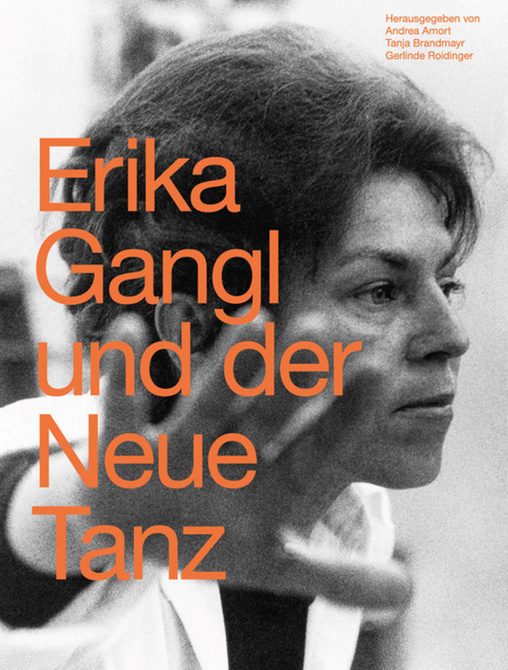
Erika Gangl und der Neue Tanz
«The name Erika Gangl (Linz 1939–2000) was synonymous with artistic avant-garde since the 1970s at the latest ...», it says at the beginning of the biography. And then?, one might ask. Then the Linz dancer, choreographer and dance teacher suffered what happened to all her generation with few exceptions: she was forgotten. Of course not by those who had come into contact with the «New Dance» through her, such as the three editors of the extensive publication on Gangl: Andrea Amort, Tanja Brandmayr and Gerlinde Roidinger. They encountered the well-known challenge: «... because once again there was no legacy after the death of a dance artist.» A multi-year research effort began in all directions, and today, through personal memories, descriptions of her teaching work, her works, photographs and notes, we can meet an extraordinary woman who was fully committed to the artistic avant-garde. Erika Gangl was born on 19 October 1939 in Linz, Austria, which was "annexed" to Nazi Germany. In 1945, after the end of the war and liberation, she attended courses at the Bruckner Conservatory, obtained a diploma in gymnastics, passed the "Artistic Dance" examination in 1957 and went to Vienna to study with Rosalia Chladek, the important protagonist of free dance. Gangl opened her first studio in Linz in 1965. "Develop dancing skills to the point of self-creative performance, not just teach pure skills," was what she taught her students. She moved her school several times, founded her first ensemble in 1978 and created a professional platform for new dance in Austria with the Erika Gangl Dance Company in 1994. "Dance needs new music, new music needs dance and movement." In 1967 she found a partner in the musician, composer and music publisher Alfred Peschek who was ten years her senior, to develop her search for new forms of expression, freedom in design and movement — beyond conventions. With "Erdenklang" she finally gained international recognition at the 1982 Linz "Ars Electronica". "Creativity, consistency and uncompromisingness" were the trademarks of this tireless dance artist and dance teacher, according to Paul Stepanek's obituary. On 28 February 2000, Erika Gangl died after a serious illness. Thanks to the editors, we can now get to know this intrepid "pioneer in the provinces" in 234 pages.
Claudia Henne
Andrea Amort, Tanja Brandmayr, Gerlinde Roidinger (ed.): Erika Gangl und der Neue Tanz — Versuch einer kritischen Würdigung; www.hollitzer.at
Book
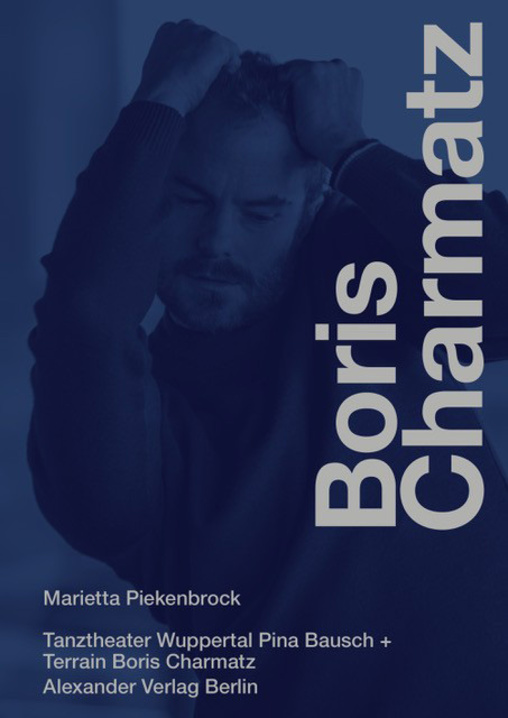
Nahaufnahme Boris Charmatz
The curator Marietta Piekenbrock has been associated with the French choreographer Boris Charmatz for a long time. Now she has published a book about the artist and his work with the two labels he runs: the Tanztheater Wuppertal Pina Bausch and Terrain. It is not without reason that it is entitled Nahaufnahme (Closeup), because the more than 300-page compendium is, according to the author, "not only a portrait of the dancer and choreographer Boris Charmatz, but also an introspection, a kind of 'open day' to the inner workings of his head".
The volume unfolds the story from 1992, starting with the production company Association Edna, founded with Dimitri Chamblas, and the first choreography À bras-le-corps. Charmatz became influential as director of the Centre choré-graphique national de Rennes et de Bretagne, which he developed into the Musée de la Danse from 2009 onwards. He founded his own production brand, Terrain, and took over the artistic direction of the Tanztheater Wuppertal Pina Bausch in 2022.
Nahaufnahme Boris Charmatz does what most artists don't have the time for: it documents developments, follows paths, structures the work and makes it accessible to anyone interested. Not least through photographs and recordings from the archive of the French director César Vayssié who has been following Charmatz's work with his camera since 2000.
Mateusz Bogdanowicz
Marietta Piekenbrock et al. (ed.): Nahaufnahme Boris Charmatz; www.alexander-verlag.com
Background photo: Cover photo of the novel tanzen fallen fliegen by Jochen Heckmann (www.querverlag.de)