
Report
The Last Dance
More and more clubs are closing. Is an important aspect of dance culture facing extinction?
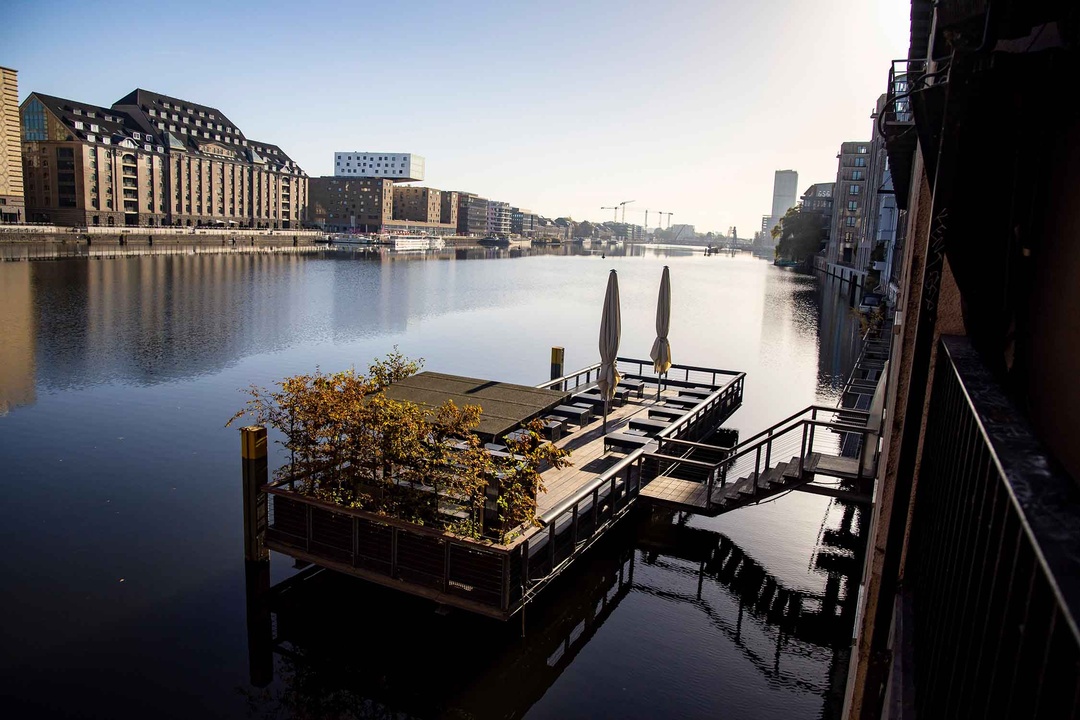
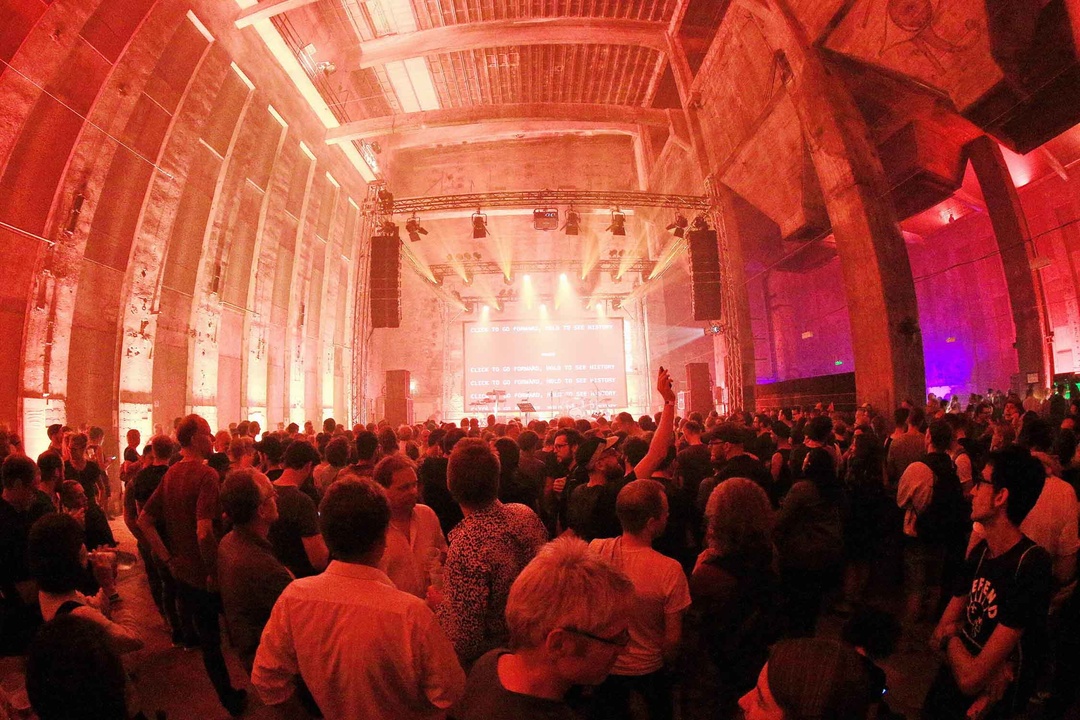
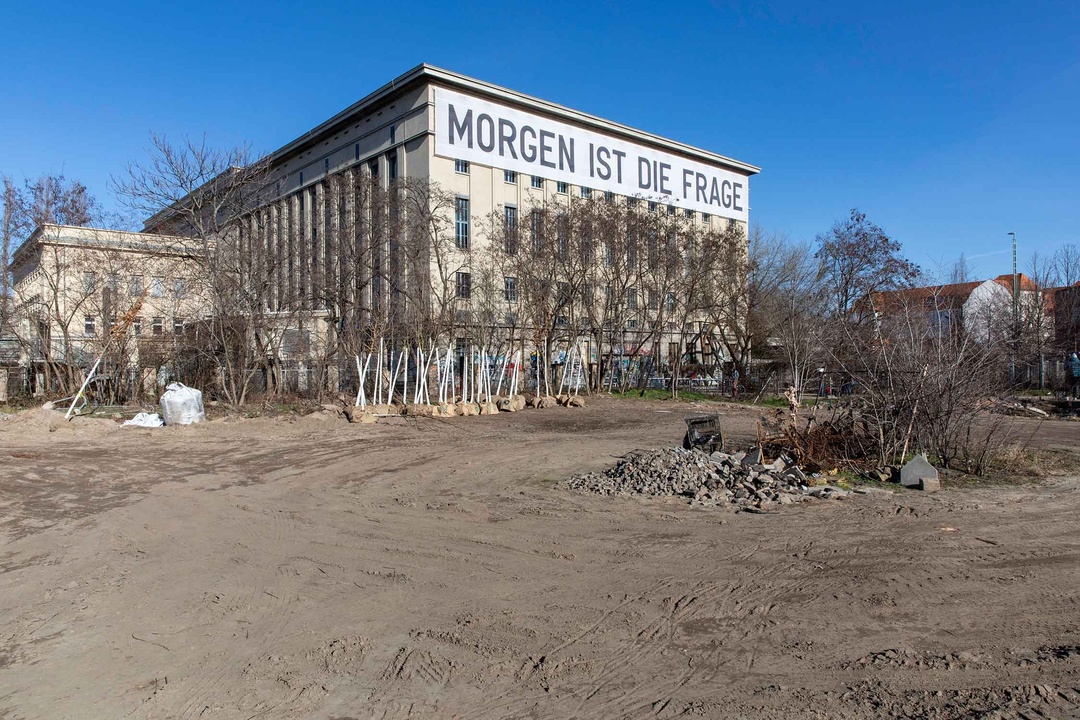
Last autumn, a shock wave swept through Berlin: the Watergate announced that it would be closing at the turn of the year. For people who are not very familiar with the club world, here’s some context: The Watergate was a club specialising in house music on two floors on the banks of the Spree in Kreuzberg. When it comes to clubs, the scene is of course fragile, always on the move — one place closes, another opens. This is not fundamentally wrong, but misses the point here. Because: The Watergate, founded in 2002 and named one of the ten best clubs in the world by the British DJ Magazine in 2009, was not just any club, the Watergate was part of Berlin's identity as a nightlife hotspot. Last spring, UNESCO decided to recognise Berlin's techno culture as an intangible cultural heritage, not least because of pioneering places such as the Watergate. When such a beacon closes, it shows that something has gone wrong.
Nightlife in the Doldrums
And in more ways than one. Nightlife is not just culture, but also an economic factor, especially in a city with a strong tourist profile like Berlin. Dancing all night has an impact on the number of overnight stays and gastronomy. So if the end of the Watergate is part of a larger restructuring process which has become a popular phrase in the scene as "club deaths", then the city is feeling this very clearly in terms of tax revenues.
"Club deaths" sounds catchy. But, once again: isn't that a natural process in a fast-moving scene? And just because the Watergate, an innovation driver, a flagship, has been hit now, there is suddenly a lot of lamenting? The fact is that in recent months other Berlin clubs have already closed their doors for good, such as the Renate or the Loophole, and it is also a fact that nightlife in other cities is also in the doldrums, in Cologne, Leipzig or Hamburg. But this is not a clearly describable process; there are a multitude of developments that differ depending on the social context.
Well: does a phenomenon called "club death" even exist then? "The term is very emotionally charged," says Emiko Gejic from the Berlin interest group Clubcommission. "It has been used in general since more and more clubs or nightspots were forced out of the city center and had to close." Gejic reminds us that in the 1990s in particular, districts such as Mitte and Kreuzberg were dominated by nightlife, a situation that is hard to imagine today.
What happened here is a classic displacement process, as we know it from Hamburg-Ottensen or Cologne's Südstadt: clubs make a district interesting, at some point more and more wealthy groups move in, then demolished buildings become condominiums, and there is less and less space for subculture. So you can actually talk about clubs dying out, but Gejic emphasizes that we are dealing with a subjective term that means something different depending on who uses it.
Factors of Decline: Tourism and Purchasing Power
Here’s an Example: In Hamburg’s Altona district, a whole cluster of clubs had formed in the area of the Sternbrücke over the past few years, in more or less run-down catacombs under an S-Bahn bridge. This bridge is dilapidated, and because rail traffic is expected to increase, it is due to be renovated soon. During the construction work, the leases of the so-called "Sternbrücken clubs" were terminated, and since then the Hanseatic city has been talking about "club deaths". A problem that was also noticed by the Hamburg cultural authorities. Alternative locations in the city center were found for three clubs, but the traditional locations Astra Stube and Waagenbau turned down the offer: the rent was too high and the location was not ideal. In addition to these problems, there are the same difficulties also known in Berlin: less tourism and declining purchasing power. According to the local interest group Clubkombinat, ten percent of all club operators are considering ending event operations,.
Regarding the declining purchasing power, Watergate’s managing director Ulrich Wombacher complained in the Berliner Zeitung that going-out behavior had changed in recent years. People hardly go to clubs anymore and are not prepared to spend enough money so that business makes economic sense for him, especially since the fees that internationally successful DJs charge for gigs in Ibiza are not affordable in Germany. "Going-out behavior is of course changing," confirms Gejic. "In Berlin in particular, we had a very high level up to and including 2019, there was a very high demand for going out and attending cultural events." In other words: tourists who came to the city specifically because of the club offerings, a party-loving audience, and also great purchasing power. This collapsed in 2020, with the Covid-19 pandemic and the subsequent contact restrictions. This was followed by general cost increases, inflation, increased energy costs, and increased rents. "In general, everything has become more expensive. This means that people are going out less and that there is less and less tourism." This affects clubs differently, depending on their target audience: if a club relies heavily on tourists, then it’s now in financial difficulties.
And when a club takes a political stance, it’s affected by the currently heated political debate. For example, committed locations such as Leipzig's Conne Island, Hamburg's Hafenklang or Berlin's //about blank, which position themselves more or less pro-Israel in the Israel-Palestine conflict: "BDS or its sympathizers contact booked acts and demand cancellations," the operators of the Hafenklang said last October. "There is a lot of pressure being exerted in an aggressive dynamic. In the last week alone, we received four cancellations of upcoming concerts." Mind you, this is not about political dogmatists, but about a music club that demands a differentiated view. "We stand in solidarity with the civilian population in Gaza and Lebanon," the Hafenklang makes clear. "We also strongly criticize Israel's right-wing government and settlement policy, citing human rights violations and war crimes through the breach of international law, and at the same time do not question the right of the State of Israel to exist!" This is apparently enough to call for a boycott, as is also known from Berlin and Leipzig.
This can be devastating for smaller clubs that are already suffering from the problems described above. In a collective statement, Leipzig's Conne Island also named 13 canceled acts between October 2023 and August 2024 due to calls for a boycott. "Silent boycott" — the fact that performances at Conne Island are silently not planned at all or are canceled under false pretenses — is not included. Accordingly, one can "only estimate how many visitors, work orders and simply sales were lost as a result. But we can still say one thing: it is noticeable and is not only putting Conne Island in financial difficulties."
Emiko Gejic from the Berlin Club Commission confirms the problem. "It is definitely extremely complex and very difficult — we at the Club Commission offer various counseling services, for example a dialogue format in which those affected can exchange ideas in a protected space. The format is moderated and there is an awareness concept. The motivation was to create a space for mutual respect and understanding that allows for a variety of perspectives. What is really important here is to show solidarity and understanding for one another." Gejic also notes that political polarization is dividing the scene, but that this is a division that affects society as a whole.
Funding Versus Freedom
Solidarity is all well and good. But what else can be done to protect clubs? In Hamburg, the city is committed, which may also have something to do with the fact that the SPD Senator for Culture, Carsten Brosda, has a personal connection to the scene, a commitment that quickly reaches its limits in view of the general shortage of funds. And it is not wanted everywhere either — Watergate operator Wombacher, for example, explicitly rejected public funding in the Berliner Zeitung, saying that it does not suit the club scene which has had good experiences with private sector organisation. “Clubs are of course also businesses”, Gejic differentiates here. “There are clubs that see themselves as cultural venues with a culturally oriented programme, and they would like to be treated as such and would accept state support.” Others want to retain their independence by standing on their own two feet financially. “Both are legitimate, and we support both. However, we think it would be useful to have precise offers of assistance that could be applied for by those who need and want it."
This wish is not entirely consistent, however. The Hamburg Clubkombinat complains that more and more publicly funded venues (the Kampnagel production house and the Elbphilharmonie are explicitly mentioned) are offering club programs, which would result in a distortion of competition. It is difficult to imagine how this distortion would be resolved if more organizers received tax money while others were left empty-handed.
However, the question of public funding for clubs should hardly arise. In view of empty coffers, no one can hope for large cash gifts, as Emiko Gejic knows. "Personally, I would rather see the conditions for cultural businesses adjusted so that sustainable business is possible and livelihoods are secured. This could happen, for example, by regulating commercial tenancy law or by providing tax relief." The prerequisite for this would be that clubs are more consistently recognized as cultural venues — legally, clubs are still entertainment businesses, intangible world cultural heritage or not. From a dance perspective, clubs are primarily places where people dance and perform. Culture, in other words.
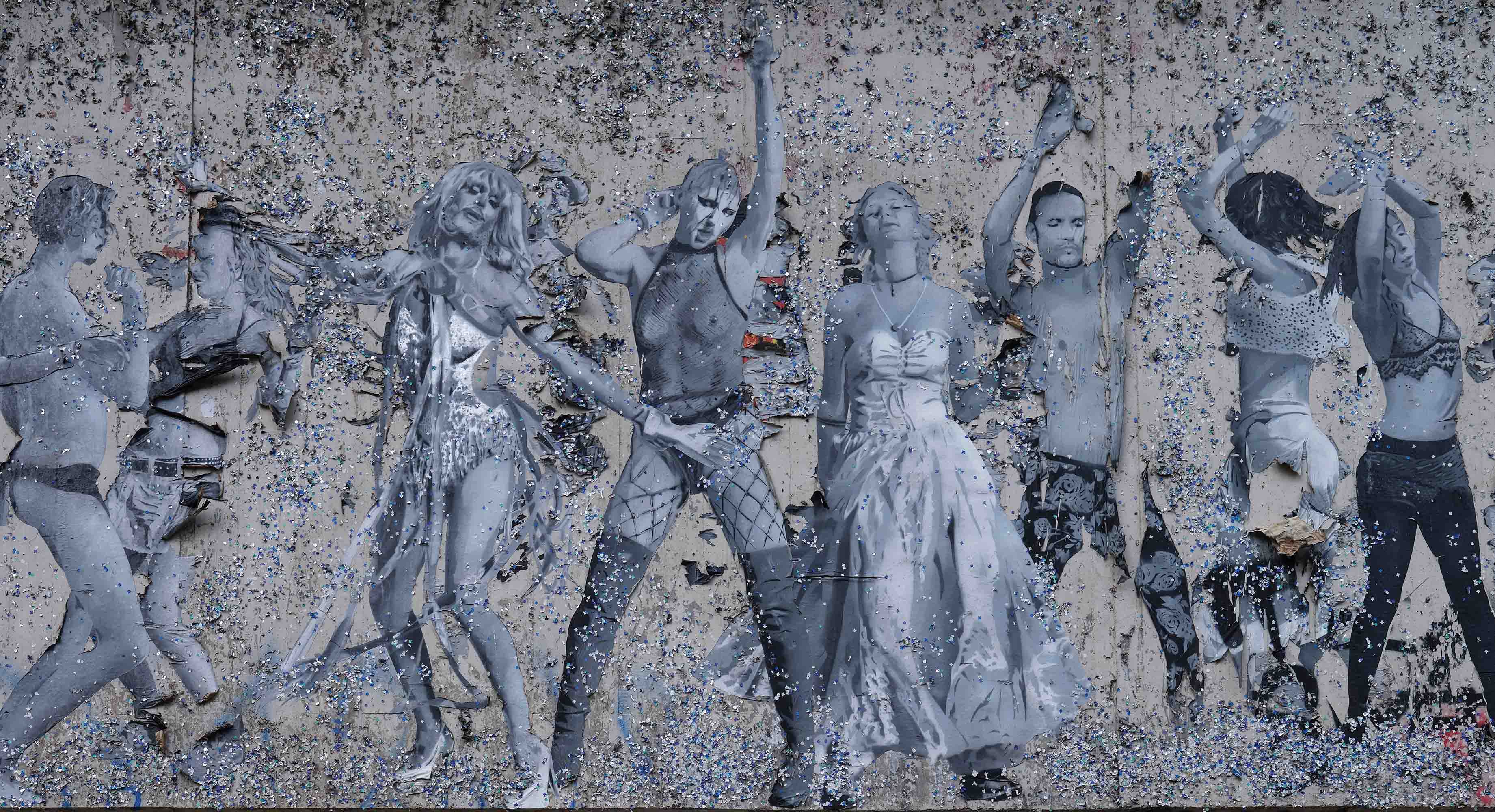
Background photo: Berlin, house wall with graffiti, 2014; © imago/serienlicht