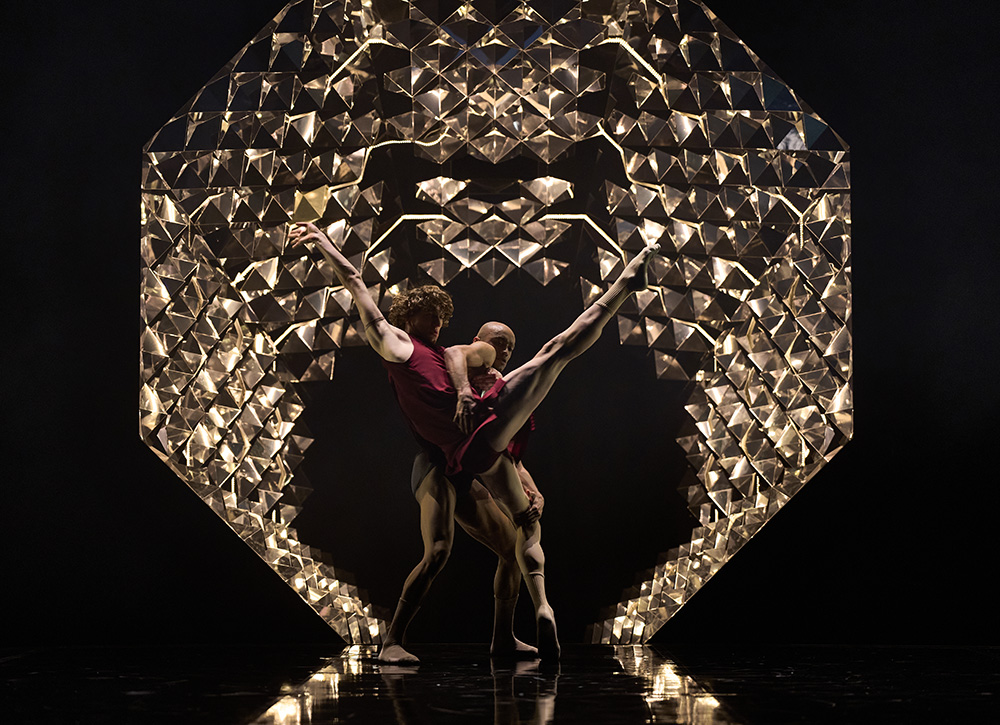
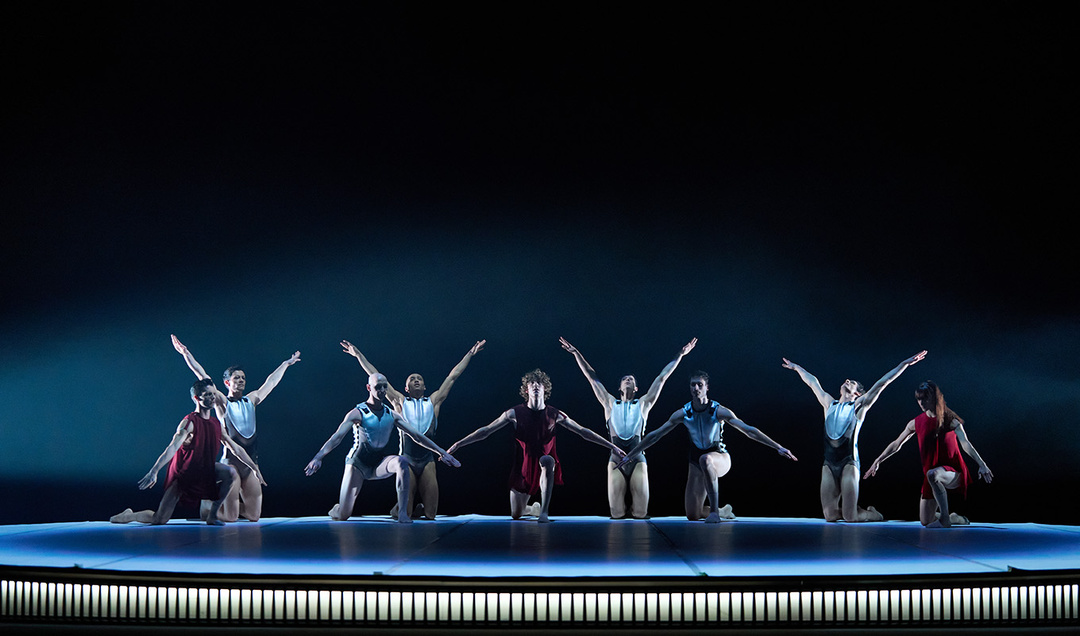
Daedalus and his son Icarus want to fly, crafting wings held together with wax. Daedalus knows not to expect too much: not too high, be careful! But his son doesn't listen, approaches the hot sun, the wax melts, the flight becomes unstable, and Icarus falls into the sea. Choreographer Andonis Foniadakis, born on Icarus's island Crete, has adapted the ancient myth into an abstract dance piece: It's about the longing for weightlessness expressed in dance, about transgressing the body's limits, about human hubris and the pruning of those limits. Let's just say this: Keeping hubris in check is a rather unappealing concept. Jamal Uhlmann's Daedalus knows exactly what is possible and what is best avoided. Costume designer Anastasios Sofroniou has dressed him accordingly in a suit of steel armor — this doesn't look particularly appealing as an outfit, but it does add a lot of visual appeal, especially in the crowd scenes when the protagonists are multiplied, it models the bodies and makes the dance seem controlled. But not so Icarus: Floris Puts (who later becomes a surging mass with the rest of the Hannover State Ballet ensemble) is a soft, feminine character, and his red shirt reinforces this trait. Someone like that knows that concentrating on what is useful has its value — but he still wants something different, even at the price of self-annihilation. The myth of Icarus, as Foniadakis understands it, is the story of the contradiction between reason and passion, between purposeful action and longing.
Reviews
Hanover
Andonis Foniadakis Ikarus
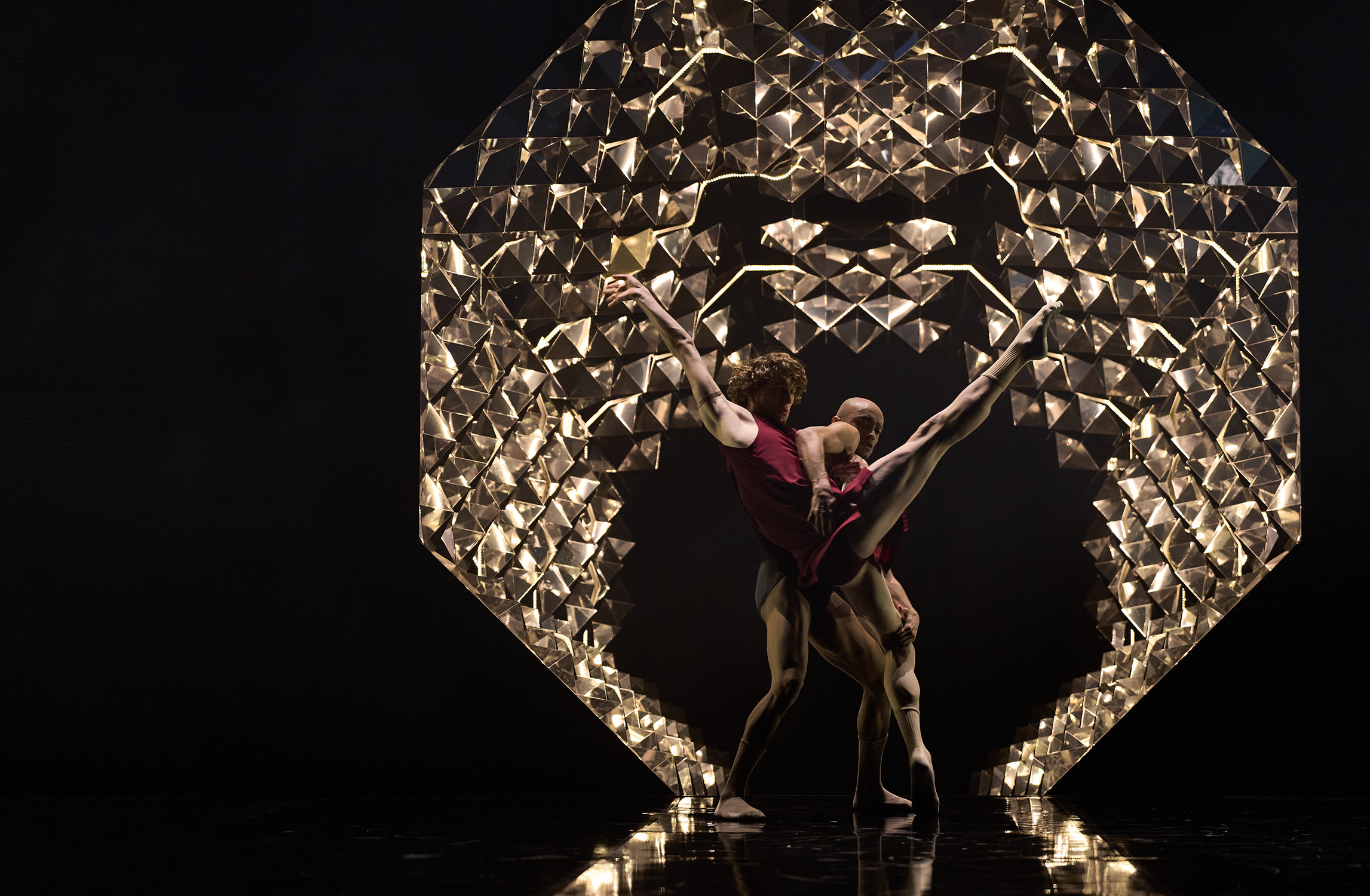
The evening finds striking images for this, with flying, floating, jumping, and falling bodies which show that while a fall is painful, it also means letting go, surrendering to movement, overcoming and simultaneously enjoying playing with gravity. The story, with its masculine connotations in the myth, is told in a gender-blind manner: While both Uhlmann and Puts are read as male, gender identity becomes irrelevant as soon as the ensemble multiplies the characters. This is not a simple heroic story, but an approach to a utopia. What somewhat hinders this is a tendency toward pathos in Foniadakis's images and in Julien Tarride's commissioned composition which layers beats, choirs, and strings until a fallen hero finally collapses to the stage floor. The fact that stage and lighting designer Sakis Birbilis cultivates a penchant for the decorative (the death-dealing sun as a shrill, glittering crystal!) also ensures that the clever analysis of a philosophical conflict is somewhat obscured by the desire for overwhelming visuals. On the other hand, it certainly is overwhelming.
Again on 4, 13, 24 April, 4, 10, 18 May; www.staatstheater-hannover.de