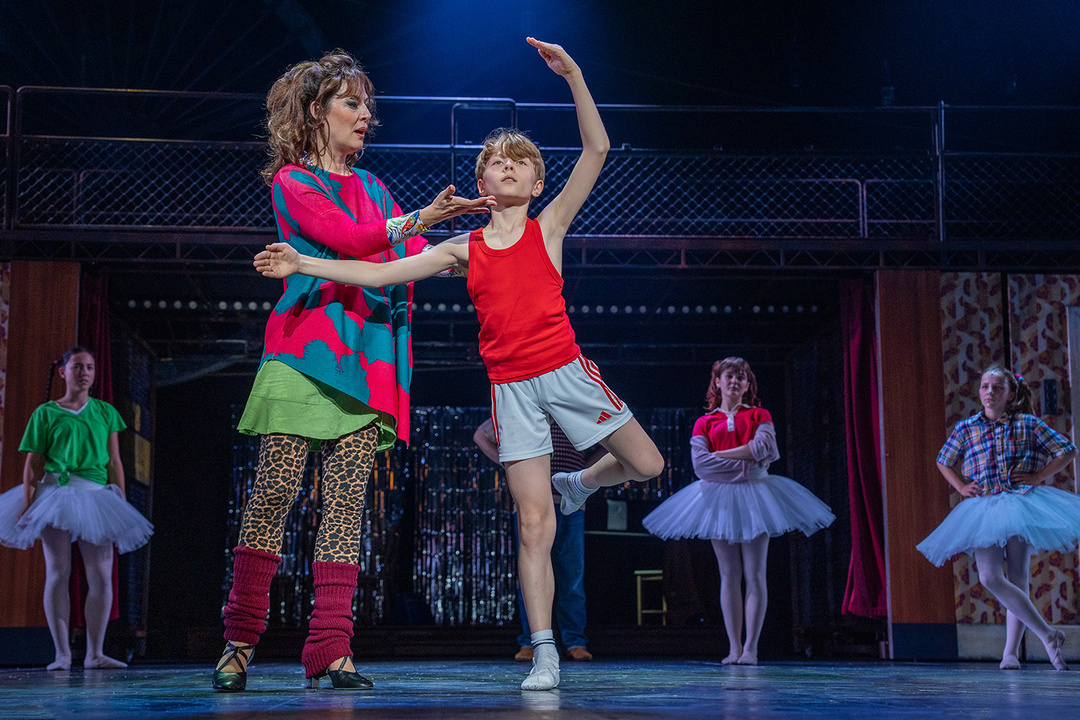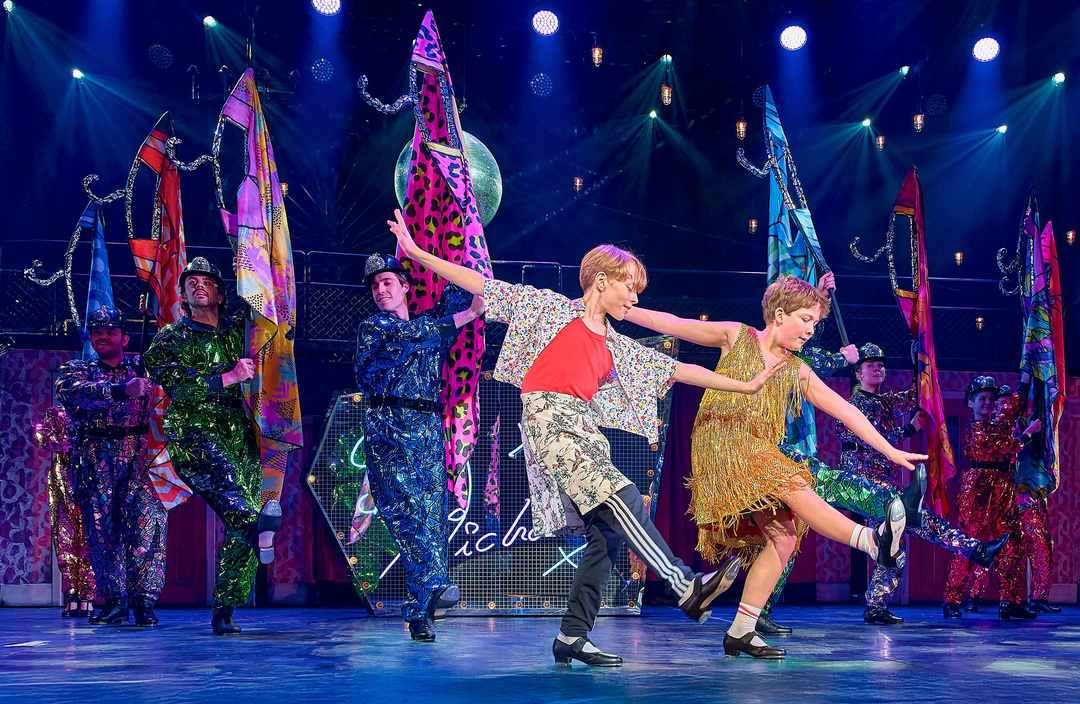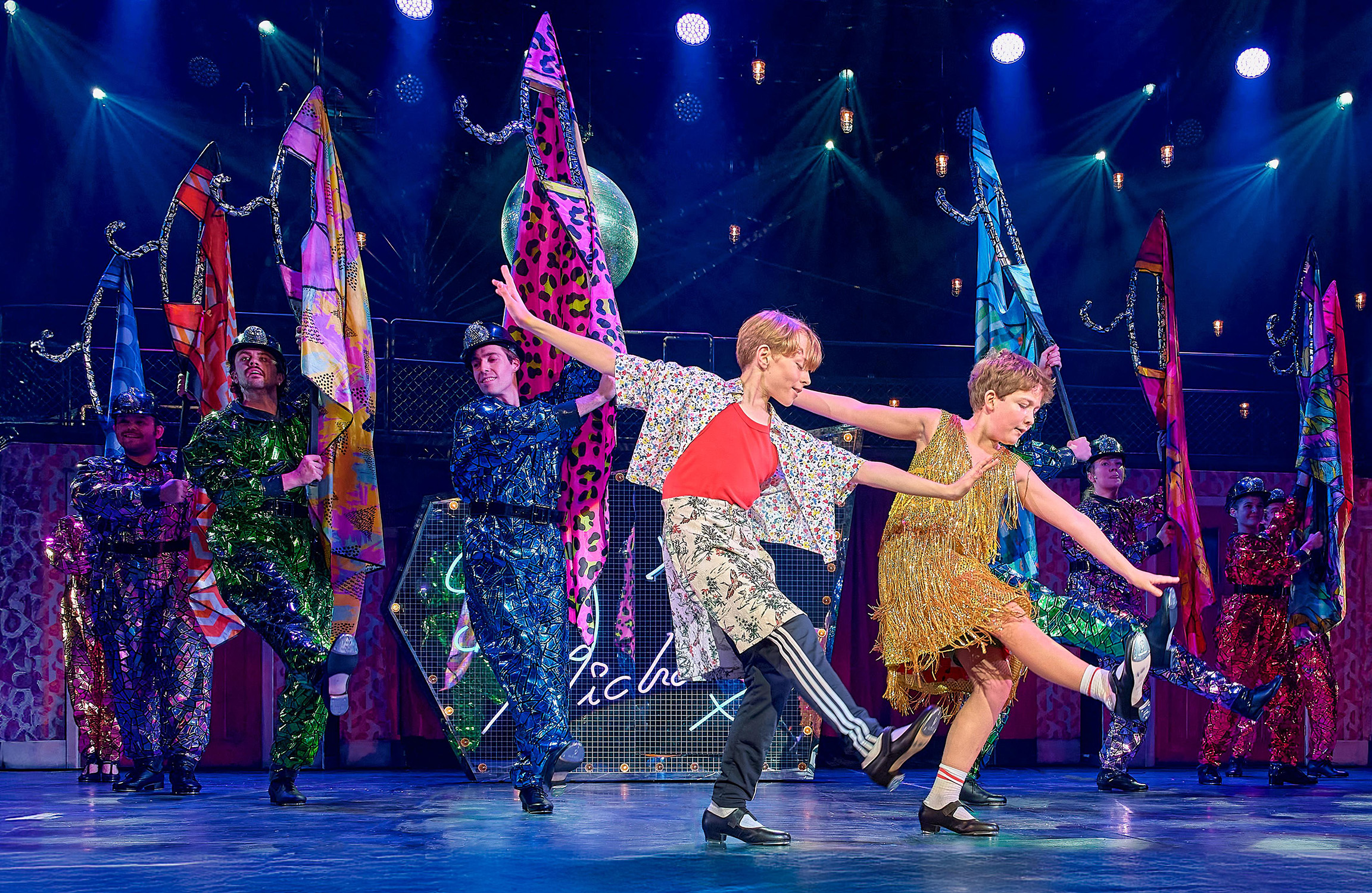
Billy Elliot ran for eleven years in London's West End and was celebrated at its premiere in 2005 as «a grand jeté into the future of the British musical»: a departure from the orgies of set design and fairy-tale material, towards social criticism, in a rough, linguistically explicit reappraisal of the neoliberal Thatcher era. The direction, script and choreography of the stage adaptation came directly from the film team, Stephen Daldry, Lee Hall and Peter Darling, and the music was composed by Elton John — angry choirs for the striking workers, jazzy numbers for Billy's dance teacher Mrs. Wilkinson and simple, almost hesitant melodies for the miner's son himself who, coming from a humble background, is determined to learn ballet. Because Billy (and this is what makes this still great story so fascinating when seen live) becomes the classic "triple threat" of the musical: he dances, acts and sings. Moritz Fischli is one of three boys who share the title role in Zurich: he spins and jumps, throws himself against the shields of the police wall in his anger at his father, and sings about ballet at Billy's audition as "something electric". Above all, however, he sensitively shows the boy's doubts and iron will between family and ballet.
Everything that makes the famous ballet movie so special is still there in the musical, perhaps a little more garishly. At the German-language premiere in Zurich's MAAG Hall, half of the ensemble is made up of great, self-confident children, all of whom dance as hard as they can.