Content

Reviews

Nürnberg

Marco Goecke, Goyo Montero Strawinsky

by Dorion Weickmann

December 13, 2024 will go down in the annals of Nürnberg as a historic date. A handful of "bigwigs" (Bavarian for all kinds of dignitaries) met on the Nazi Party Rally Grounds in the southeast of the city to break ground for the interim headquarters of the Nürnberg Opera. Music theater and ballet are expected to move into a new building from 2028, attached to the so-called Colosseum — a monumental Nazi ruin that is to be put to a useful operational purpose by being used as an opera. However, Nürnberg's current ballet director Goyo Montero is retiring before the move: At the end of the season, he will move to the top position in Hannover, whose former director Marco Goecke will in turn be hired in Basel. The day after the groundbreaking ceremony, the two choreographers show a two-part evening on the stage of the opera house which is in need of renovation: Strawinsky features Goecke's Scènes de ballet and Montero's Feuervogel one after the other: a magnificent diptych linking the past to the present.

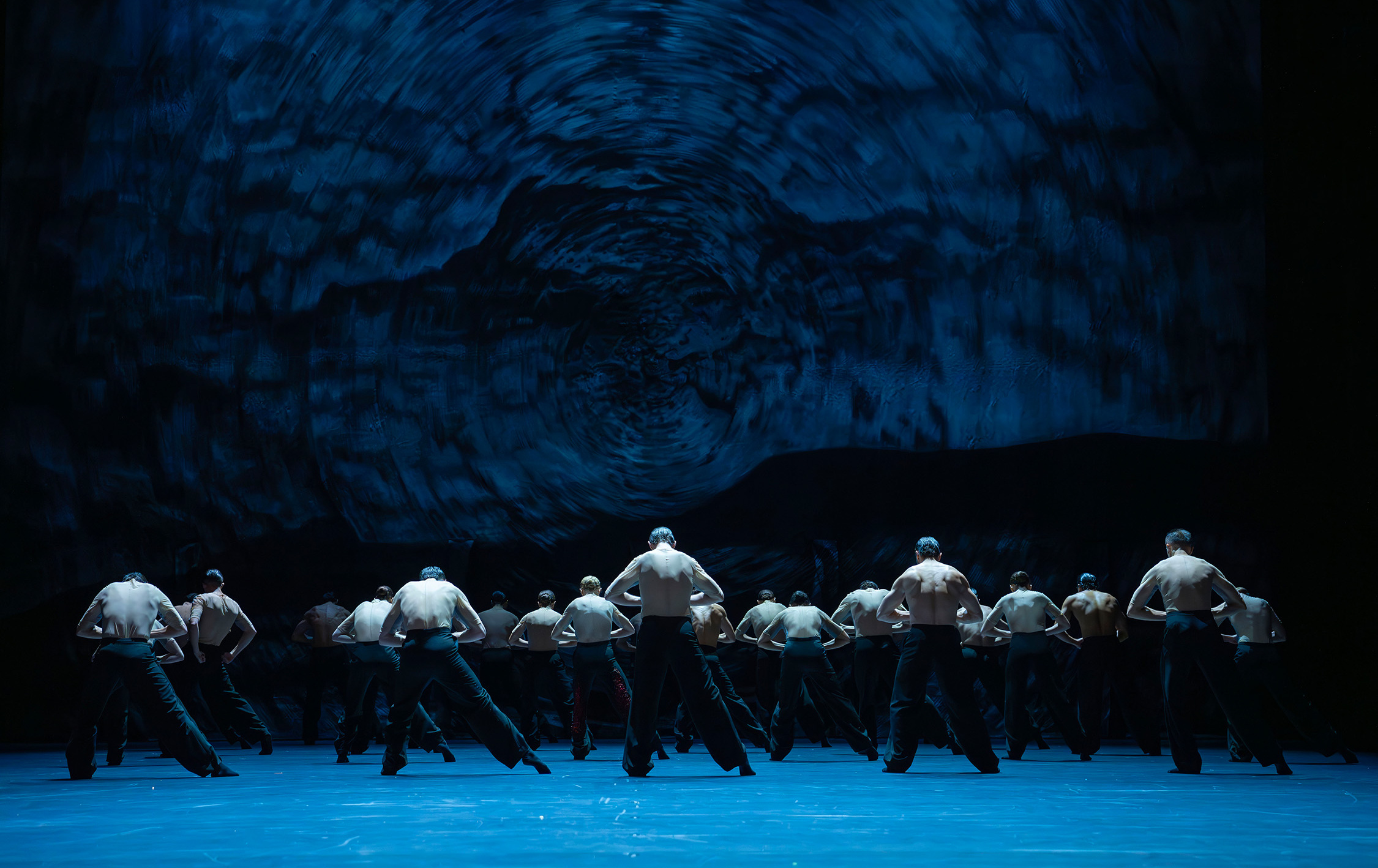
A man emerges from the darkness, bare torso, dark trousers. Behind him, an anthracite-grey maw yawns, flashes of light whiz by, thunder sweeps away the silence. No natural backdrop, but muzzle flashes and cannon shots — signals of a battle wafting over from the nowhere of an imaginary battlefield. In the depths of the orchestra pit, the members of the Staatsphilharmonie Nürnberg also listen to them before conductor Roland Böer raises his baton for the brief Introduction, the start of a fabulously musical quarter of an hour.
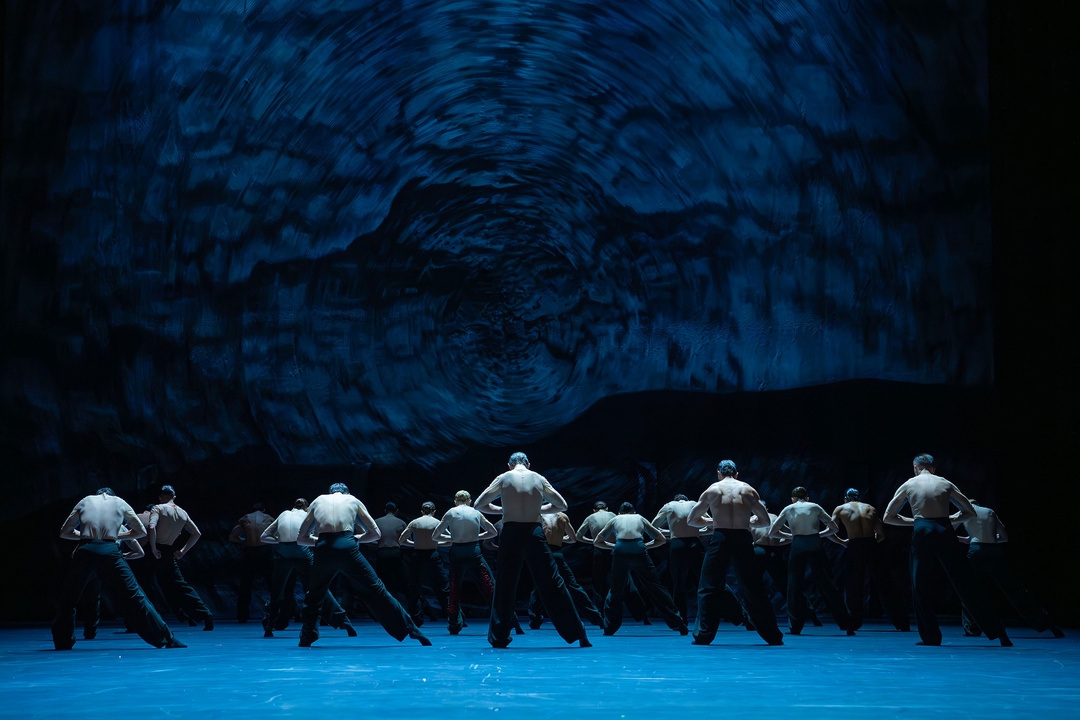
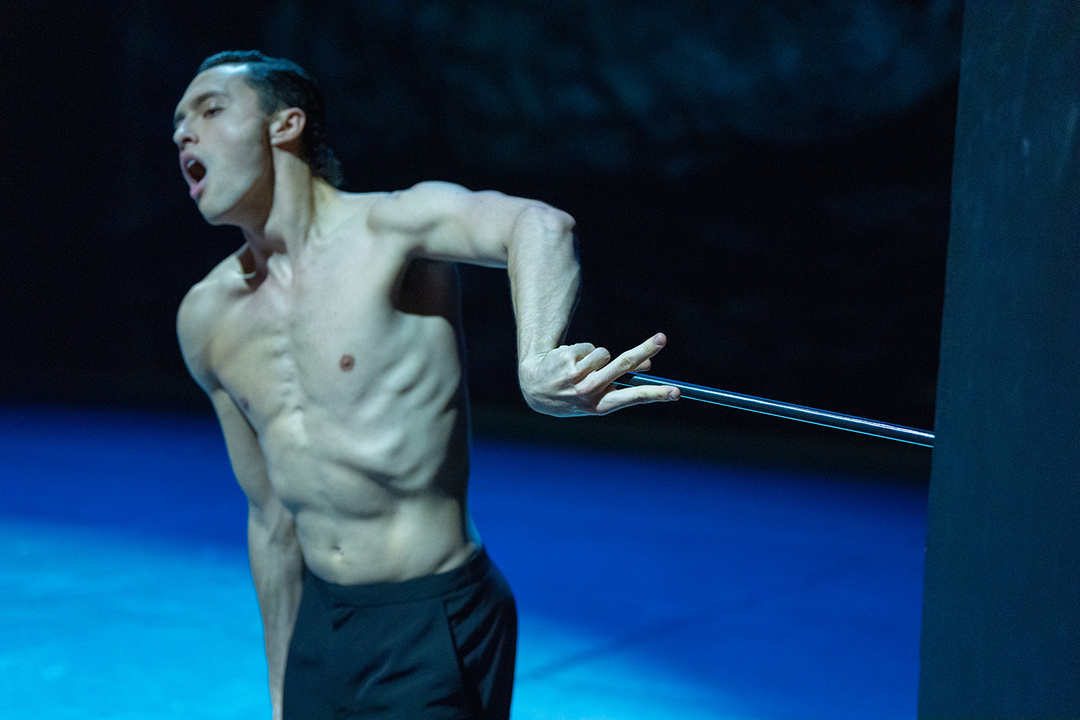
Igor Stravinsky wrote his ultra-short Scènes de ballet in 1944 on commission from a Broadway tycoon who put them on as a show act. Nothing sensational, but a useful distraction in times of war. Four days after the German capitulation, the entire production disappeared from the repertoire, and Scènes de ballet was only rarely taken out of storage after that — by Frederick Ashton, Uwe Scholz or Christopher Wheeldon, for example. But Goecke extracts a dozen episodes of humanity from this divertissement: pure evolution, pure essence. Couples first drift manically towards each other, then violently separate. With steps as sharp as sewing needles, they rush in, push themselves into view with their legs spread, only to sink back into the lightless sidelines a few hugs later. Goecke masterfully exposes the martial underpinnings of the composition. Instead of illustrating lively notes with delicate jumps, the dancers spin around their own axis like crazy projectiles. The threat is total annihilation. Goecke shows this too: a whisper, a shot, a falling body. The world stands still. The curtain falls.

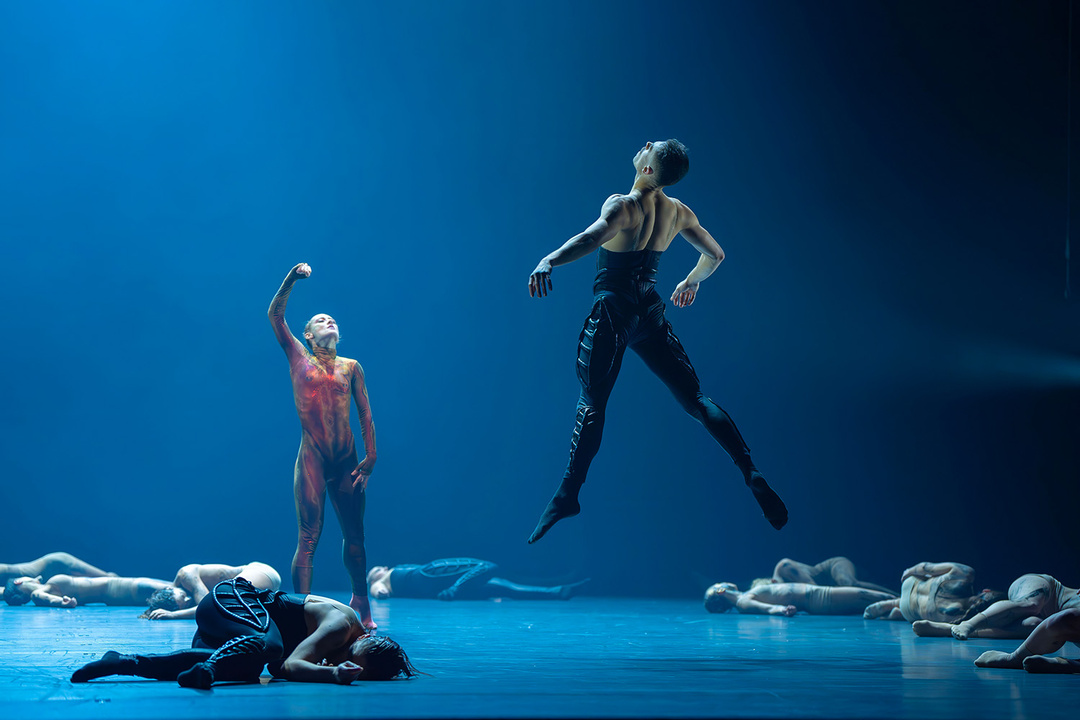
Goyo Montero's Feuervogel continues the thread of this apocalypse. His choreography, premiered in 2023 with the Ballets de Monte-Carlo, overwrites the fairytale original with a sci-fi story: here a nameless "people", there a colonial "researcher" entourage led by a queen and a science guru. The unlikely pair wrestle for love, power and magic: with a collectively fatal outcome. Montero's robust to brutal movement clusters create a gripping tableau that stifles all hope. No rescue in sight as his Sacre version still promised in 2019.

www.staatstheater-nuernberg.de