
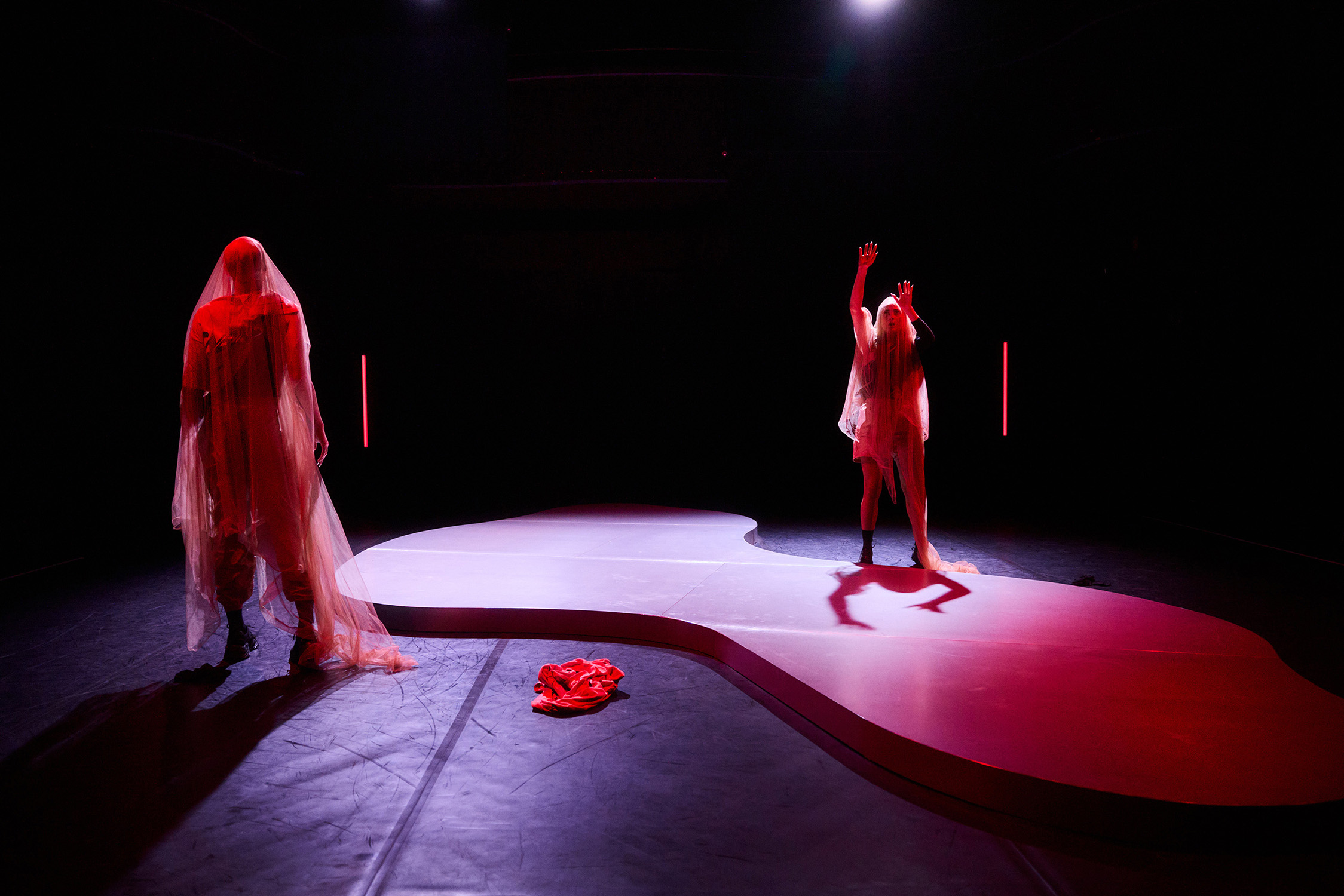
The wind blows, you can hear a beeping, a humming. Carolin Jüngst and Lisa Rykena are lying on the floor, next to a massive stage sculpture typical of the duo's work: in Hamburg’s cultural center Kampnagel, Lea Kissing has built a metal object for «Transfigured», a kind of puddle around which the protagonists lie. Until life slowly emerges. Transfigured is a creation story: the two performers stand up, try out movements, come into contact with one another, sometimes fingertips touch, sometimes their two bodies, and at some point language emerges. "Wwwwwwweißtduuunoooch?" Jüngst stretches out the vowels; it is laborious speaking, a laborious movement. But in the end it serves its purpose, contact is possible, cooperation too, and then first one body withdraws, then the other. "This was the end of the beginning", it’s all a constant process of becoming and passing away, and then the piece is over, after just under an hour. The characters "act with language and song in choreographic world building", Transfigured is announced, and, indeed, the evening outlines the creation of a world, blurred, fragile, but nevertheless a real world. Another announcement: "You won't understand anything until the time comes."
Reviews
Vienna on tour
Rykena/Jüngst Transfigured
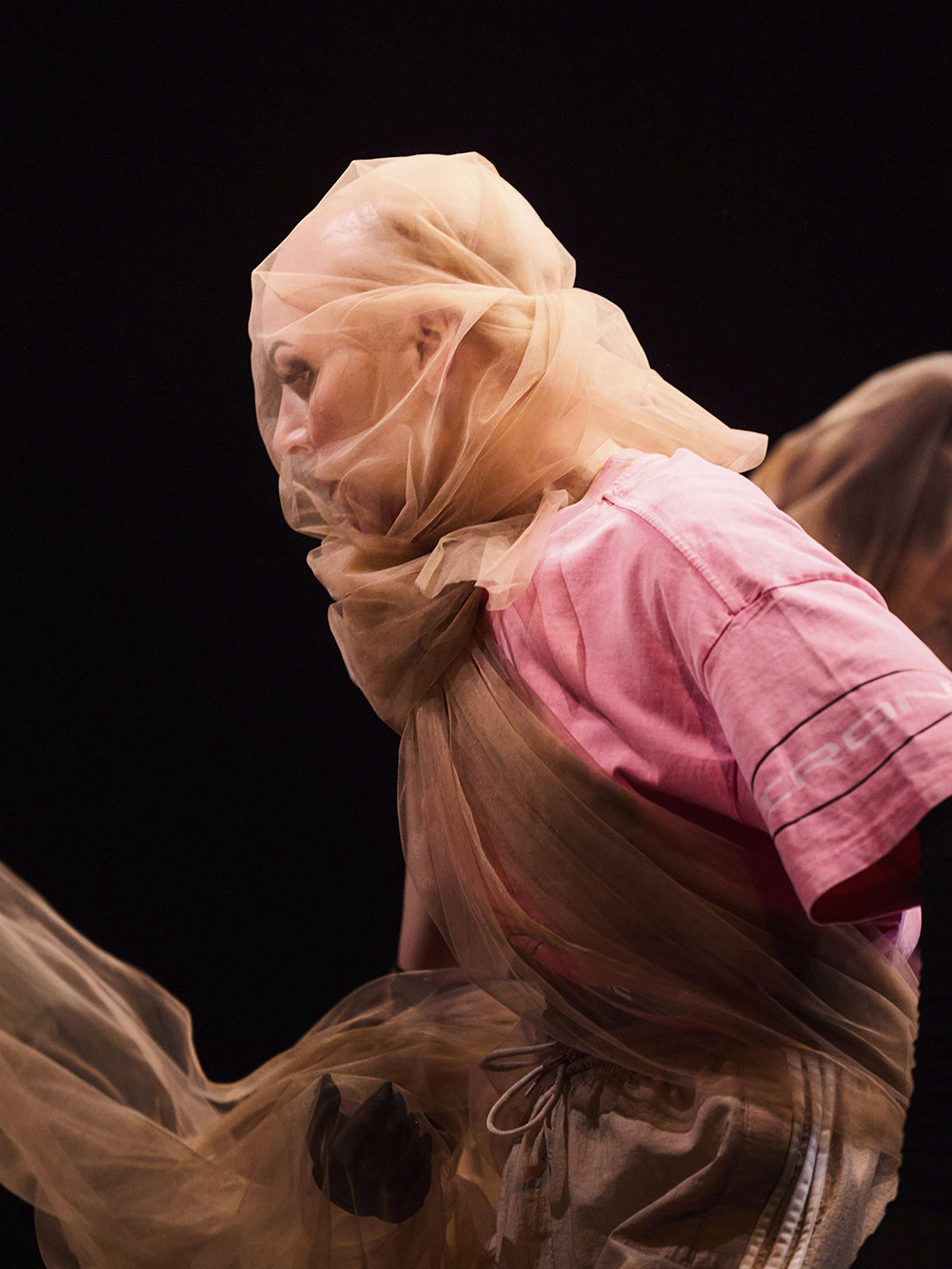
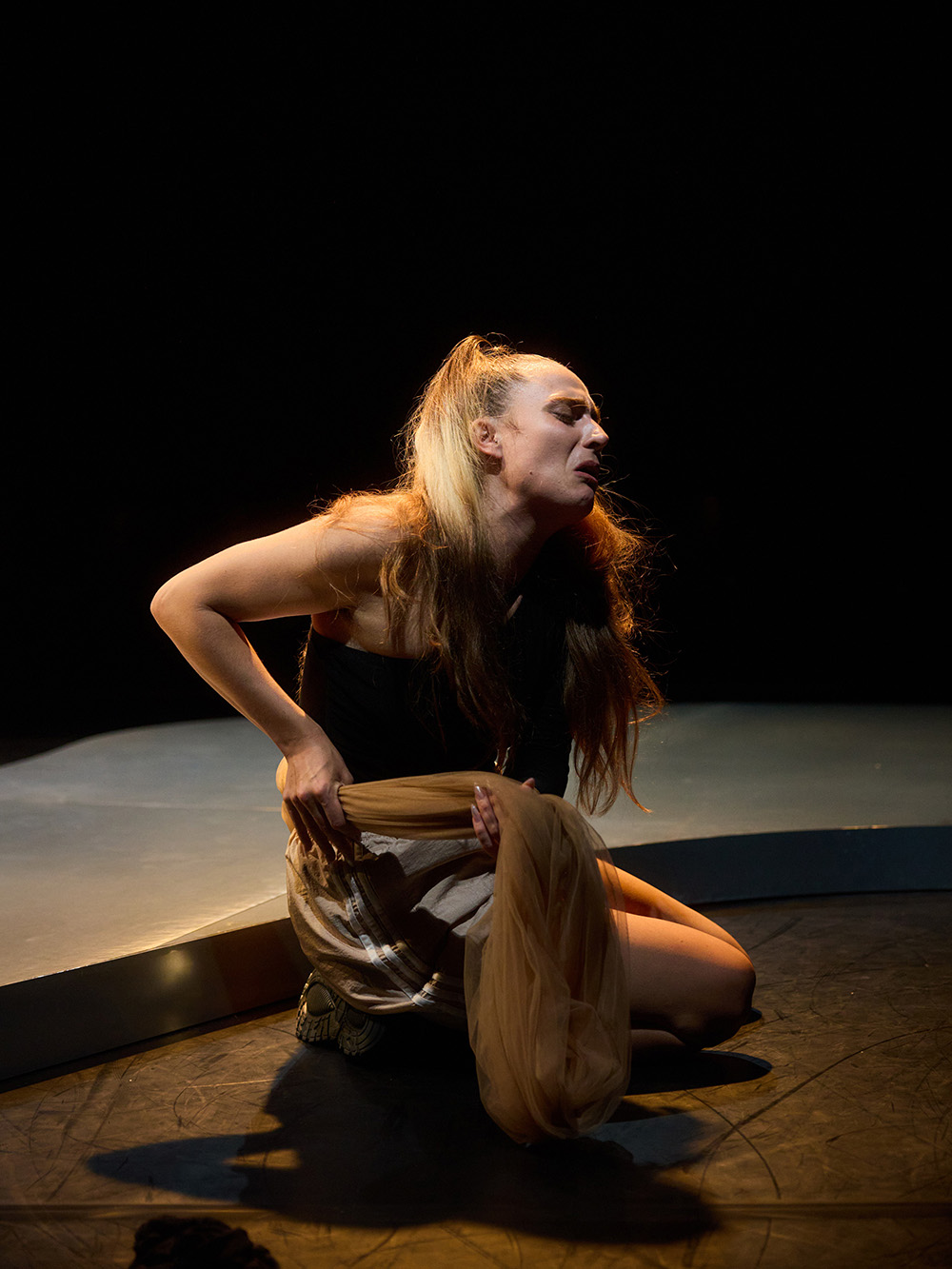
Rykena/Jüngst have been working for several years between Hamburg and Munich on a kind of physical theatre based on the body. The artists design science fiction scenarios into which body images are thrown: superheroes in She Legend, aliens in Sense of Wonder, robots and androids, and in Transfigured it’s now Adam and Eve, so to speak, who have to make do with gravity and biology, with the inadequacies of the body and its slow decay. This is interesting not least when the bodies of Jüngst and Rykena undermine the posthuman concept of the piece through their presence, when their movements take on something cat-like and suddenly seem natural and coherent, regardless of the deeply artificial, hostile nature of the setting.
The duo sees their dance concept as critical of ableism; participation and access are important aspects of their work. In Transfigured, this means that the audio description is not only a tool for a blind and visually impaired audience, but also takes on artistic value itself: the soundtrack is more than a description of the performance, it is also a commentary, a shift, an irony. Which opens up another level on which this piece can be perceived. A piece that is primarily about readjusting one's own senses. For this purpopse, it uses very different levels of perception.
Back in Vienna, brut, 1 February; Munich, HochX, 19, 20 February; www.rykenajuengst.com