People
No Routine!
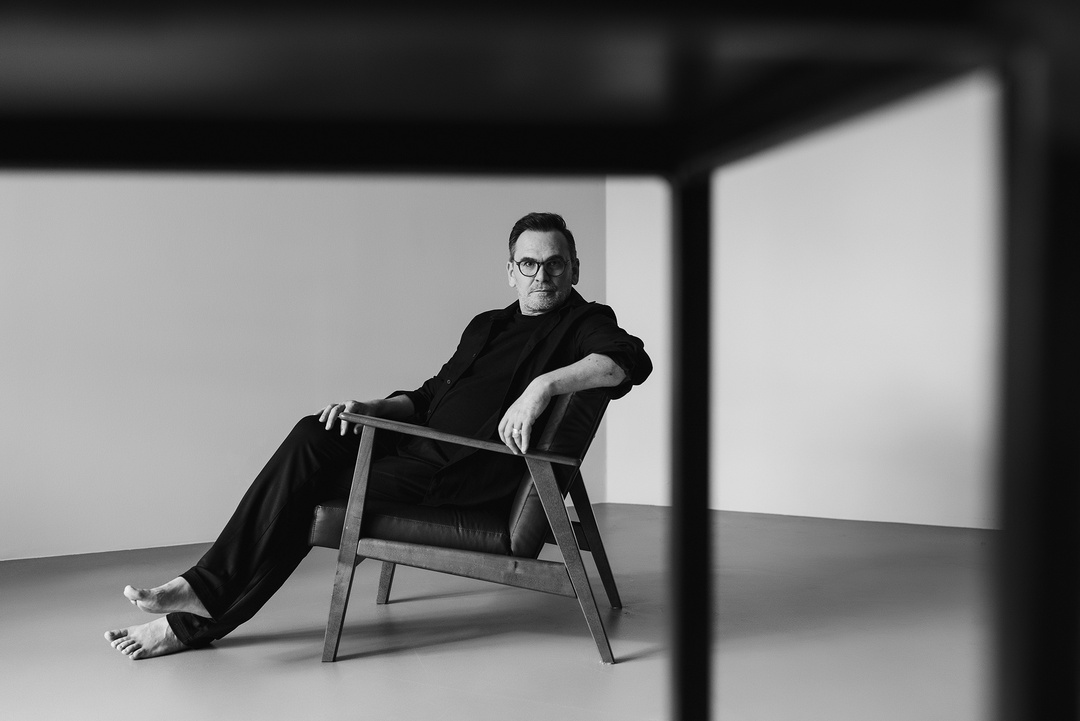
Dirk Elwert reinvented himself countless times before he took his place in the executive chair of Ballett Graz — of course, not a pure office job
Dirk Elwert enjoys living in Graz. It has a very different atmosphere than Chemnitz’s eastern block charm, where he spent a year as Ballet Operations Director and Deputy Ballet Director before moving to the Austrian city where old and new melt together to shape its vibrant culture. The night before our meeting, the premiere of Sacre!, a contemporary doubleheader, comprising Louis Stien’s Fieber and George Céspedes’s Le Sacre du printemps, marked the opening of his second season leading Ballett Graz. Full house and standing ovations. A vote of confidence by the audience which before his arrival had become quite used to narrative ballets. This reaction took him by surprise and the excitement is still visible when he is asked about it. It made once again clear to him why the work they do matters. The goal is set: to bring as many different “people, dance idioms, nationalities and approaches” as possible to Graz. A new younger audience is already there and this aligns with one of his key responsibilities — to plan for the future. He doesn’t believe that such institutions can rely on their taken-for-grantedness anymore. Not shielded from the Zeitgeist, they too need to reimagine themselves to stay relevant constantly.
He is someone who knows what he is looking for: passionate artists, who follow their artistic path and don’t look for easy formulas. In April Iratxe Ansa & Igor Bacovich, along with Maura Morales will have a premiere on the main stage of Oper Graz. It is not about seeking provocation but taking away the fear some may still have. Many of them say they don’t understand dance, to which he always responds: “Me neither!” It is all about trying to open up and letting yourself be fascinated by it, instead of expecting an explanation of something. Just like with music: “It’s important to let oneself in on it.”
His path to becoming Ballettdirektor is not the one we may have come to expect. Guided by a curiosity for everything dance he embarked on it over 40 years ago, even though its beginning didn’t seem to be necessarily written in the stars. While growing up in a working-class family in Gelsenkirchen culture and the arts remained distant until the day the company of the Musiktheater im Revier entered local schools. He felt something burning from within. The Ballettdirektor cast him for his Bewegungschor and took him along. First dance steps? Can-Can in Pariser Leben. He knew he had discovered a whole new world. Yet soon he also had to face its often harsh reality. Starting professional training at the age of 19 was going to be nearly impossible. He decided to stay in the theatre as Assistant Director.
Instead of the full-time contract, he asked for he received advice, for which he is still grateful: to seek out formal education if he is serious about pursuing directing. After long deliberation, he decided he wanted to be an actor. While applying for various acting schools he enrolled Theatre Studies in Cologne. His persistence paid off, and he began acting training in Zurich, where he stayed for a year and a half doing intensive physical classes. It was interesting but he knew It won’t take him far within the system of the German municipal theatres. So he moved to Munich to complete classical acting training and started working as a professional actor. He did enjoy it but the passion was not there.
In 1992 he received a call from a friend dancing in Ballett Nürnberg. They were in urgent need of a dance dramaturge for the upcoming production of Cinderella. He knew this was his chance and he took it. There was no guidebook on how to be a dance dramaturge but then he isn’t someone to shy away from challenges. A persisting curiosity for everything in the gravity field of dance and a healthy lack of “fear of contact” will define his whole career. The consciousness for the profession was starting to take shape at that time and he was part of it. Back then he was a librettist for the remakes, who also helped the dancers with their roles, now an outside eye, stepping in and out to reflect on where the process is headed and what comes across.
With 98 opera and operetta performances per year, the ballet had eight. They couldn’t go on much longer like this. He took action and initiated a partnership with Tafelhalle which turned crucial for the survival of the company. The independent institution became their second home. This later gave birth to TANZWERK, a forum for contemporary dance and ballet in Nürnberg, which he led together with the dancer Uwe Möller and choreographer Jean Renshaw. After a brief stint as manager of the dance companies at Theater Basel and at the Oldenburgisches Staatstheater he spent the next twelve years of his life as an independent dance manager. Be it organizing international tours of companies like Limon Dance Company New York, Danza Contemporanea de Cuba or Szeged Contemporary Ballet or festivals like Ballett Tage Oldenburg, Würzburg tanzt and Tanzbiennale Heidelberg, once again there were no guidebooks to follow.
The agency The. Lab art and media grew fast, maybe even too fast. Once the organizers started having ever smaller budgets and the dance companies relied more and more on earnings from tours, it was the team’s paychecks that shrank. Every project turned into a difficult calculation about how much has to be earned before they get to make a living out of it. How long does it make sense to keep going like this? It was during this time that he was a member of the Jury of the SAT1 dance-casting show You Can Dance in which various contestants showed what they’ve got in elimination rounds. In authentic 00’s fashion it was the TV audience that decided who gets to continue on and in the end, come out as the winner. He laughs in disbelief as I tell him that the finale is to be found on YouTube. Although the show wasn’t that successful it was a fun experience and two contestants followed his advice to pursue professional training and become contemporary dance artists.
In 2016 he reimagined himself again as an apllication agent for dancers with ZAV artists agency in Germany. During this time he was part of the juries of various ballet and choreography competitions like the Internationalen Wettbewerb für Choreografie Hannover. After three years of living the desired by many 38,5 hour work week, he traveled to Bern and never came back from his leave of absence. The pure office job was never something he was meant to do. Today he jumps between being a dramaturge and Ballet Director — and it is just as easy as it sounds. In the Swiss capital, he took over the management of the Tanzcompagnie am Konzert Theater Bern for two years before moving to Chemnitz.
What has changed in the politics since he started? “Nothing at all!” He leads the same conversations in Graz he had in Nürnberg 30 years ago. What is new however is the drift between a new generation that makes theatre from a political impetus and the people who long for the “good, beautiful, and true“. It is a discord about what the role of the arts should be in this day and age. What has changed in dance? “So much!”. Voguing, Hip-Hop, Street Dance, Martial Arts: there is a whole movement universe and every form has its legitimacy. There is a curiosity and a drive to cross borders but it also gets more difficult to stay in touch with the discourses of contemporary dance. It has become a form of work by itself.
”Not all structures are God-given”. There is still a lot of work to be done in Graz. He wishes for a Health Department and regular physiotherapy for his dancers. With an 18-person strong company, he could use a second Ballettsaal and have more choreographers working simultaneously. Longer rehearsal times on stage and in general are essential for the well-being of the artists too. What would be a success? He smiles: „If the Opera’s opening season premiere were a dance production; if the most important production of a theatre were a dance premiere… one can still dream“.
Louis Stiens and George Céspedes
Sacre!
by Plamen Harmandjiev
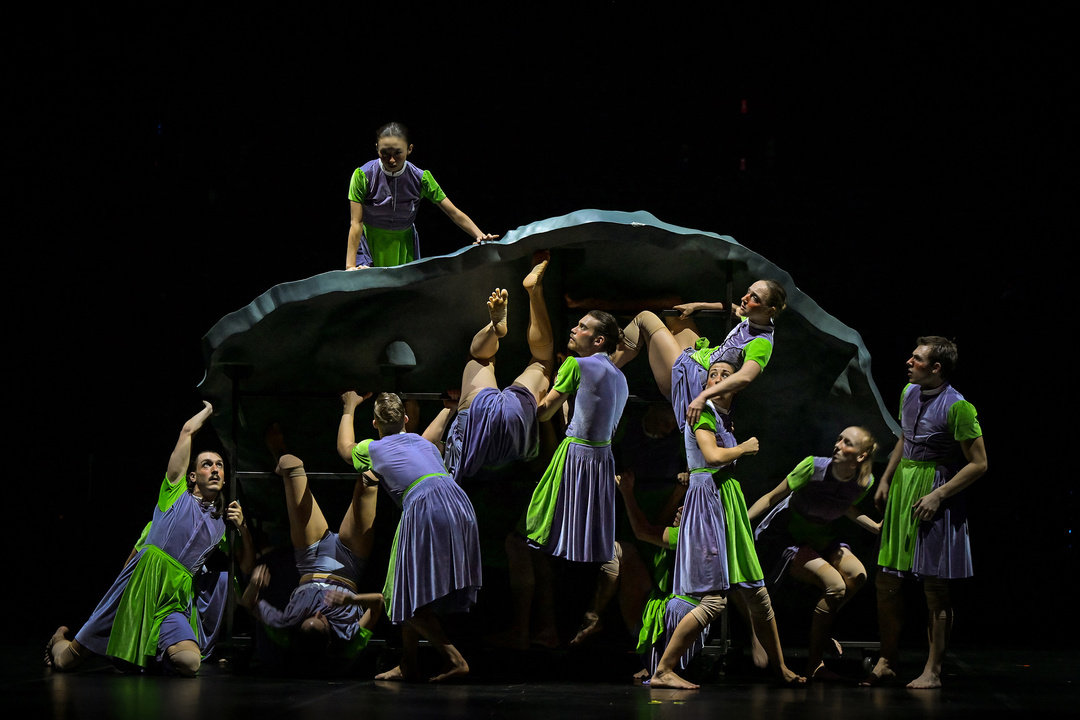
The large sculptural object on wheels feels omnipresent. It evokes an imaginary montage of devastated landscapes, be it the surface of a drifting meteor in space, a hard rock, or maybe a piece of land destroyed by fracking. The uneasy feeling it creates, can't be traced back to Debussy’s Prélude à l'après-midi d'un faune, nor the following piece by Ravel: Ma mère l’Oye. It is a parallel opaque narrative, signaling a possible post-apocalyptic future perhaps? Fieber by young German choreographer Louis Stiens seems to try to inhabit the space between the optimism of the early 20th century music, and a bleak premonition of the future we seem to be headed towards. The movements transform between grander gestures, charged with yearning, stretched arms and legs, and moments where unspoken anxiety is palpable. The performance of the Grazer Philharmoniker is interrupted by sounds of thunders, or maybe bombardments, and quotes from Vaslav Nijinski’s journal. They feel like short glitches leaving one wondering what may lay hidden in them if expanded in time or repeated more often. The purple-green “Dirndl”, which at some point replaces the body-colored costumes, hints towards a political notion of nature and Heimat, which can resonate acutely in many of Europe’s new political realities.
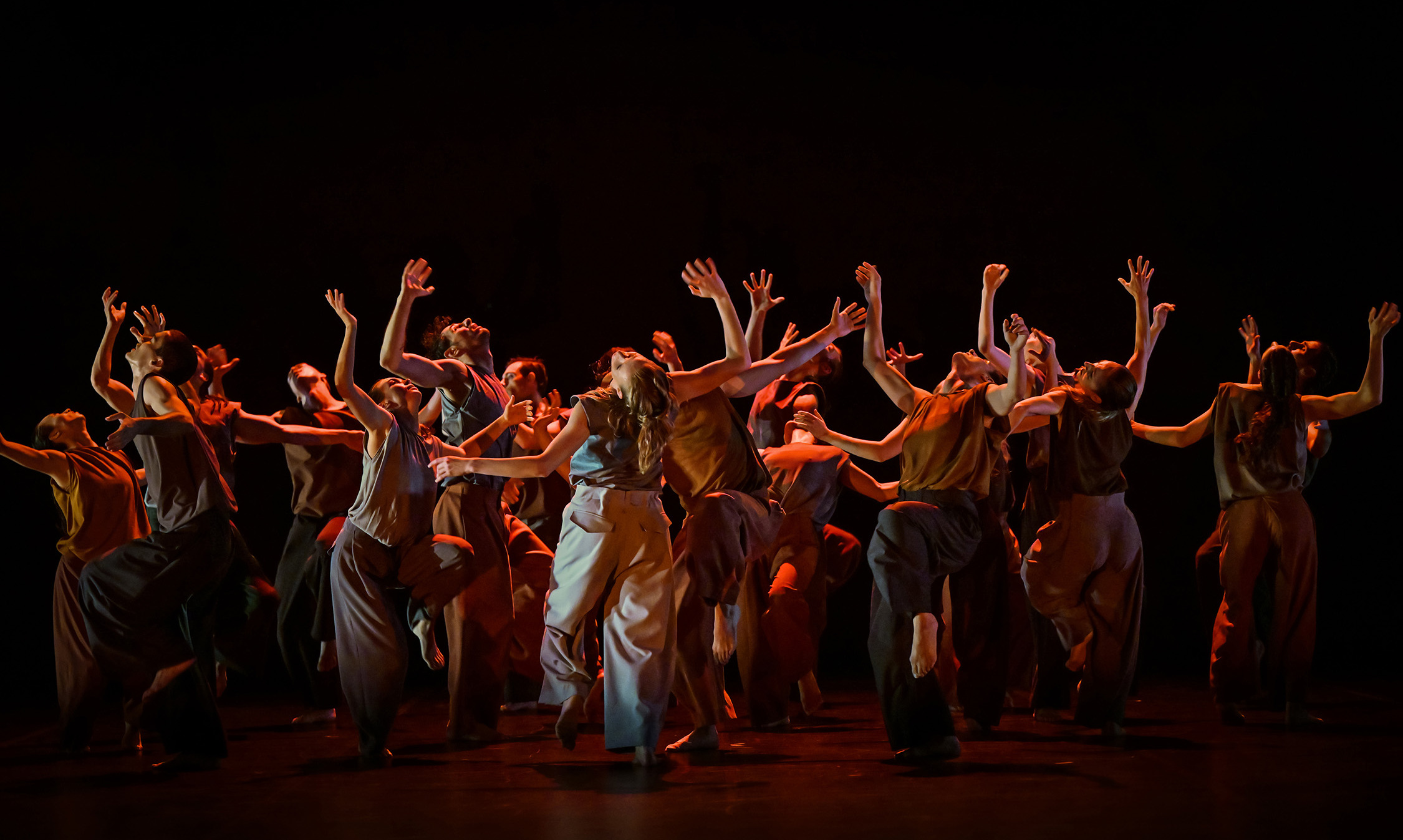
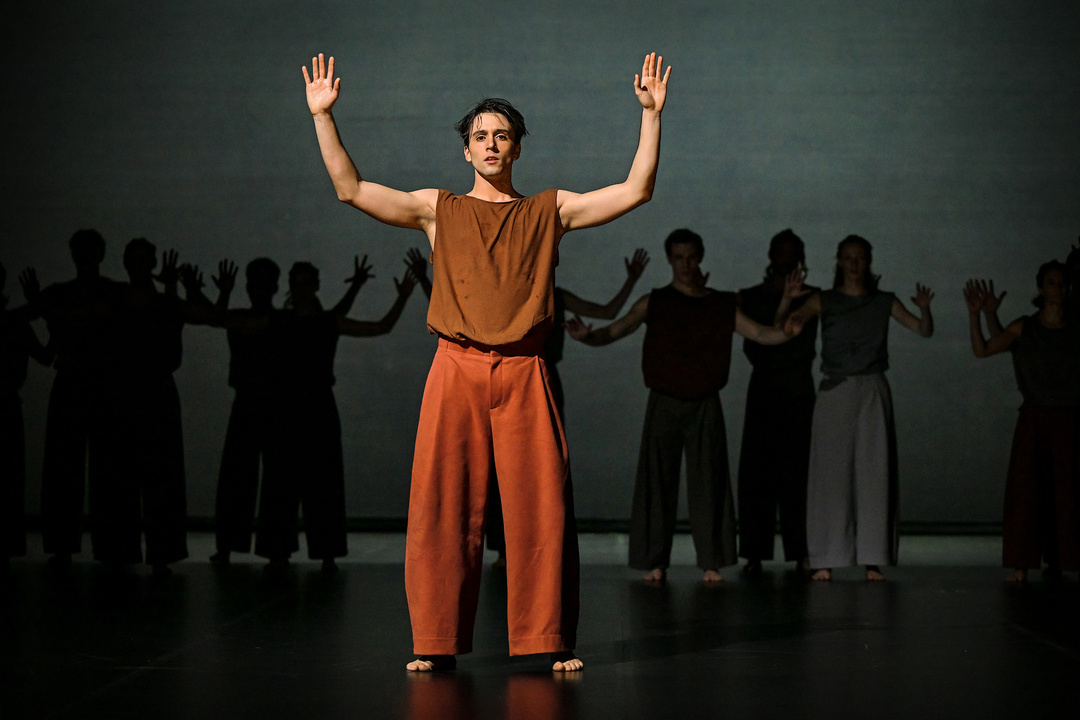
After the intermission, the dancers of Ballet Graz face us with threatening energy. In his first work with a European company, the Cuban choreographer George Céspedes presents his take on the legendary Le Sacre du pintemps. Yet no time is lost in reverence to the past. Everyone is entwined in an expressive power struggle. The assertion of dominance seems to be the key to survival in this rather grim world. The dancers brazenly storm the stage in sprints, large jumps, and violent battles. Céspedes lets the exceptional dancers shine in his movement language, which in this piece fuses ballet with contemporary techniques and martial arts. Looking for a direct dialogue with the audience, at times it feels as if the performers are challenging all of us into a dance battle. The piece portrays a metaphor for a conflict-ridden human history. From moving in an almost military formation, acrobatically shaping bodily sculptures in the duets, or finding short moments of calm and hints of intimacy, its energy, not unlike that of Fieber, connects with a deep worry regarding the world we live in. The sacrifice at the end also stays metaphorical and leaves us with more questions than answers. Indeed, how much has yet to be sacrificed until it’s enough?