

People
Breaking Rules
The celebrated South African choreographer Dada Masilo shockingly died at the age of just 39
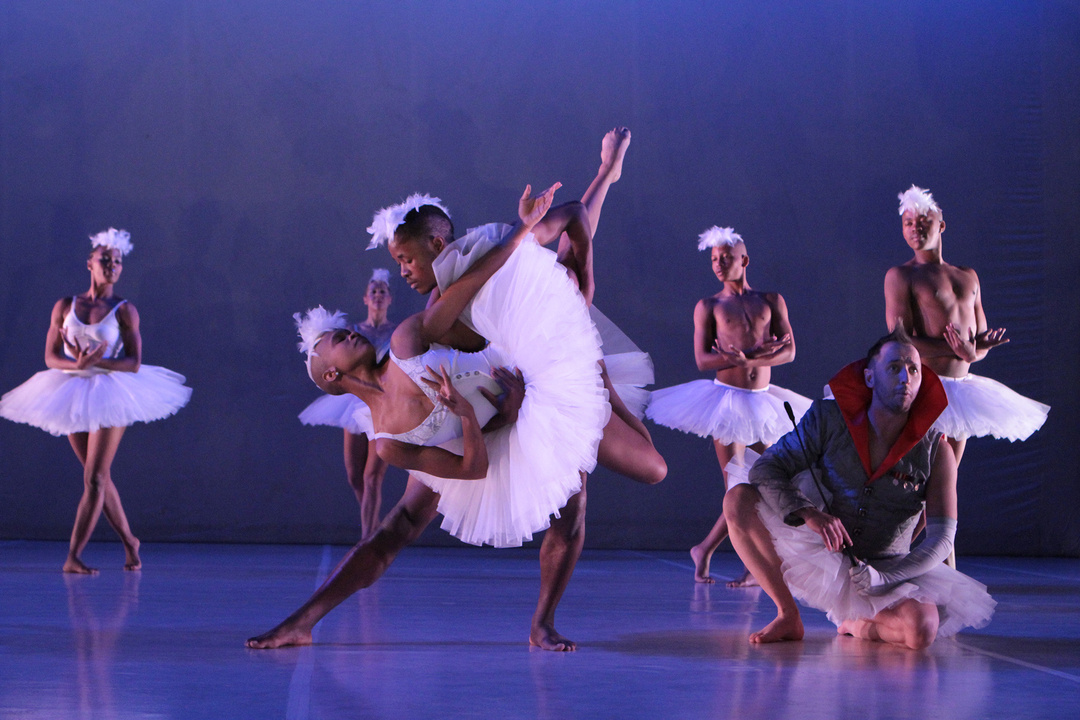
Given Dada Masilo's early career, we only found out about her late, in 2012 — she was 27 years old at the time and had already created three full-length choreographies for the world's major stages, which had already toured internationally. In 2006, she received the "Most Promising Female Dance in a Contemporary Style" award as part of the Gauteng Arts and Culture MEC Award. The National Arts Festival then commissioned her to choreograph Romeo and Juliet (2008), Carmen (2009) and Swan Lake (2010). The sheer creativity! Her Swan Lake completely overwhelmed us. Dada took the original seriously, rejuvenated it and twisted it in the most original way. We only briefly considered whether we could present in our largest hall an artist completely unknown in Hamburg at the time and decided: No risk, no fun! Who, if not Dada, could do it! Her Swan Lake may have been quite classic in terms of the costumes, but at the same time it was a very idiosyncratic choreographic rewrite.
I called Dada's long-time companion and manager Suzette le Sueur. The price seemed too high for such a young artist, but Suzette answered unmoved: "Her work is sold out all over the world." That was a statement. In April 2014, the time had come: in front of a sold-out audience, the dancers moved rapidly across the stage in white tutus, with swan feathers and short hair, without pointe shoes of course, but also without binary roles. A Swan Lake that fearlessly surfed between classical and modern, between Europe and Africa. Minutes of standing ovations were the beginning of a deep love affair between our Hamburg audience, Masilo and her company. In September 2024, she opened our current season with Hamlet.
Growing up in Soweto, Dada began dancing at the Dance Factory Johannesburg, founded in 1992 to support children and young people. She later transferred to the National School of Arts, where she studied ballet and contemporary dance. At the age of fourteen, she was already fascinated by Anne Teresa De Keersmaeker's company Rosas; a video by the choreographer had impressed her so much that she wanted to study with her. At just 19, she went to Brussels to the P.A.R.T.S. dance school which her role model had founded.
Since then, Dada Masilo has established herself internationally as one of the most radical and innovative voices in dance. Her choreographies are characterized by daring reinterpretations of classical ballet works. Her productions were not only characterized by technical virtuosity and lightness, but also by profound social reflection. They questioned normative role models, positions and areas of action in ballet, addressed discrimination, homophobia and violence on stage thus giving a voice to all those who are often left unmentioned in the narrative of classical dance.

In her work, Dada looked for connections between the stories and aesthetics of African and European cultures. She saw herself as an artist who had learned the rules of classical ballet in order to deliberately break and expand them in order to create new narratives, perspectives and aesthetic spaces. In December last year, her hometown of Johannesburg honored her with a star set into the wall of the Soweto Theater as one of 44 "Artistic Icons in the City of Gold." She also received a lifetime achievement award in Italy. Since 2012, her pieces have been performed in 30 countries and 176 cities worldwide.
Dada Masilo died on December 29th. It was a shock. Most recently she was working on a solo that dealt with the loss of loved ones. We already miss Dada Masilo, her work will stay with us.
Amelie Deuflhard is the director of the Hamburg production house Kampnagel, Luise März is the dance dramaturge at Kampnagel.