
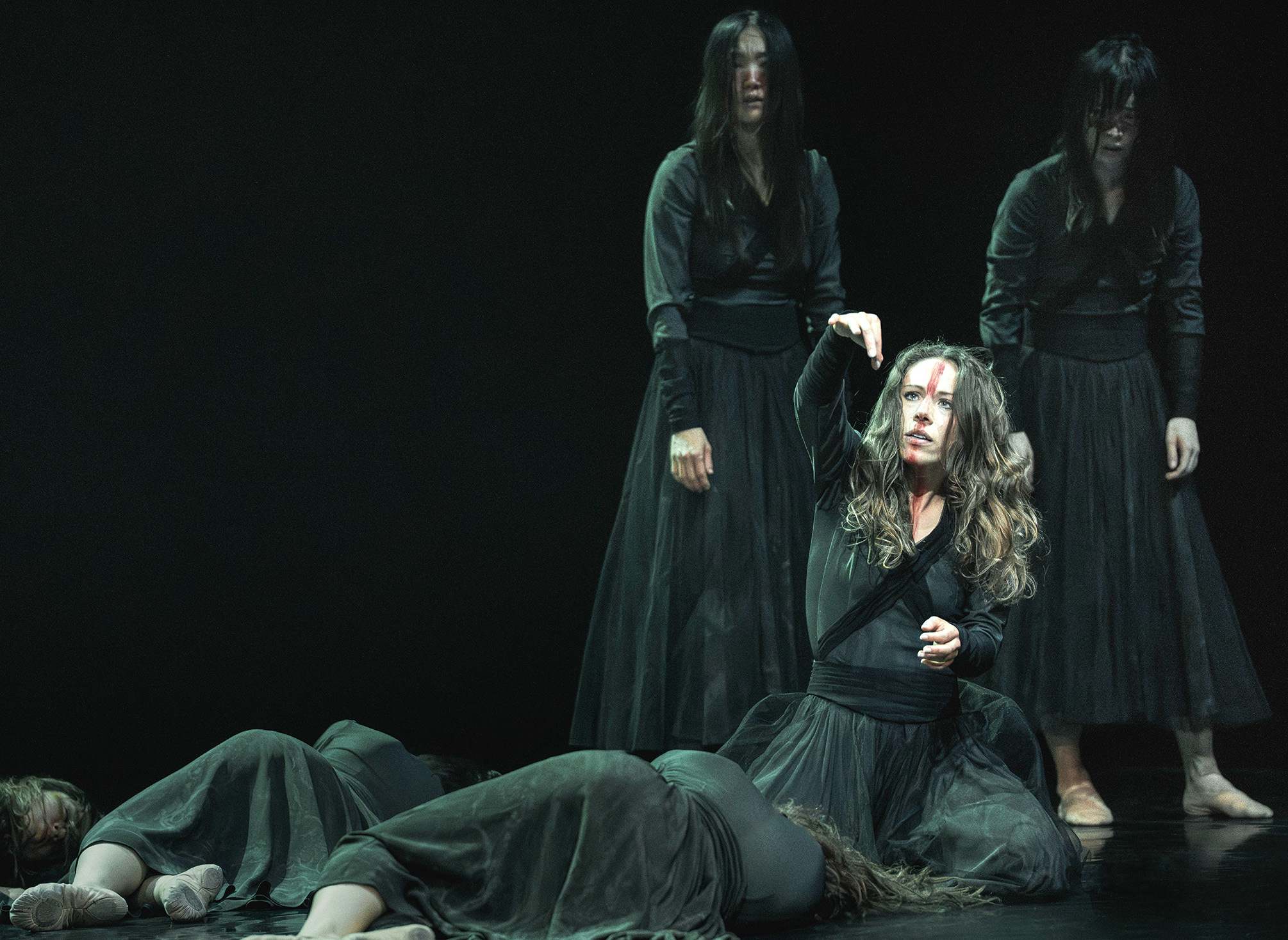
Akram Khan’s debut for Royal Danish Ballet builds upon his innovative style of contemporary ballet that began at English National Ballet with Dust, Giselle and Creature. A sense of otherness has defined Khan’s crossover cycles of work although there is a satisfying sense of sameness about Lady Macbeth with familiar choreographic motifs drawn from those earlier works. Dust has a scene of men joined in a wavy line by holding each other’s elbows, and a similar motif in Lady Macbeth has women pulling their hair to the sides, linking with their neighbours’ arms to create that same memorable image.
Another similarity comes from the wilis in Khan’s Giselle with the female corps, also representing spirits, permanently en pointe and moving in continual pas de bourrées. As well as movement language, ...
