People
Cultural Leaps
Roxane Stojanov, danseuse étoile at the Paris Opera Ballet, embodies a story of European integration
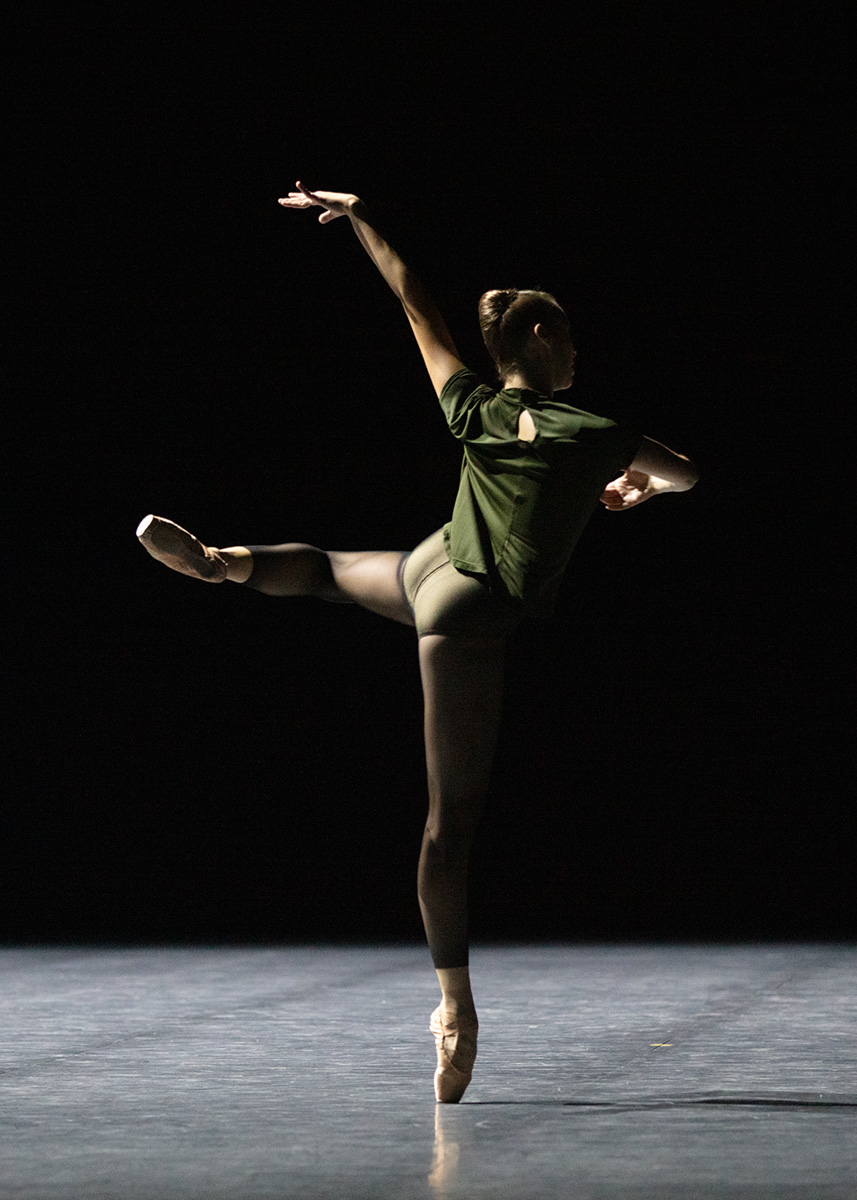
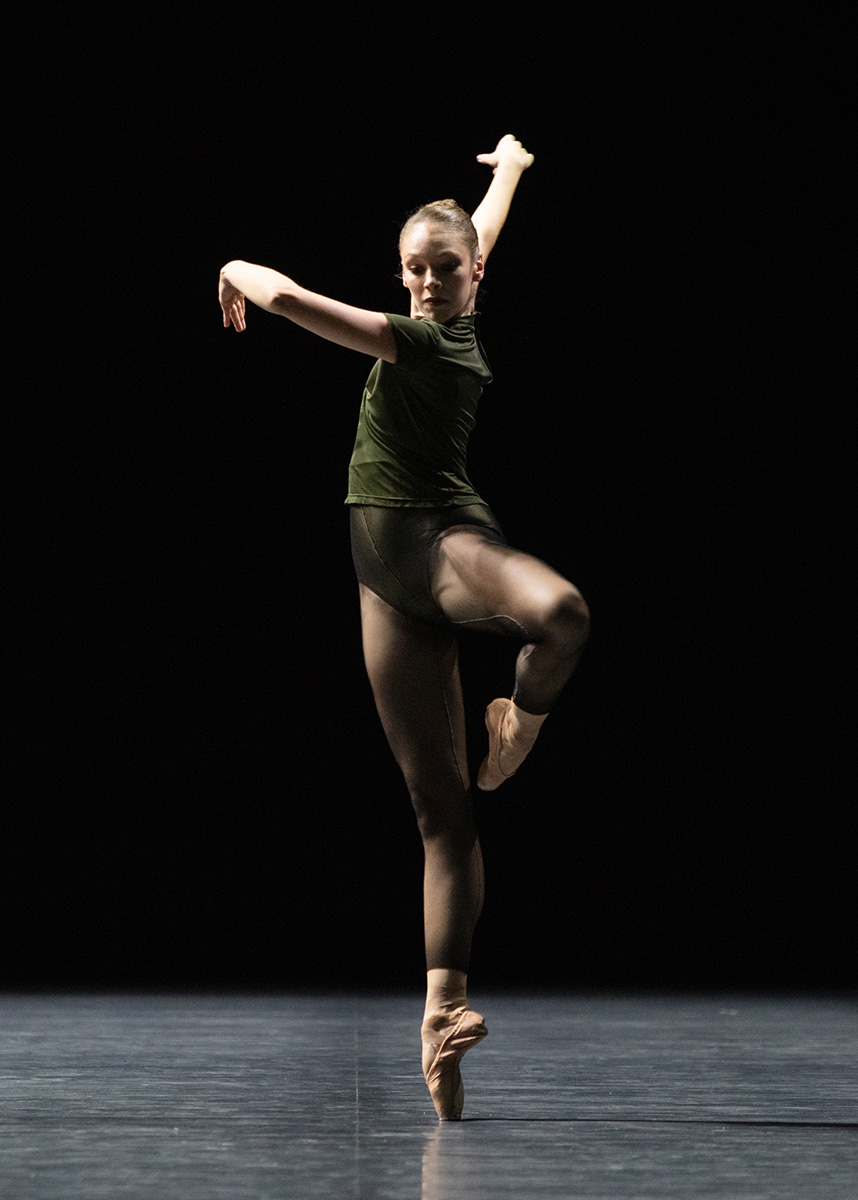
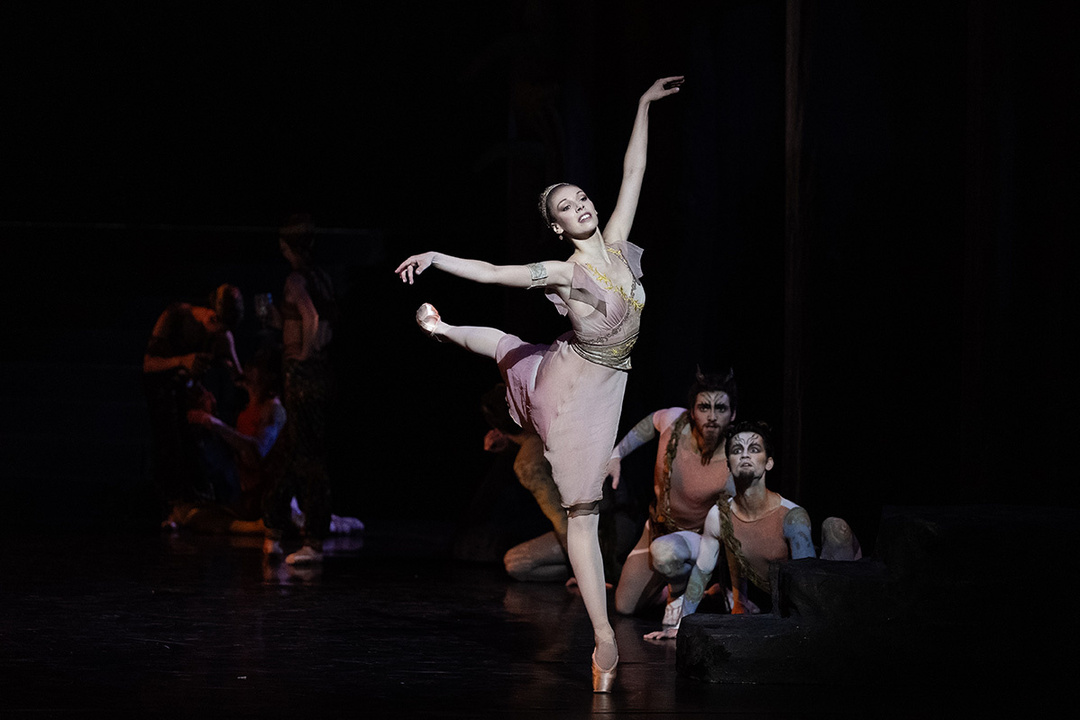
Has the Paris Opera Ballet perhaps found its new Sylvie Guillem? Roxane Stojanov, at least, bears a striking resemblance to the former superstar: The newest danseuse étoile at the Palais Garnier measures 173 centimeters (Guillem: 172 centimeters) and possesses similarly long arms and legs which she knows how to use to great effect. She is thus physically predestined for Forsythe or Balanchine, of whom she has already interpreted eight pieces. But, in keeping with tradition, she was chosen as an étoile for a leading role in a romantic narrative ballet, namely as Paquita. Rather unorthodox, however, are her background as the daughter of a French mother and a North Macedonian father, as well as her appearance. "I'm regularly told I have something Slavic about me. But that's for others to decide." Above all, she was born with an international spirit: Stojanov's mother is a simultaneous interpreter, and her father worked in Brussels with the European Commission on the preparation of the North Macedonian accession to the EU. When he temporarily returned to Skopje, Roxane was four years old. Five years later, they went back to the European capital, a pivotal time, with a change of schools and her first dance lessons. “I learned to read and write in Macedonian, instead of going to a French-speaking school. I was happy because I could speak to my father in his mother tongue from the very beginning.”
Multinational Patchwork
Even in childhood, she had to cope with many cultural differences: “In North Macedonia, children don’t start school until they are seven, so my parents applied for a special permit, and I was allowed to start a year early so that I wouldn’t be a latecomer later in Brussels or elsewhere.” There, she faced an even greater challenge, because she suddenly had to read and write in French, which she hadn’t learned in Skopje. But life straddling cultures also offered plenty of stimulation: “My mother translates between French, German, and Spanish, and understands many other languages as well. She now lives in Bordeaux and works as a court interpreter. On many car trips between Skopje and Brussels, we frequently visited friends in Austria and Germany. The constant shifts between cultures would also prove very helpful for my dancing.” In addition, my parents each brought two daughters from their first marriages into a large family scattered across Europe. “My mother’s daughters suggested I try dancing because I moved a lot to music, including classical music. My mother loved opera, and I was already creating my own choreography back then. But we wanted to wait until our return to Skopje before starting dance lessons.” There, her parents first had to find a suitable dance school. “Luckily, a neighbor, a former dancer, recommended the perfect place. They only accepted children from the age of seven, but then it started right away, with really rigorous training at the barre, like preparation for a profession I didn't even know existed. It was like a game to me. The teacher would ask, ‘Can you do it?’ And I could.” One day, there was a children's performance, Peter Pan as a musical. “The actress playing Tinker Bell dropped out, and I was her replacement. I danced, acted, and sang to a backing track. The audience loved it, and I thought it was wonderful that I could make people happy.”
Eastern Europe is known for its rigorous ballet training in the Russian Vaganova style. This was also the case in Skopje, where the playful approach to challenges motivated young Roxane to her very core. Back in Brussels, she continued her dance lessons. At the age of twelve, she applied to the Paris Opera School, was accepted and lived in the boarding school from then on; her family in Brussels only saw her on weekends. After six years, she, by then of age, was accepted into the Ballet de l’Opéra national de Paris. It took another twelve years until she had completed all the career stages and, in December 2024, was named Danseuse étoile as Paquita in Pierre Lacotte's production. Unfortunately, her father could not witness this momentous occasion; he had died a few years earlier.
Macedonian Heritage
Stojanov already shared a connection with Lacotte through her rise to Première danseuse, when she performed in his Le Rouge et le Noir in 2022. Mats Ek chose her for Appartement and Manuel Legris for his Sylvia. Stojanov now has another twelve years until the internal rules of the house will force her into retirement. Twelve years in which many a dream should come true: for example, to perform as Odette-Odile in Rudolf Nureyev's Swan Lake. "It was the first ballet I discovered, danced by Nureyev himself and Margot Fonteyn. A childhood dream." Besides the classical repertoire, she is also drawn to other universes and eras: "I love to be carried by a character and immerse myself in another life." Or to transform oneself: "How I would love to dance a piece by Pina Bausch. Everyone who had that opportunity at the Opéra emerged transformed."
Stojanov's Macedonian heritage is a topic in itself and anything but insignificant. For one thing, she grew up immersed in the traditional festival culture and has the warmest memories of the joyful circles of Oro dances, where everyone holds hands at weddings, baptisms, and spontaneous parties. "We learned the movements at school, and I understood which dances belonged to which musical styles. I always looked forward to the wedding celebrations, where all the guests agreed that it was truly in my blood." Today she lives in Montmartre, and when she wants to treat guests to Macedonian specialties, she shops at Turkish stores. "It's a very aromatic, generous cuisine, but I also like the cuisine of southwestern France, my mother's," she says, describing her appetite, which doesn't fit the dancer stereotype at all.
Subtle Acting
Stojanov is doing her part to help small North Macedonia, with its approximately two million inhabitants, emerge from the shadows. Accordingly, since her appointment as Danseuse étoile, she has been courted by the local media. And with the support of the French Embassy and the Institut Français, she established a dance prize for North Macedonian youth, which was awarded for the first time in April 2026. In this way, she wants to create incentives, encourage potential successors, and spread the word in North Macedonia that dance can be a profession. "I am proud of my North Macedonian heritage and want to build bridges," she says, reflecting her very international understanding of her father's culture. "Although North Macedonia borders Greece, the language and alphabet are closer to Russian, however different the two Slavic countries may be. I can communicate well in Croatia, though. On the other hand, many words in North Macedonian are similar to German because they were brought back by guest workers.”
Something of her Slavic heritage is definitely noticeable at the Opéra.In her interpretation of Esmeralda, the femme fatale in Roland Petit's Notre-Dame de Paris, inspired by Victor Hugo's The Hunchback of Notre-Dame, she pulled out all the stops last December, portraying everything from the provocative seductress to youthful naiveté, fear, and genuine compassion for Quasimodo. Her acting was so subtle that one practically felt like one was in a movie theater. This also has to do with her family history. One of her half-sisters, Aurélie Vauthrin-Ledent, lives in Brussels as an actress and writer. "She gave theater classes at the dance school I attended. That's very helpful for dancers." But there was more: “We also received acting lessons from Clément Hervieu-Léger.” He is a theater director and has been the artistic director of the Comédie-Française since August 2025. “It was his first theater course for dancers. I was only 15, but the connection with him has remained to this day.” Hervieu-Léger recently directed L’École de danse, a lesser-known play by Carlo Goldoni. A sign of things to come? Stojanov could well continue her career in the theater after her time as a danseuse étoile. But first, she gets to dance and act in one of her dream roles. In April, she appeared in Rudolf Nureyev’s Roméo et Juliette as the Capulet daughter, John Neumeier’s La Dame aux Camélias is scheduled for May, and La Bayadère for the summer.
See her in Paris in «La Dame aux camélias» as Prudence on 5, 8, 13, 19 May, and as Manon on 7, 10, 20 May; www.operadeparis.fr