
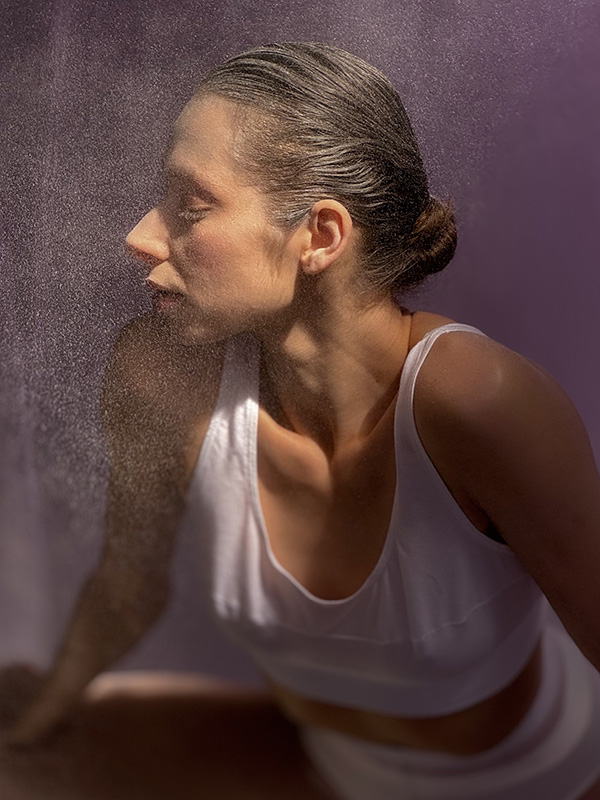
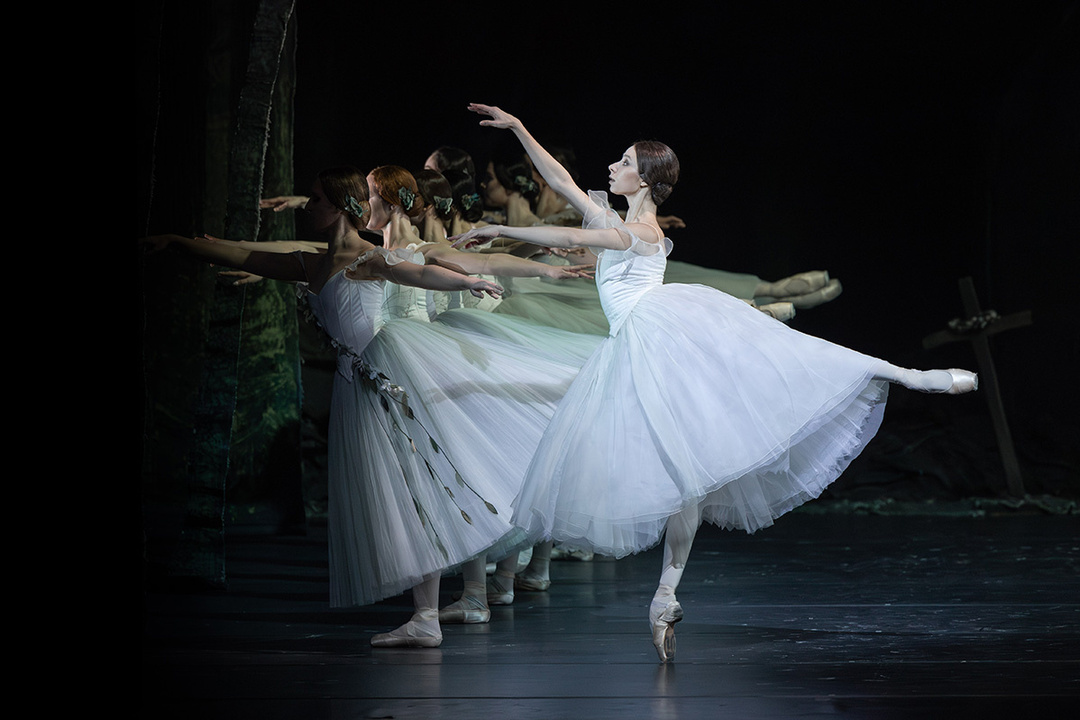
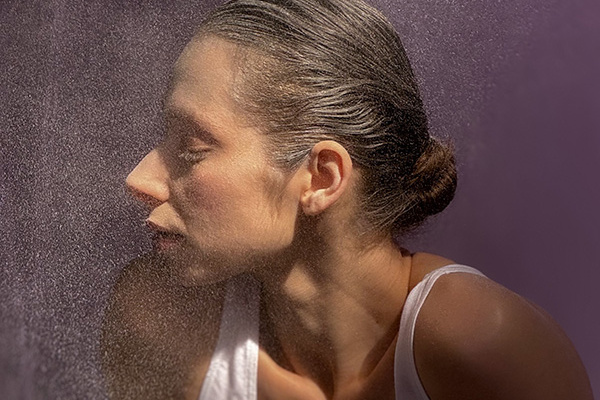
Cuteness factor? Zero. She says herself that she doesn't have a "Giselle" face. Ksenia Shevtsova's appearance is far from the childlike stereotype which, incidentally, her famous predecessors in the role of Giselle, such as Eva Evdokimova, Carla Fracci, or Gelsey Kirkland, didn't follow either. She has a very special face, a face like something out of a Renaissance painting, a distinctive nose, full lips, a narrow chin — and those soulful, deep brown eyes beneath beautifully arched eyelids and broad brows. "Giselle" face or not: Shevtsova's Giselle is enchanting, giving you shivers of joy and goosebumps in equal measure. The way she increases in precision and speed with each step carefully chosen when she notices that the gentle Albrecht is interested in her; then her incredulous, stunned expression at Bathilde's entrance; her desperate rage in the face of Albrecht's cold-blooded mimicry, pleasing his fiancée. One can see in this Giselle how the crushing realization of only having satisfied a whim works within her, only to then furiously mark the circle of mortal despair with Albrecht's sword. In Ksenia Shevtsova's performance, this comes across as lived experience.
People
Fast as
Lightning
Always in the fast lane: Ksenia Shevtsova shines at Bayerisches Staatsballett
Watching Others? Boring ...
Shevtsova fondly remembers the dreams of a very young Ksenia: "I was lucky enough to meet people who believed in me and gave me a chance. I loved dance and I loved performing in the theater." She caught the ballet bug when she was not even ten years old. But watching others dance was something she didn't like from the start: "I found the first ballet I saw so boring that I ate the whole time during the performance. I wanted to perform myself." From then on, she took dance lessons at school, but only twice a week and not very professionally. To become a dancer, she had to leave the not-so-small city of Samara, an industrial city on the east bank of the Volga River with a population of one million: off to St. Petersburg!
"Later, at 14, at the Vaganova School, I finally got proper lessons and soon won a competition. And gradually my self-confidence grew, and I knew I could rely on what I was doing," she continues. Ksenia Shevtsova's pronounced features relax as she recalls her decision to become a dancer. How her family naturally supported her in this, and how her mother accompanied her on the excruciatingly long train ride to St. Petersburg to the Vaganova Ballet Academy. When she talks about it, her eyes light up. She graduated from the same school in 2012. She was 20 at the time.
And now, 13 years later, she is Giselle. Why Giselle is listed in the current program of Bayerisches Staatsballett as a "peasant woman" and not as a "winemaker's daughter," as she has been all these years since 1974, when Peter Wright's Giselle premiered in Munich, is probably something only the dramaturge knows. In any case, there is certainly nothing rustic about Ksenia Shevtsova's features. She is cheerful and lively. She makes a grounded impression, even as she takes you on flights of fancy with her dancing. She uses surprising nuances: In the madness scene, for example, she emanates a quiet, defiant rebellion against Albrecht's betrayal, something we have never seen before. It is, as it were, the desperate prologue to what would inevitably happen to him at the Wilis'. But there she is again, Giselle, now a ghostly figure, suspended as if on cushions of air, yet still grounded. Ksenia Shevtsova found her ideal partner as Albrecht in both acts in Jakob Feyferlik — tall, dazzlingly handsome, her equal in both dancing and expression.
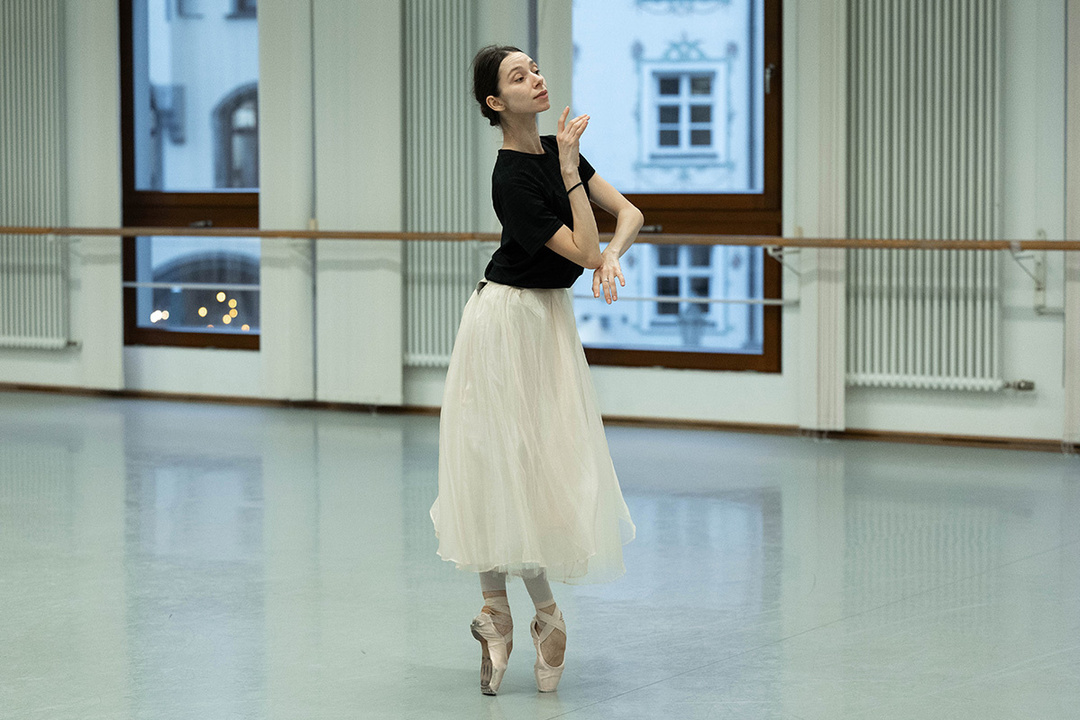
As both a deceived woman and a lover beyond death, she turns her innermost being outward, without tremolo. She forces nothing. What she does looks natural. In an interview with the press spokesperson for Bayerisches Staatsballett, she explained how she is able to increase the intensity of her dancing: From Munich's ballet director Laurent Hilaire, once a Danseur étoile at the Paris Opera and its ballet director for many years, she learned to "breathe with her legs." In our conversation during a rehearsal in the large ballet studio at Platzl, she says quite succinctly: "The most important thing is breathing." And one involuntarily thinks of yoga and Pilates teachers who never tire of urging you to direct your breath everywhere in your body.
From Romanticism to Rave
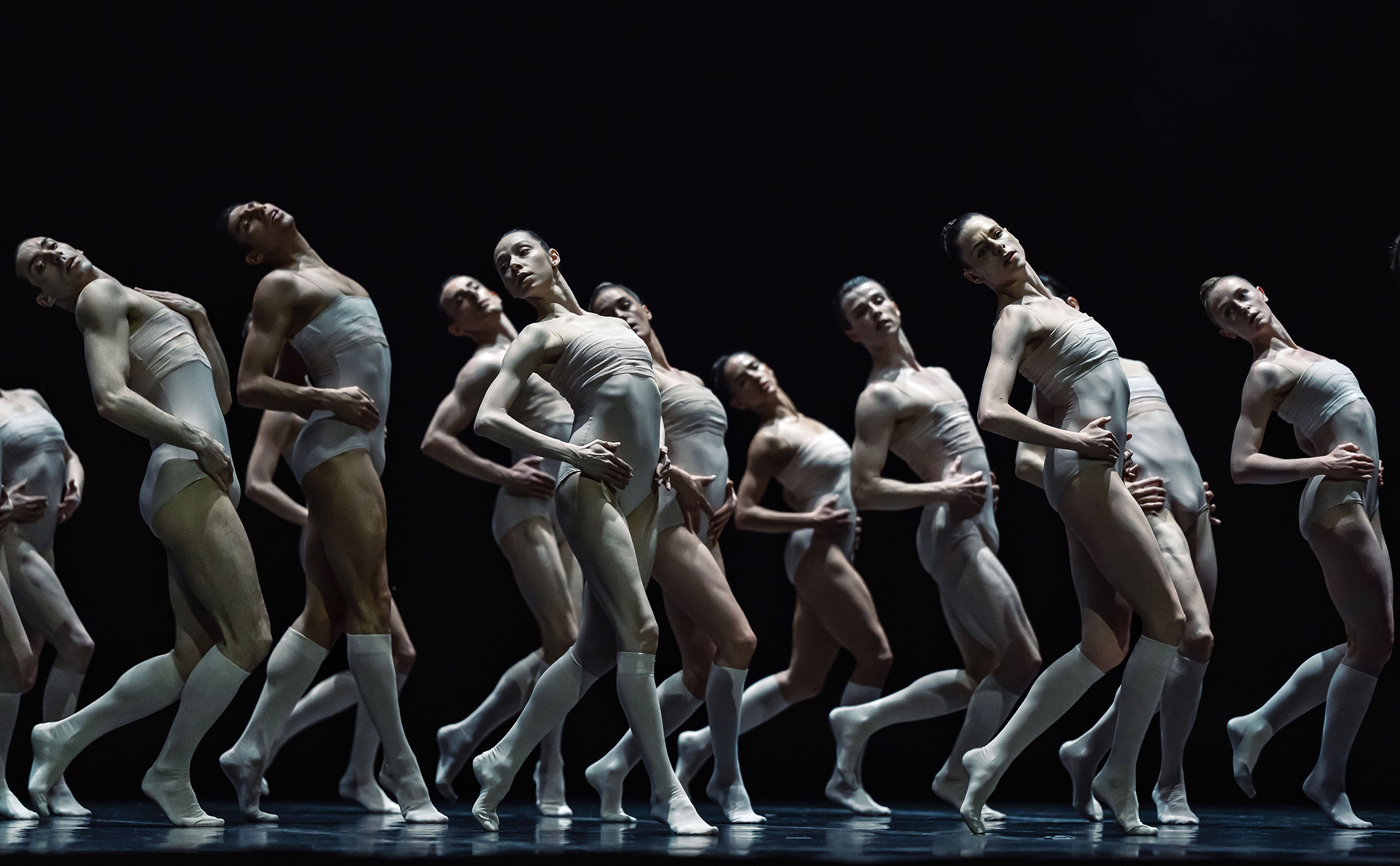
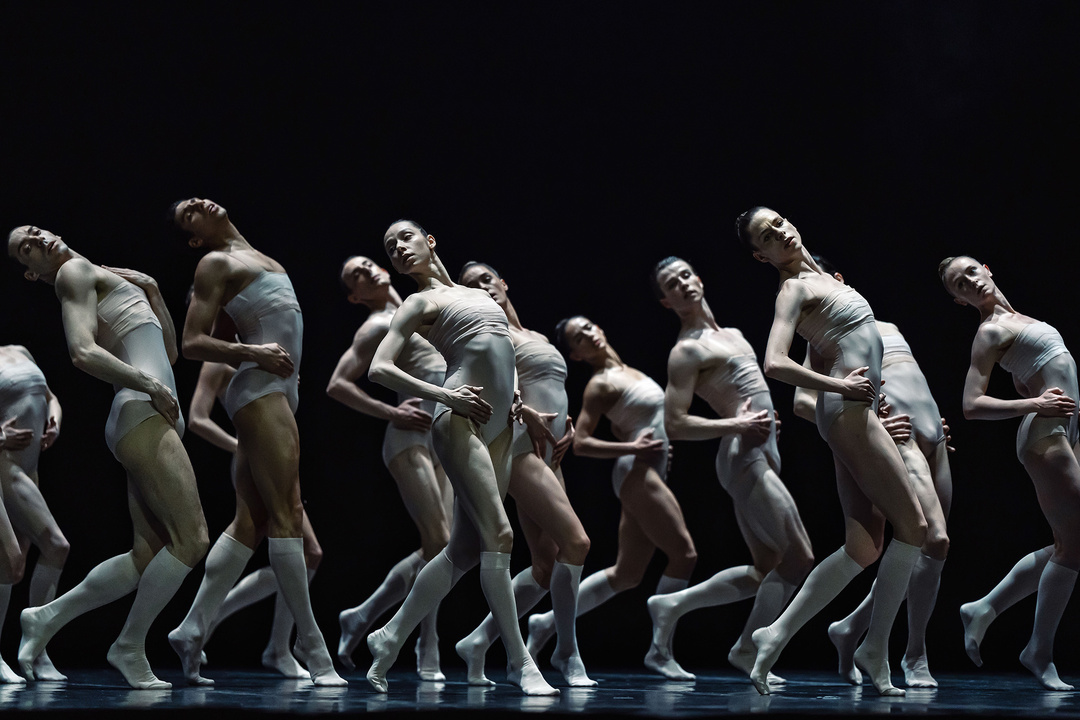
Now, in Munich, Ksenia Shevtsova has arrived where she belongs — at the top. A position that isn't new to her, as she already held it in Russia at the Moscow Stanislavsky and Nemirovich-Danchenko Music Theater, where she was a member for more than ten years. She is a principal dancer at Bayerisches Staatsballett, meaning prima ballerina (which, of course, sounds much nicer), inspired by her respective sponsors, Igor Zelensky and Laurent Hilaire, whose names she mentions with rapturous affection. While still in Moscow, Laurent Hilaire succeeded Igor Zelensky as ballet director, as he did later in Munich. Ksenia Shevtsova values both equally. This season, she will be seen primarily in romantic roles (when she's not stomping her feet as a group dancer in Sharon Eyal's Autodance). She dances La Sylphide in Pierre Lacotte's version, which she prefers to the equally nimble version by Auguste Bournonville and which has been common in Munich up to now. And she immediately demonstrates why, elegantly tilting her shoulders to the right and left in the Épaulement: In Lacotte's version, the whole body is in motion. Which is why she loves the French style far more than the comparatively rigid Vaganova technique.
The way she works during a rehearsal of a complicated Pas de deux from John Neumeier's Ludwig II ballet Illusions – Like Swan Lake is astonishing. The premiere is scheduled for mid-May. So now she's finally a beautiful ballerina? Shevtsova is too down-to-earth for that. And also too organized and clear-headed. And far too quick for vain poses. It seems as if she is always a few (mental) steps ahead of both the ballet mistress and her dance partner. Everything she does is well-considered; her spontaneous reactions are based on astonishing intelligence, a phenomenal memory — and, last but not least, many years of experience. Ballet mistress Judith Turos, formerly first soloist of Bayerisches Staatsballett back in the days of its founder Konstanze Vernon, can of course recite the Pas de deux by heart, but has a video of the performance from Hamburg with her just in case. Ksenia Shevtsova only looks at it occasionally, and apparently just for show.
She simply continues dancing entire passages on her own. But first, she is busy positioning the hands of her partner, the Chinese Principal Jinhao Zhang, on her back near her kidneys for secure lifts. After about ten minutes, it all fits; she knows exactly where he has to reach. Zhang lifts her up. She stands effortlessly with her feet stretched out in the air, as if her toes were on solid ground, and she is visibly pleased about it. Obiously, she already knows the choreography by heart. Because, once seen, she internalizes sequences of movements in no time? That must be the case, because she has never danced Illusions – Like Swan Lake before, but she has danced ballets by John Neumeier, as the Moscow Stanislavsky and Nemirovich-Danchenko Music Theatre has some of his pieces in its repertoire. The rehearsal confirms: Ksenia Shevtsova displays remarkable comprehension and breathtaking speed in the rehearsal room as well as on stage. And all of this, or so it seems, is completely free of airs and graces, lively, cheerful, and communicative. Just as she comes across in conversation.
To be seen in the three-part opera Wings of Memory at Bayerisches Staatsballett's Ballet Festival Week from 10 to 16 April, as well as in May in Giselle and in Illusions – like Swan Lake; www.staatsoper.de