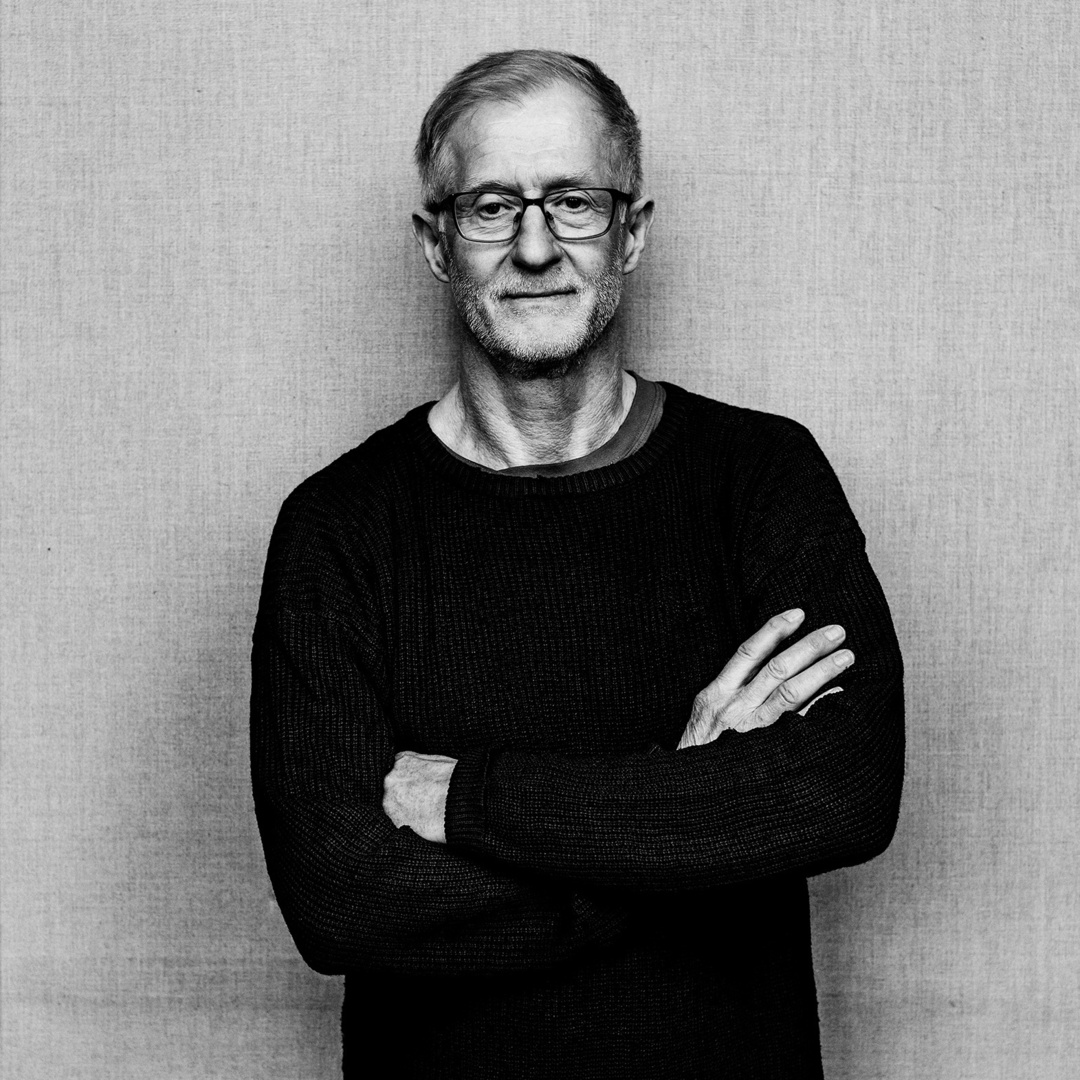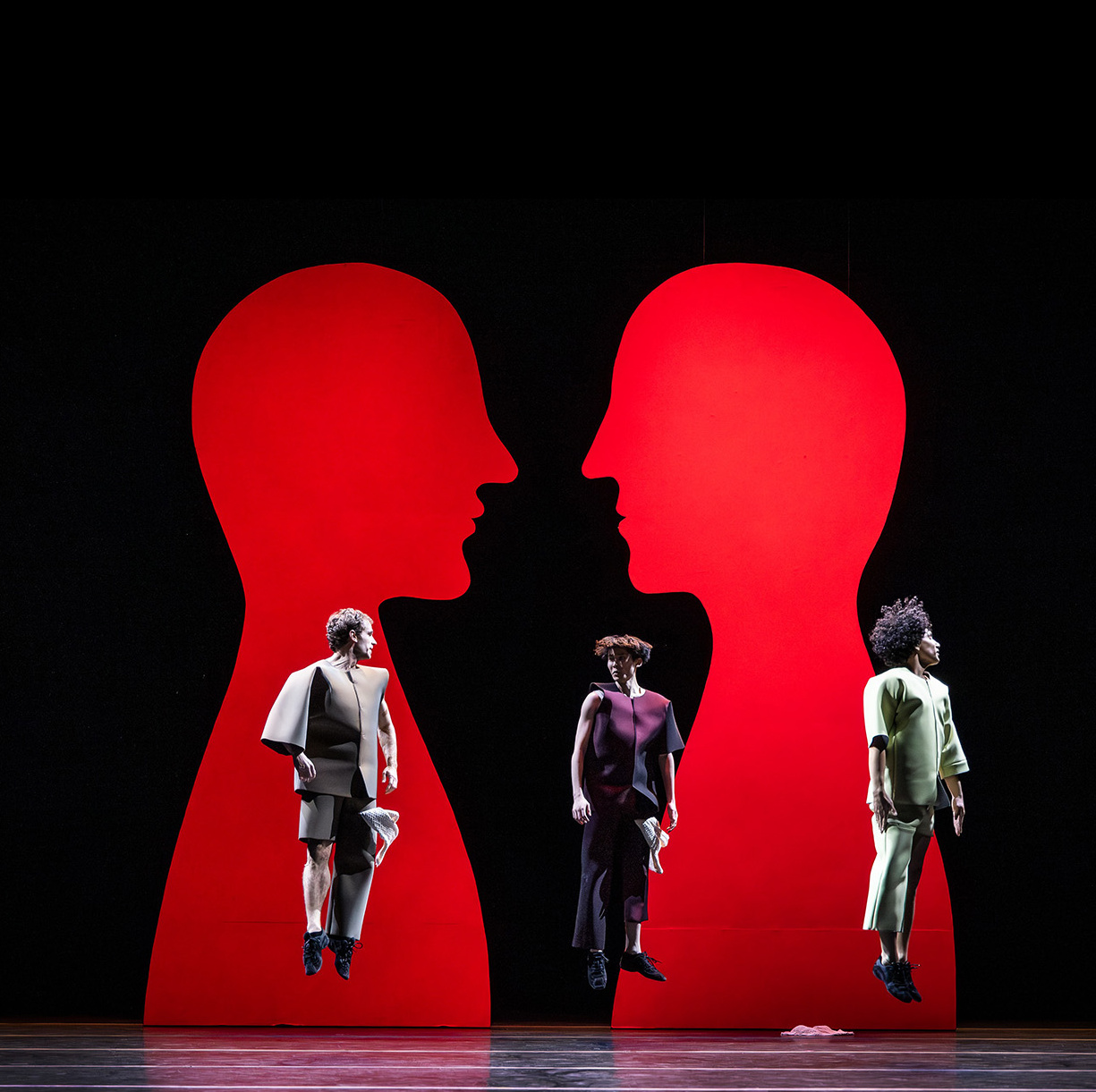
Will he finally sit back and relax at eighty? The question is not unreasonable, given that Mats Ek already announced his retirement before, only to return to the stage. "No," he declares immediately, referring in this context to his most recent choreography, commissioned by the Royal Swedish Opera in Stockholm as a prelude, perhaps even as an invitation to his birthday: A Cup of Coffee.
Alone in the Studio
A stage without the works of Mats Ek would be hard to imagine. His choreographies, which he created over the course of a long life and hopefully will continue to create, are unmistakable: pieces sui generis, immediately recognizable as his own. Pieces that are always down-to-earth, even when they soar, and consistently characterized by a humor that can suddenly turn into its opposite. Yes, his way of moving sometimes has something eccentric, surprising about it. Perhaps that's why, in the end, it always gives cause for hope and joy.
Undoubtedly, the personal appearance of his choreographies is linked to the way they were created. Mats Ek, as he himself puts it, still feels too "shy" to develop his own language in front of his performers. "I need to be alone in the studio when I'm trying something out on myself. Once I've worked on my body and gathered movement material, I feel free. In the studio, well prepared through self-experience, I can improvise and discover new things with the dancers."
This shyness, this self-control, is explained not least by the family environment from which Mats, born in Malmö in 1945, comes. His father, Anders Ek, is one of director Ingmar Bergman's most prominent actors. His mother, Birgit Cullberg, was already something of a legend as a choreographer in Scandinavia during her lifetime, touring halfway around the world with the ensemble named after her. Niklas Ek, the older brother, embarked on an early career as a dancer, a striking blond man in the midst of a Ballet du XXe siècle, which, under Béjart's direction, was one of the top ensembles of the time. And his twin sister, Malin, also caused a stir: as an actress in Stockholm.
The Choreographic Calling
Mats Ek initially turned his back on his mother. "But this resistance was completely unconscious," is how he explains his stubbornness. "I didn't immediately turn to dance because I didn't want to take what I was being modeled for granted, but rather wanted to arrive there myself by a long detour." A detour that, after studying theater studies and various directing activities, led the 27-year-old back into his mother's arms, namely to Cullberg Ballet. And there he felt nothing but "joy, joy, joy," even if dancing sometimes became difficult and he had a lot of catching up to do technically. But the desire to become a choreographer had long been awakened, if not overwhelming. And the opportunity, not to say the necessity, arose after a temporary engagement with Erich Walter at the ballet of the Deutsche Oper am Rhein: To overcome a creative crisis at Cullbergbaletten, new movement impulses were needed. Ek provided them for the first time in 1976 with Kalfaktorn, a ballet based on Büchner's Woyzeck. Ek: "45 minutes long, utter madness." But thoroughly prepared down to the last detail, like all the choreographies that were to follow.
And there are now many of them in the repertoires of renowned companies. Starting with Giselle, which Ek brings into our time so that ballet can no longer be dismissed as a dusty relic of a bygone era. To a Sleeping Beauty, interpreted in Hamburg in 1996 as a drug trauma complete with ambiguous pointe shoe. All the way to a classic like Julia och Romeo, which deliberately eschews anything classical. Not to forget the smaller and larger cabinet pieces like Gräs, She was Black, or A Sort of ..., which you never tire of watching. Because they never fully reveal their secrets. Each time, they pose questions that probably only dance can answer. Provided, of course, Mats Ek has given it a body.
On 18 April, Mats Ek turns eighty. We have every reason to properly celebrate the "stagehand," as he calls himself not without irony and deeper meaning. A cup of coffee probably won't be enough.