Content

In Practice

Confidence

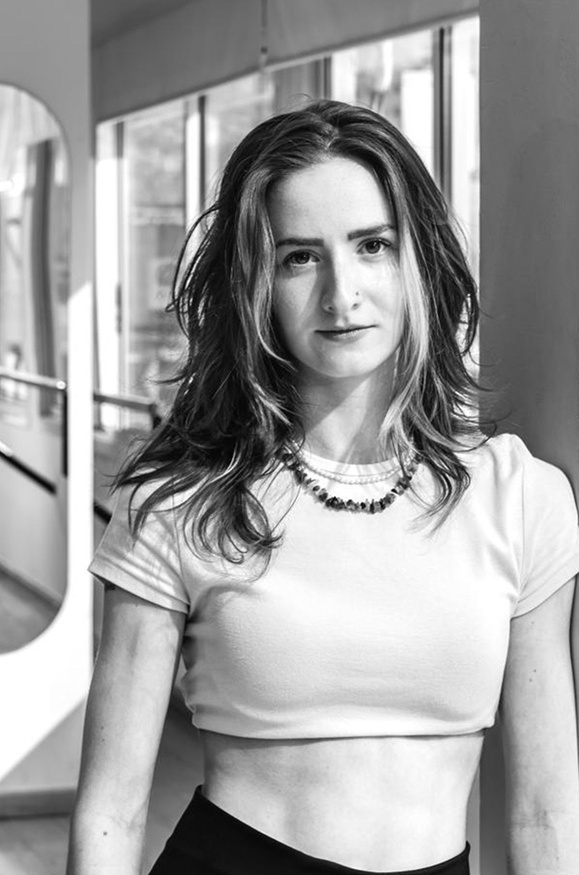
Lisa-Marie Al Munaizel spent eight months in Lebanon working at the Beirut Contemporary Ballet. She reports on her experiences – and the changes that took place within her

My hands smell of tangerines, my mouth tastes of coffee. The car window is open, the spring smell of jasmine and honking vehicles accompany me on the way to training. The Uber driver asks me what I am doing in Beirut and where I come from: "Ana Urdunnije" — "I am Jordanian," I say proudly. He drops me off in Bourj Hammoud, a busy district next to the freight port, and negotiates the fare with determination. I run up the stairs because the power and thus the elevator have gone out. I open the door to the studio of the Beirut Contemporary Ballet. Since its founding in 2018, the company has made a name for itself with a variety of formats and locations — from classical stages to digital media to unconventional venues. Today it has twelve dancers from six countries.

Exchange of Ideas
But what am I doing here, in Beirut? Over three and a half thousand kilometers away from Berlin which I have called home for the last 13 years, where I was trained with a focus on show and stage dance, including my first professional experience. Anthony Nakhlé, a good Lebanese friend, trained with me in the same Berlin company. Our conversations made it clear to me that I wanted to get to know a new approach. Find out more, including about myself. He then suggested that I work with Beirut Contemporary Ballet. Before I came here, I was afraid of the lack of structures and the insecure situation in Lebanon. But my family and friends were even more worried because I wanted to fly to a politically unstable country. For me, the question was: How do I get from fear to confidence? I decided that the fear had to be made concrete so that I could understand where it came from. And what I was actually afraid of.
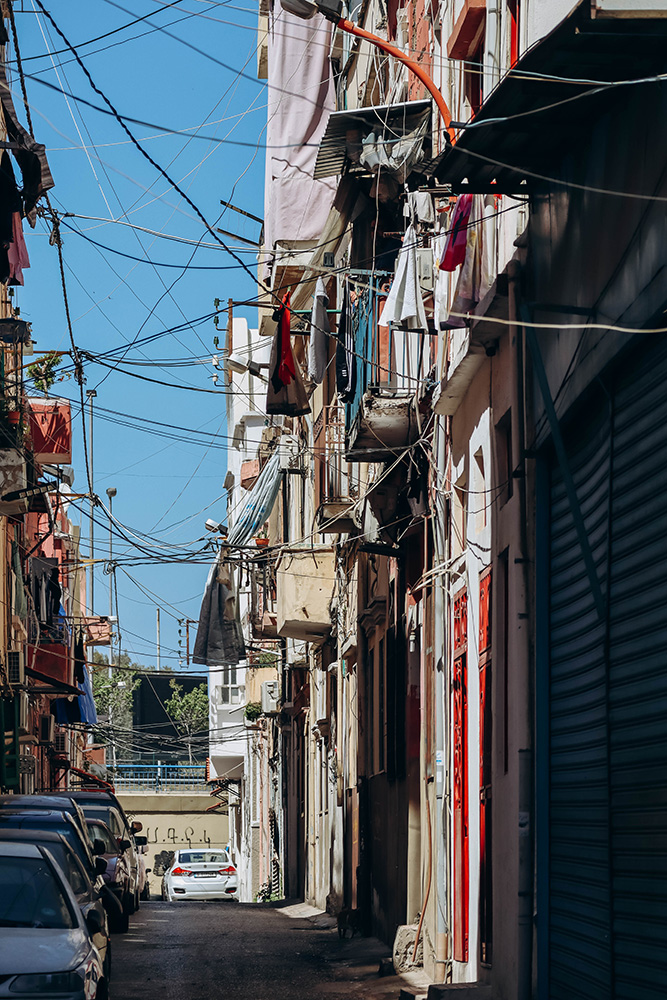
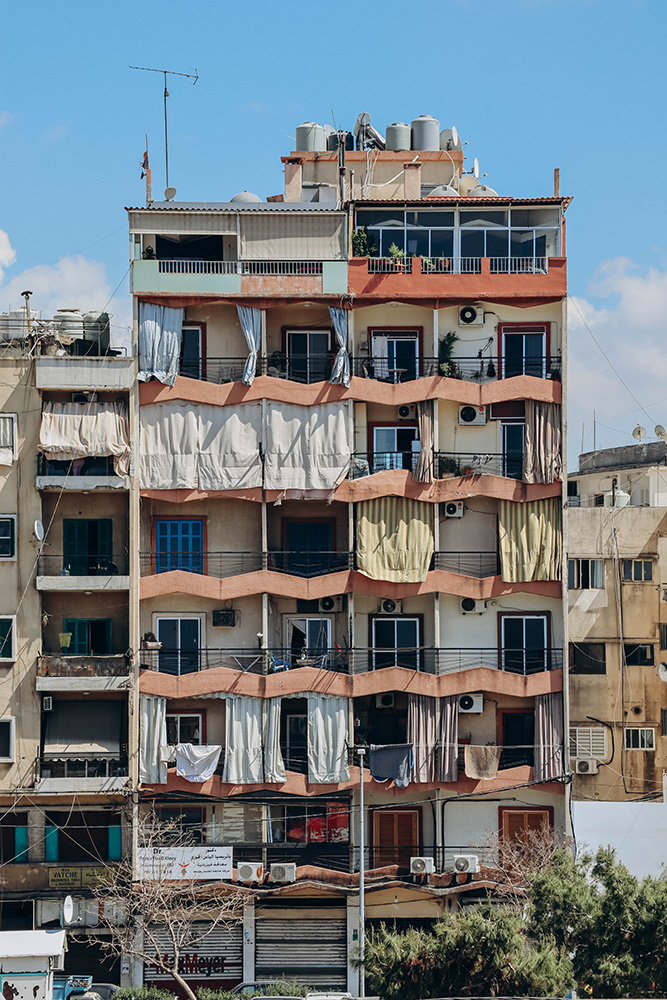
The goal for my time in Lebanon was to get to know the country and its people. That's how I came to Beirut Contemporary Ballet. I trained there, danced, led rehearsals and not only rediscovered my body. I also immersed myself in Lebanese culture. Jana Younes, one of the three founders of the ensemble, showed me how important intensive conversation is, even in the studio. And that means not only the dialogue between your own body and mind, but also the interpersonal exchange of ideas. We constantly asked questions: How does your body feel when you get a correction? How does my body feel in everyday life, in professional contexts? It was a constant search for the deeper structures of the body and how we as a collective relate its individual qualities to one another. I learned an incredible amount about basic mechanisms, both on a physical and psychological level. How does my nervous system work? How does my body react to other bodies?

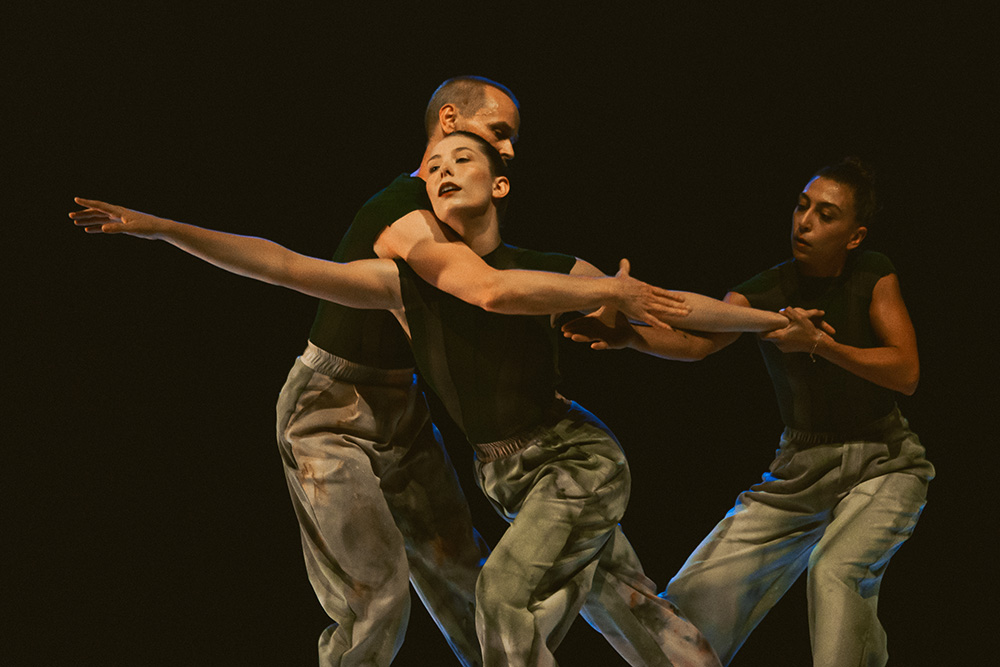
The company places great emphasis on intelligent training in order to train "smart" dancers. It's about recognizing connections between my body and that of my counterpart, perceiving and understanding similarities and differences. One example of this is an exercise in which two people stand opposite each other and hold their center of gravity not with their hands but by hooking their wrists. Both lean back and support each other. In doing so, they continuously change their positions by adjusting the alignment of their wrists. Through this minimal point of contact, I notice even the smallest change in my own body and that of the other, as they have a direct impact on our shared basic posture. The mutual understanding that develops in this way during training also proves its worth outside the rehearsal room. It creates human connections, friendships, curiosity about what moves the others, what they experience.

Diversity and Cohesion
In the summer of 2024, larger productions such as Aswad ("Black") were performed at the Metro al Madina Theater. The piece, designed as a transition from darkness to light, honors the human ability to overcome obstacles and resistance and to continually draw new strength. This is exactly what was needed for the implementation, because we designed and realized costumes, stage and lighting from the ranks of the company. The music was produced by Makimakkuk, a Palestinian singer-songwriter. My assumption that productions of this magnitude would hardly be possible in Beirut because the structures and materials are lacking turned out to be simply wrong. It works! Paradoxically, I had the feeling that the lack of financial support spurred creativity and the piece as a whole became larger than initially planned. Because it was supported by the diversity of the people and their cohesion.

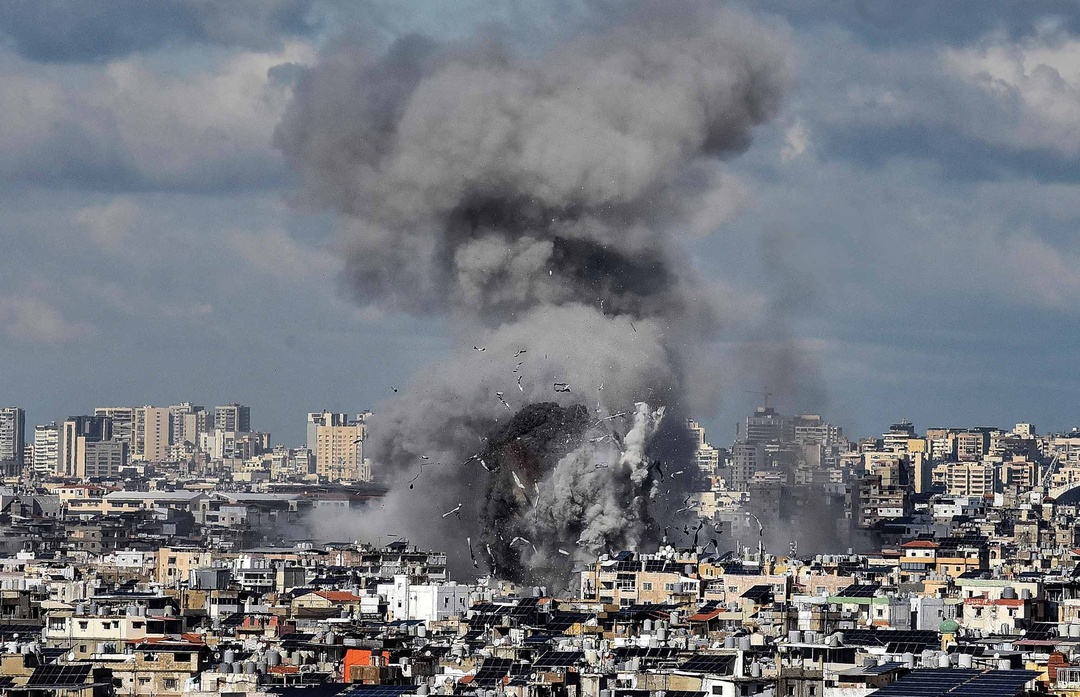
The principle of give and take was the foundation for Aswad and the starting point for the success that the company was able to achieve. In my observation, this mutual exchange is typical of Lebanese society. At a time when politics and the economy often fail and the region is characterized by a precarious situation and open, warlike conflicts, this ties up an enormous amount of energy. It is all the more important to continue to expand, shape and maintain the existing structures. This can create a network that catches you in challenging times. Of course, it is extremely exhausting for many people to keep building structures, tweaking them and thus taking on work and responsibility that should actually be the responsibility of the state. Nevertheless, in my opinion, the lack of external framework is not the main problem. Rather, creativity, confidence and motivation are repeatedly questioned and destroyed from outside. It comes to a standstill. The ongoing conflicts and the current war obviously have serious consequences. A very banal example, but one that can have far-reaching consequences: the GPS system often doesn't work, and the blue dot of my location keeps showing the airport. The feeling of threat increases when Israeli military aircraft break the sound barrier, when bombs fall, and injured and dead people lie on the streets. Naked fear reigns. This is also how it may feel for the civilian population in Tel Aviv and Gaza in the face of a situation that is increasingly escalating and from which there seems to be no way out.

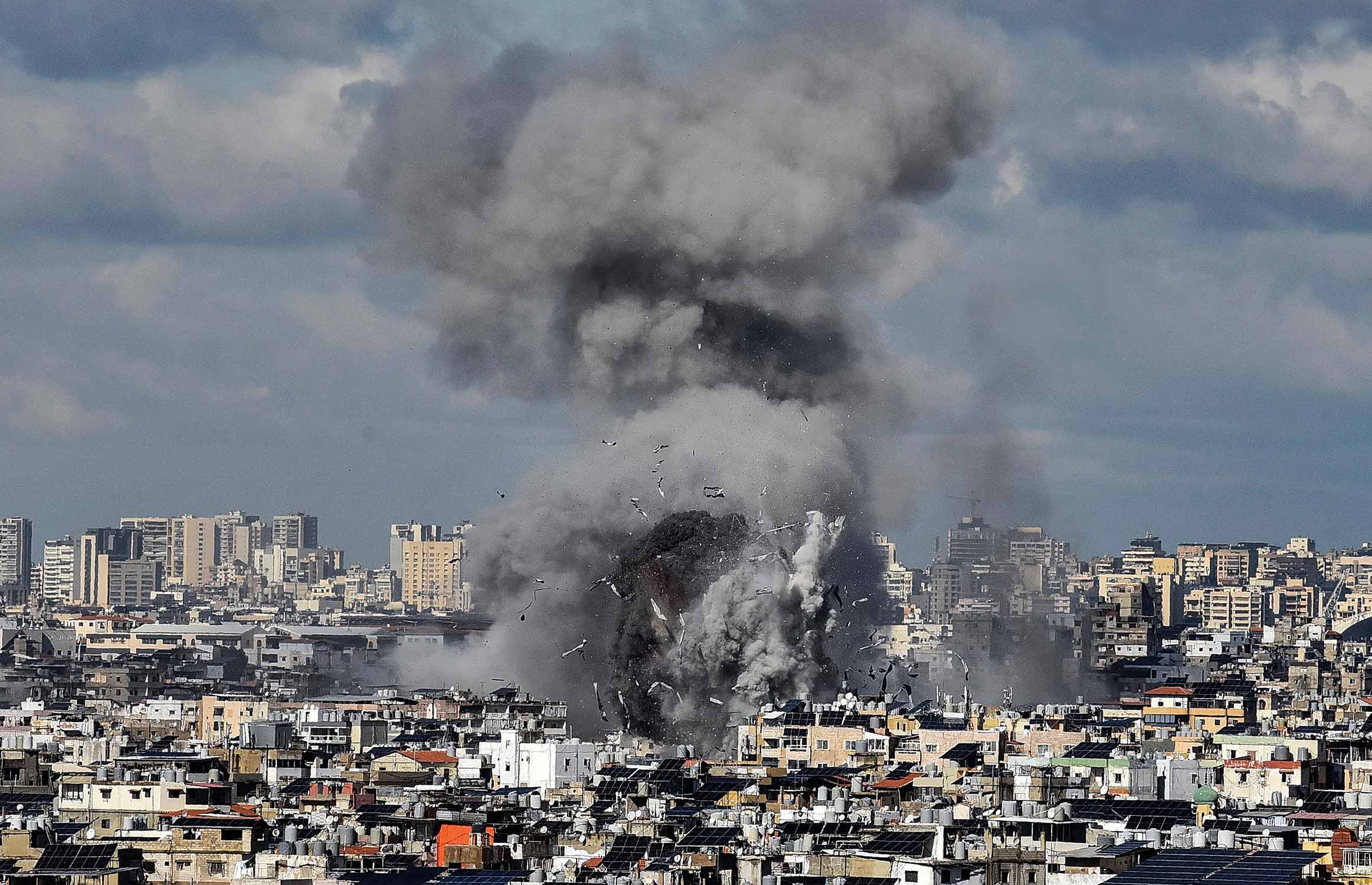
The question that comes to mind is: how can people find any hope in this frightening situation? What is happening has left deep scars and a trail of devastation. The repeated destruction of self-built streets and houses, the disruption and even elimination of cultural identities and living spaces weakens people's ability to shape their existence and their world. If the war and the destruction associated with it do not end in the medium or, worse still, the long term, I fear that Lebanon will lose its vitality. The high level of frustration caused by living conditions leads to so-called push factors. Many people do not want to leave the country, but have no other choice. Their unique culture, their humanity and all the special features that make them who they are — all of this evaporates with the smoke that drifts over the city.

True Inner Freedom
Lebanon is a country that stands between modernity and tradition. The people I have met are shaped differently by both influences, but they all have a deep love and affection for their country — beyond politics and the prevailing conditions. Rather, it’s gratitude for mutual support that ultimately leads to a form of hope. My time in Lebanon showed me how dance can create a space of solidarity, calm and curiosity in difficult times. For me, true inner freedom lies in understanding what is happening in my body, and in the ability to interpret these impressions. In this way, I was able to understand better and better where I come from. I gained an honest, vulnerable and focused view of myself that I had never had before. I learned an incredible amount, both personally and in terms of dance. I am very grateful to Beirut Contemporary Ballet for their openness and the trust they have shown me.

I am back in Berlin, with many experiences and insights in my luggage. I have understood that movements are individual moments and that life means constantly "being in motion". I want to return to Beirut as soon as possible, to the place that led me from fear to confidence.